November 19, 2026
AI in supply chain

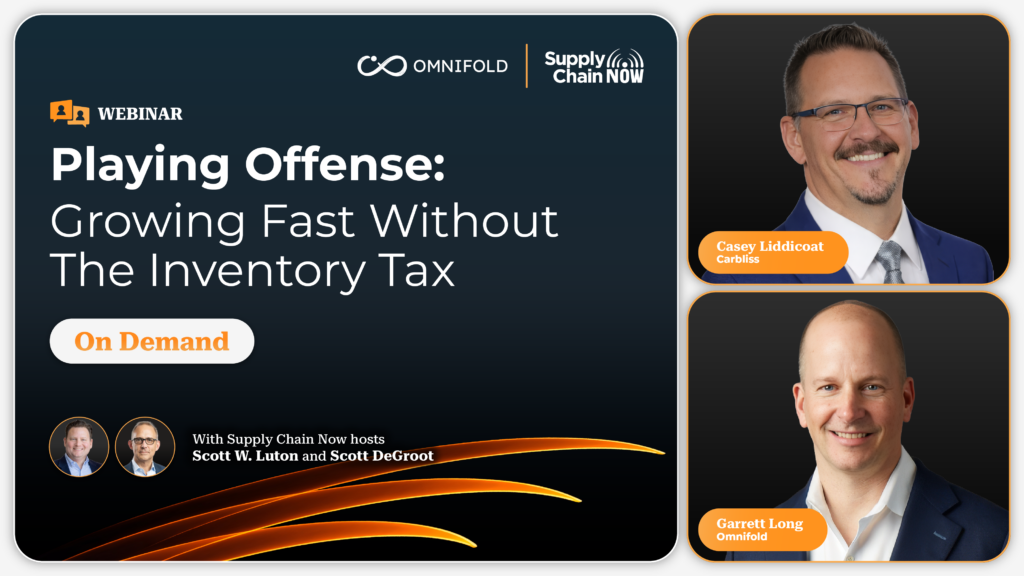
WEBINAR: Playing Offense: Growing Fast Without The Inventory Tax

Share:

WEBINAR: Playing Offense: Growing Fast Without The Inventory Tax

In a few years, Carbliss went from about 40,000 cases to more than 4 million, from 6 flavors to more than 32, and from 40 distribution centers to more than 150, becoming one of the fastest-growing private companies in the country. Its forecast didn’t keep up. It was last year’s sales plus a percentage, built by the sales team in spreadsheets, and it couldn’t see what mattered most in a business like this. It missed how one flavor pulls volume from another, how a new state will behave, and what a distributor told a rep last week.

Every miss cost money. Running short meant lost shelf space and strained distributors. Overbuilding to be safe tied up cash in product with a shelf life.

That extra stock is the inventory tax. In this candid fireside conversation, Casey Liddicoat, VP of Operations and Quality at Carbliss, joins Scott Luton, Garrett Long, and [executive]. They talk through the forecasts that went wrong, what it took to move to a reasoning AI model built on the full context of the business, and why the team now trusts the number.

Webinar Key Takeaways:

Growth breaks the forecast first. A forecast built on last year’s sales stops working when you’ve grown 100x and are adding flavors, distributors, and states at the same time.

The inventory tax. How to spot it in your own operation: overproduction, emergency purchase orders, warehouse-to-warehouse transfers, and expired ingredients.

Forecasting with no history. How to plan a new flavor or a new state using what you know about the product, the market, and the network.

From defending the number to discussing the business. How the planner’s role and the S&OP meeting change when the forecast carries the context everyone used to argue about.

Where a different forecast shows up. Network expansion decisions, margin, stockouts, and the cash tied up in inventory.

More Webinars
supply chain visibility
play-button-webinar
webinar-person
Webinar
September 23, 2026

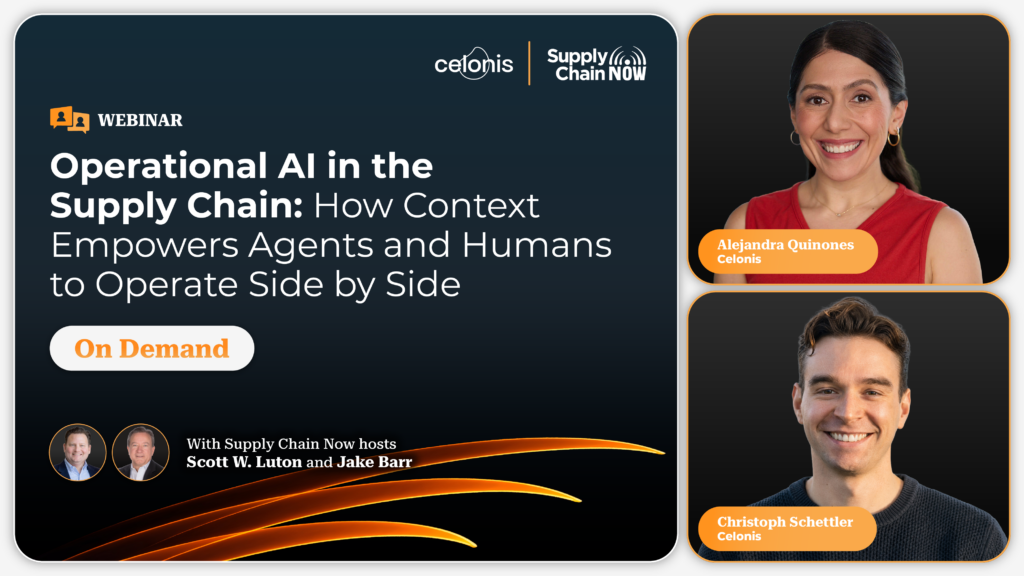
Operational AI in the Supply Chain: How Context Empowers Agents and Humans to Operate Side by Side
The path to autonomous supply chain operations requires more than just transparency and generic AI solutions. It requires technologies that understand your company’s operational realities—a connecting link that ties together all your internal silos, external suppliers, and customers to create a contextual foundation for coordinated, autonomous AI agents that collaborate with humans. In this Supply Chain Now and Celonis webinar, hosted by Scott Luton and Jake Barr, Alejandra Quinones and Christoph Schettler of Celonis will explore how creating this unique operational context enables human experts and AI agents alike to understand past performance, monitor current operations, and make better decisions about future “what if” scenarios. This contextual foundation helps ensure AI agents act appropriately within defined parameters while accelerating decision making across your entire value chain. Key Takeaways: Why generic AI fails without an understanding of your organization’s unique operational DNA How operational context bridges departmental silos and drives cross functional collaboration Best practices for establishing a context layer that supports autonomous decision making
AI
play-button-webinar
webinar-person
Webinar
March 2, 2021

Taking Stock of AI Technology for Inventory Management

Manufacturers understand the importance of precise data management to assure that sufficient materials are available in order to avoid costly production downtime. Still, many continue to rely on an outdated and error-prone patchwork of spreadsheets and manual data inputs, often leading to supply shortfalls, mislabeled products and overstocking of products that are no longer needed. This webinar will demonstrate how artificial intelligence (AI) replaces disconnected data silos with a digitized network footprint of all goods, services and logistics throughout the supply chain so that every decision is visible across the entire organization. AI’s machine learning capabilities remove materials guesswork by continually updating and interpreting market and customer trends to drive highly accurate predictive inventory analyses for indirect MRO, direct goods and even finished products. The webinar will also explain how complete digitization of data improves operational efficiency by harmonizing real-time, continually updated data across all departments and users, streamlining inventory management for speedy access to individual product stocks and available quantities.