Intro/Outro (00:00):
Welcome to the Tango Tango Podcast, real, raw, and unfiltered conversations with veterans and those who support them. Tune in, be inspired, and walk away stronger.
Lloyd Knight (00:14):
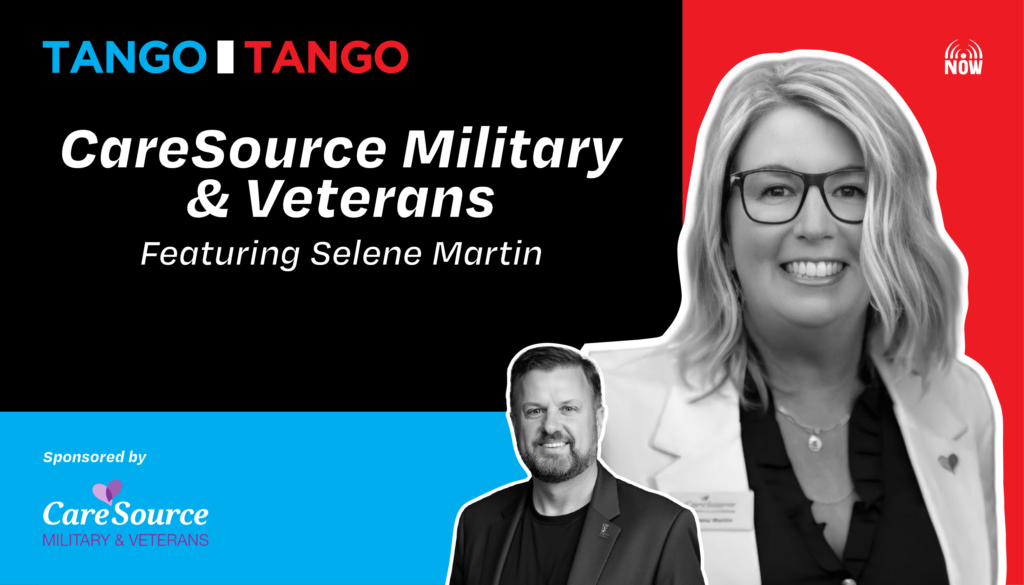
Welcome to the Tango Tango Podcast. I’m your host, retired First Sergeant Lloyd Knights, and I have a great guest today. She is an associate vice president for strategy and marketing with CareSource Military and Veterans. And you’ve heard it before, that’s who I choose for my TRICARE option because I’m blessed enough to be in one of the two cities they’re offering it in. And I’m really, really healthy and more healthier because of some of the provisions that CareSource Military and Veterans and some of the things they’re doing a little bit differently. But hey, before we get into that, I want to introduce Selena Martin and tell you a little bit about her career because she just didn’t show up at a CareSource Military Veterans. It was a journey that took her there, including being a military spouse. So welcome to Tango Tango, Selena.
Selene Martin (01:08):
Lori, thanks. It’s such an honor and pleasure to be here. I’m a big fan and I love the platform that you have to tell people stories because everyone has a story. So thank you. It’s an honor to be here.
Lloyd Knight (01:20):
You’re welcome. Yeah, I love the story telling. My mom’s listening. Hi mom. I’m always going to get at least one download, but she loves the storytelling aspect of it as well. So Selena, talk a little bit about where were you born and raised?
Selene Martin (01:36):
Sure. Well, I was actually born in Arkansas. My mother and father were both born and raised in Arkansas. My father served 25 years in the Navy and when he retired, he retired back home in Arkansas and that was two years before I was born. So I was born there, but I was actually raised in Memphis, Tennessee. So my mom and dad quickly realized after my dad retired that the middle of Arkansas was probably not the best place to grow a family and be comfortable and have a good quality of life. And so they picked up the family and moved us to Millington, which at the time was one of the largest inland naval bases. And so although my dad was retired, we grew up right outside the gates of NAS Millington and spent a lot of my early life there. My dad went on to a civil service career there and my mom worked at the exchange and retired at the exchange.
(02:24):
So I was born in Arkansas where my parents were born, but I moved when I was very, very young to Millington and grew up there.
Lloyd Knight (02:32):
Did your dad talk about his military service?
Selene Martin (02:34):
He did. He was very proud of it. Very, very proud. So ironically, my mom and dad are both twins. My dad is an identical twin. My mom was a fraternal twin, and my dad and my uncle joined the Navy in 1943 when they were 17. So I think Pearl Harbor was a big turning point in their lives. They literally were in the cotton fields of Arkansas, very, very, very poor and probably saw the military as a way out, a way to a better life for them and their family. And so from a very early age, whether I wanted to hear it or not, because when you’re young and your parents share stories, you’re like, “Oh my gosh, boring, I don’t want to hear this and stuff.” But a very, very young age, my dad did talk a lot about his military service because he was proud.
(03:21):
He talked a lot to his brother. They had obviously a lot in common. He wrote some articles and was featured in the local newspapers and I still have a lot of that content. He wrote a letter describing their first experiences. And so he did talk a lot about it in the early years later, not as much. And of course he’s gone now and I wish I would’ve asked, like we all do, a thousand more questions. So I spent a lot of time, as you can see, behind me putting those pieces together, both from a photographic perspective and then also his records and his military history.
Lloyd Knight (03:54):
I just wonder how that shaped you. I mean, you are a tremendous veteran advocate and you’ve had a great corporate career, LexisNexis, definitely you’ve had three careers and then USAA and now CareSource, but you’ve always been passionate about veteran causes. Do you think it dates back to then and the stories and being around your uncle and your father?
Selene Martin (04:18):
Absolutely. And for them, it was always about pride and country and service and serving something bigger than themselves. My mother was that way too. She was a servant. She taught me how to be a caregiver. She was actually layaway and customer service at the Navy Exchange. So she took care of young enlisted and their families, officers, military spouses and the like, and very much made that a career. So very early on, and again, my mom and dad didn’t come from a lot. We did not have a lot growing up, but what I have always said, even as I get older is we had enough. We never went without. We didn’t have a lot, but we didn’t go without. And so I learned that service and taking care of other people and that kind of grounding from my mom and dad. And I also learned how to work hard and how to contribute.
(05:07):
And that really has carried me through who I am today. So what you can’t see on the rest of my office walls are pictures of generations of my family’s black and white pictures, a bookcase with all of my mom and dad’s things in, family Bibles, military photos, just history. And so it just reminds me where I came from.
Lloyd Knight (05:27):
Oh yeah, that’s awesome, especially in your current job, but we’re not going to go quite there yet. We’re going to fast-forward a little bit later because we’re going to spend quite a time talking about CareSource and the contract. But fast-forwarded a little bit, you become an adult, you joined corporate America. When did you reengage back into the veteran space as an advocate?
Selene Martin (05:47):
It’s a great question. So I grew up at a time just talking a little bit about childhood and grew up in a community that embraced the military. So before Brack hit Millington, we were very much a military community. We still are today, but it was different. It was very much part of our everyday life. And so I feel like a lot of that I learned just being around my mom and dad and going on and off base, even though we didn’t live on and off base, it really shaped who I was. And I’m from a huge military family, so that has always been part of who I am. It didn’t actually translate directly into my professional experience probably until I got to USAA. But I would say the values that I learned at a young age are similar to the military values that my mom and dad carried and taught me and my sisters.
(06:38):
And the chance to work for an organization whose mission primarily focused on the military and veteran community came along at USAA. But all those values and things that I learned in my work ethic came from my mom and dad. And through various moves of my own and career changes, LexisNexis to USAA and then to CareSource later in those years really started to shape to take what I was born into and what I grew up into into my professional life and my professional mission and personal mission intersected. And you’ve caused me to really slow down and think about all of this the last couple of days as I prepared for our conversation, and I never look back. I found they were always my people. That was no question. But when you intersect professional and personal life, it’s like you can be the most authentic that you can be.
Lloyd Knight (07:32):
Yeah, I love it. And definitely you’re authentic. One of the things I love about you and Ted and Ollie and the team there is just so authentic. I never feel like you’re trying to sell anything. So I think that’s very powerful. Let’s rewind a little bit back to USAA. Do you have something that you
Selene Martin (07:49):
Did
Lloyd Knight (07:50):
Or were
Selene Martin (07:50):
Involved
Lloyd Knight (07:51):
With at USAA and veteran engagement that you’re just so proud of and just so appreciative you got to be involved in it?
Selene Martin (07:58):
Yeah, for sure. I mean, I think there’s a little context that helps with that too. So a remarkable career at LexisNexis. And so a lot of work in the community and building partnerships up until then and then coming to USAA, again, it was a chance to marry my personal and professional life and all that I had seen growing up and really loved dearly. Came to USAA, I know where I was going. After the end of LexisNexis didn’t end the way that I would’ve wanted it, but in hindsight, it was God pushing me into an uncomfortable place. And at that point, I was actually in a semester of nursing school, had moved home to help take care of my mom and was really going to change careers at that point and go back home again. And was working through nursing school, not going back to corporate America.
(08:45):
And I saw the USAA role on LinkedIn and it was so unique that it really caught my attention and I though, “Oh man, I’m going to look at this.” And I did something that I had never done in the past. I went in cold. I’m a big relationship person. I believe in networking. I believe in lifting other people up and warm handoffs and all that. With USAA, I went in cold. We were members because we were part of the military community, but in terms of professional connections, I didn’t have any. So I though, “Hey, I’m enjoying this nursing school thing, but this mission, this service to the military community, this is really intriguing. San Antonio, I don’t know.” And so I applied and came on board there to a really great leadership and team and mission and built programs and really built strategies that exist still today.
(09:32):
I think what I’m most proud of there is really taking the organization to the next level from a corporate philanthropy, from an employee giving and volunteering perspective, and really building phenomenal programs that still exist today that are run by really phenomenal people. The pinnacle of my career at USAA was being on the front end of Face the Fight. And so it moved out of the employee giving and volunteering piece and others stepped in and took it to the next level. And then I moved over into grant making and the philanthropic side. And then we started to build Face the Fight. I mean, we started to dream what we could do with that and what we could do with others’ help. And so that was both part of what was so bittersweet about leaving USAA and that mission and that team and all the great work that was being done, but I was really being pulled to bring CareSource to the table for our military and veteran community.
(10:29):
So I would say coming in thinking that I was never going to go back to corporate America again, finding a mission and purpose that I could believe in that both kind of crossed my personal and professional values and building community and building programs from the ground up. And I think the other thread is just taking the unique resources that we have as people and organizations and putting those to work to solve really tough societal problems for people. And so building all that from the ground up, being at Face the Fight from the ground up, watching to see where it is now, I am still one of their biggest fans of cheerleaders. It was an incredible, incredible time and I still dearly love and cherish the work that I did there.
Lloyd Knight (11:15):
I remember. I didn’t know you at the time, but in my role of Atlanta, I was watching everything going on at USAA and I was like, wow, they hit the afterburner. All the throttles were up, you’re hitting on giving and program and hiring and you guys just went from cruise to Mach four and something that, and I’m going to use all these Air Force terminology because that’s who I am. As I’m getting older and my runway in front of me is getting a little bit shorter for my professional life, I want to go faster of what I’m doing at UPS and some of the other things. And I would love to have the afterburners that you guys figured out at USAA. So very kudos to you.
Selene Martin (12:01):
The sense of urgency becomes greater and we get a little more honed in on what matters and what brings us joy and who we want to work with and how we want to get things done. It was also a great time because, and I saw this at LexisNexis too, and I see this at CareSource, you’re talking about really, really incredible organizations that are born at a time and a place and then they continue to evolve. And so at USAA when I came in, very much still a lot San Antonio focused and based had regional offices. We grew those programs to include the regional offices, to include home-based teams, to really advance culture, which was also a theme throughout all of my career. And then moving from very localized kind of peanut butter spread strategy to a fully ratified data informed, listening to our members’ strategy on where we could bring our unique resources to bear, to move the needle on some of the toughest things.
(13:02):
And my gosh, veteran suicide and veteran suicide prevention, I can’t think of many other things that would be a lot of worthwhile things, but it just made sense and it was hard and we had to figure it out and we knew we couldn’t do it alone, but we knew we could garner a lot of other partners in the community who believed us strongly and had different resources to bring to the table. We’re stronger together than we are apart. It was very, very meaningful work and made it very hard to leave and to go to CareSource. And by the way, since you’re a VLP alum, I was smack in the middle of my VLP cohort during that time.
Lloyd Knight (13:42):
VLP is the Bush Institute, the Presidential Center of a Veteran Leadership program. It’s a five-month program and it can be intense at times. So to do a career change in the middle of it and then stick with it, wow.
Selene Martin (13:58):
Yeah. Well, the Bush program and any good leadership program makes you just take a full stop and think about where you’ve been, where you are, where you’re going. And so I was going through all of that already and Bush forced me to just come full stop with that. And knowing that I had an opportunity to go help yet another organization build something that the military and veteran community needed so badly was more than I could turn down, but leaving something, a mission, people and work that I dearly loved. Yeah, it was very bittersweet. I’d love a do-over on the VLP when I wasn’t so emotionally charged, but what a phenomenal experience that was. And God’s timing always makes sense later. It may not make sense to you at the time, but yeah, no regrets.
Lloyd Knight (14:49):
So yeah, definitely when you have that perspective later, it’s like, oh, I get it. I get it now, thanks. I didn’t get it at the time. So let’s talk a little bit about before we get into CareSource, let’s talk a little bit about what Congress mandated the government do for competition for TRICARE.
Selene Martin (15:06):
So Congress and the FY17 NDAA created space for this competitive plans demonstration or CPD. And what really is creating competition in the space for military healthcare, reducing costs, but improving quality of care and bringing innovation into the space. And so what was born out of that are the TRICARE prime demonstration pilots that are running in Atlanta and Tampa right now that CareSource military and veterans and CareSource bid on and won those contracts and are fulfilling that today. But it’s really about, again, creating competition and creating greater opportunity for innovation and building again, something that is evolving with the military and veteran community, evolving with their needs and not just meeting their needs, but exceeding their needs. And that was something that was really exciting. And there were some people who reached out when I was still at USA to say, “Hey,” and we got those phone calls a lot, right?
(16:07):
“Hey, we’re trying to do this off the side of our desk. Here’s what we’re trying to do. You’ve been at this for a hundred years. How do you do that? Who do you talk to? What do we do? What do we do next? Here’s what we’re doing. “And so we had those conversations and I’m like,” Oh my gosh, yes, CareSource storied history, more than 35 years, nonprofit taking care of members and improving their health and wellbeing. And really, I think what is special about CareSource is that like USA, everyone wakes up fired up every day about the mission and the people that we serve. And so to bring that to the military and veteran community, to bring what we do so well at CareSource to serve TRICARE beneficiaries, just super exciting. So it was born out of a congressional mandate. A pilot was built. We bid on that work.
(16:57):
We won. And the reason we’re here is a lot of us are military connected. A lot of us have been or are continue to be TRICARE beneficiaries. We’ve been caregivers for our parents or others, spouses. We’ve navigated multiple health plans at one time, TRICARE VA, TRICARE for Life. I saw a lot of that as a caregiver for my mother. And so all of us on the team, and I know you’ve talked to Holly and Ted, are just incredibly passionate, passionate about bringing something good that will improve quality of life for military and veteran families, and not just for the families of today, but for tomorrow. So I like to say, yeah, we’re in the driver’s seat, but we can’t do this alone. We can’t possibly take care of all of the military and veteran families and help them navigate healthcare. But I want to see us collectively come together and say, “We can make this better and we can make this better for the families of today and tomorrow.”
Lloyd Knight (17:59):
Yeah. Competition is so important. If I go buy a pickup truck, there’s nine different companies I can choose from and different models within that. If I go to the store, if I want faucet flakes, I have six different flake cereals I can choose from. I work for UPS. I don’t take UPS healthcare insurance, but I look every year, there’s a whole seven, eight, nine different options. And then it comes to the TRICARE and there’s never been competition. So I love that, and that’s why I’m so knee-deep in supporting CareSource. I also supported the first trial, which was another company, and I saw improvement in the first trial. And I think one of the questions that I asked you when I was determining if I wanted to sign up for CareSource was like, “Hey, I had my heart broken because I was getting better treatment with the competition the first time.
(18:54):
I’m going to hate to do this and have my heart broken.” So I think the first question I asked you was what has changed? What has changed where the military has opened up their eyes more between the first trial and the second trial?
Selene Martin (19:09):
It’s a great question. I mean, I think we always learn from pilots and programs whether they continue or not. I think what has changed, or at least what I see today with the people both within CareSource and DHA and the military communities that we work with is that, and I say this same mission, different seat, even when I changed, especially when I changed from USAA to CareSource, same mission, just a different seat. I see people in each of the stakeholder groups who believe the way that you and I do, that healthcare should be easier, that especially for military and veteran families, this should not be some difficult hurdle that they have to overcome. There shouldn’t be barriers to accessing healthcare. And there are people in all of the seats in the groups that we’re working with who deeply believe in that and want to see change.
(20:03):
And I am hopeful. Our whole team is hopeful, and there are many that we work with and collaborate with on this work that are hopeful that the pilot will be successful, and it is working. And you’re obviously an example of that. People are taking care of themselves and CareSource gets to take care of military and veteran families with this plan. And we see the outcomes of that. People are healthier, people feel heard, people are in the driver’s seat of their healthcare, but they also have someone who’s with them through all the steps and navigating that because it shouldn’t be difficult. And we know that especially with our active duty families, our guard and reserve families that are activated, our veterans who are transitioning, it shouldn’t be one more hard thing that they have to do and they shouldn’t have to do it alone, and we certainly want to be there.
(20:52):
So what I am seeing different, and I don’t know that it’s different, I imagine it was the same in the other pilot too. There are people that wake up every day with beneficiaries at the center of their hearts.
Lloyd Knight (21:04):
Great point. I know you guys, since this is a trial and you have some parameters that you have to fall under, you can’t go too far away from what the other TRICARE provider is doing, but for those that live in the Atlanta and Tampa area and have a choice and providers, you do have some big value adds. So open enrollment season’s getting ready to start, and I’ll tell my personal story after you cover what your value adds are.
Selene Martin (21:39):
Sure. Well, open enrollment, TRICARE open enrollment comes every November and December this year. It’s November 9th to December 8th, so about 30 days to make changes to your health plan. Sometimes that’s top of mind for people, sometimes it’s not. What I would say about the TRICARE Prime option that CareSource Military Veterans has for me, the great and the team, the great privilege to do, it’s all of the TRICARE Prime benefits that you’ve come to know and expect and learn and love, but the who and the how is different. So who is with you right next to you, locking arms with you, managing your healthcare, and helping answer questions and navigate both the health plan and then other resources that are available to you, that who is different and that who is us, it’s CareSource. And the how, we’ve talked about it from our very beginning, it’s really about taking care of our members and beneficiaries.
(22:34):
And because we’re part of a nonprofit organization, opening the door and warm handoff to community resources beyond even the health plan itself is something that we really believe in, getting left of health issues and making sure that preventative care and all of that is in place and just putting people along the journey, CareSource people along the journey to talk to beneficiaries and answer questions and help them navigate care. So all the same benefits of TRICARE Prime, the who and the why and the how is a little different. Some of the added benefits are things that differentiate ourselves from the other TRICARE Prime plans right now. And again, this is about innovation, it’s about testing different pieces and parts of a health plan to see if it will improve quality of life and reduce barriers and burdens. So one of the best is no referrals for in-network specialists, and I know you’ve taken full advantage of this.
(23:26):
So we know that getting a referral, working through your PCM, seeing them, getting a referral, then having to wait to get into a specialist to get care can take a long time. And then there’s some administrative steps that can take a while and it requires follow-up in between active military life or transition or work or just life in general. So by removing that barrier of referrals, we’re saying move about the cabin freely, keep your PCM informed and engaged, but if you want to go see a specialist, go see a specialist, take care of yourself, and we’re right here to help you do that. And so I think that you talked about the story early on, people have been putting off their healthcare because of the referral process. And so what keeps me and the team going, because good and meaningful work is not easy, and so you have high days and low days, but what keeps me and the team going are when our beneficiaries say, “Oh my gosh, I am taking care of my health.
(24:28):
I am not putting it off anymore because I can pick up the phone or get online and schedule a specialist appointment and go get something taken care of.” It’s hard to discount that. So that makes the heart happy every day.
Lloyd Knight (24:41):
And I’m saying this to my listeners and viewers and friends and Atlanta members and fellow veterans in the community, it’s been an absolute game changer for me. They’ve made it so easy to go out and go to direct specialists, and it’s really impacted me in two ways. The first one was I’m going to get seeing those specialists that I never did before because it was going to be so hard. And then I’ve got to go get the referral, and then my doctor’s office only has a certain amount of relationships and maybe they take TRICARE, maybe they don’t. And so I put off a lot of stuff and I’m no longer putting that stuff off. And the second one, I’ll give you a great example, and we talked about it earlier today, I’ve had insomnia for started about the year before I left the Air Force before I retired.
(25:33):
So I’ve had it for a little over 20 years now, and I ignored it for my first four or five years after leaving the service. I got to the point I had to get treatment, but my treatment was always done by my PCMs, and I’ve had multiple PCMs on moves, but they always treated it and I just took their word. And finally, after some big success on a VA claim, I said, “You know what? I need to go in and get a specialist to look at it,” for two reasons. One, to get the proper diagnosis for my VA paperwork, but the second was, “Hey, let’s go take a fresh look.” And so it was so easy. I just called up the Northside Sleep Center, booked an appointment, had an appointment the next week, went, had an amazing doctor. He actually listened to me for a full 45 minutes.
(26:27):
And then he was kind of appalled at the treatment, my care in the past. So he booked me for an overnight stay in the clinic, a full-blown case study. And before, everybody was just quick to throw medication at me, which I was on Ambien for 11 years, which is not great. I’ve been off of it for a long time. And then the second thing was everybody was just like, “It’s cognitive behavior. It’s your sleep habits.” And so every time I changed doctors, “Just go get sleep habits.” And that’s not my issue. So the fact that I was able to navigate that so easily, and it’s to be determined what’s going to go on with it, but wow, we need competition. We need more perks and benefits like that. One, we deserve it. And two –
Selene Martin (27:15):
Earned it.
Lloyd Knight (27:15):
Hey, UPS got better because of FedEx. I wanted to hear competition get better because of CareSource. And I think it’s a great thing. I’m praying and keeping my fingers crossed that the trial is not only extended, but it’s expanded and it goes full time.
Selene Martin (27:32):
Thank you, Lloyd. Thank you for sharing your story, and I hope it encourages others to share their story too, right? I agree. And those stories fuel us to work even harder. So we’re all very, again, very passionate in this space. I know we just came back from military influencer conference. I know you’re a big fan while I’m still trying to unpack all of that, but you talk about what’s different. I think what’s important to know too is that we wanted to make sure these are our people, and so we wanted to make sure that we showed up authentically. And so we took a lot of time and thought into how we were going to show up authentically in this market with this offering. And one of the things I’m especially proud of is we put together a provider panel for Mick, and I don’t know that we’ve ever had just a full-on provider panel like that before.
(28:20):
I think we’ve probably had providers in the mix and conversations in the mix, but on the main stage, a provider panel that really talks about cultural competency, both on the provider side and the beneficiary side. And so we had Dr. Miranda and Dr. Nunez from the Military and Veteran Clinic in Tampa General Hospital and just big fans of theirs. And like your specialist that you talked about, there’s some really awesome providers out there. And Dr. Miranda is former Air Force, and so he is military connected. A lot of folks in the military and veteran clinic are military connected, but it was a really great conversation that Holly moderated about the importance of the things that providers, especially civilian providers that may or may not have any military connection, what they need to know when they’re serving military and veteran families in their practice. And then we had Dr.
(29:17):
Brittany on the panel with us too, who is a veteran, a spouse, and a CSMB beneficiary and on the ground there in Tampa too.
(29:27):
She has a really phenomenal story and a lot of health concerns and issues along the way, both for herself and her family. And so it was really fantastic to have that conversation on the stage and bring that to Mick, because I know a lot of people are thinking about that and have had different experiences, good, bad, and ugly in terms of when they go to providers and whether or not they disclose that they’re military connected, a veteran or a spouse or a military child and what that means for their care. I joked, I’d love to take that show on the road because I think that conversation needs to continue to happen. I’m grateful for our providers who want to show up as authentically as we do.
Lloyd Knight (30:10):
As we get close on time, I want to really close it out with the two questions. The first is, what can the average listener or viewer that is a veteran or veteran advocate that is passionate about competition in this space, can they take any action to encourage the government to not only extend this, but to expand it to other locations?
Selene Martin (30:34):
That’s a great question. I love that. I would say for military connected and not the like, because anyone can advocate and lead. I would say get educated about what we’re doing, about the competitive plan demonstrations, about the pilots, about why they even exist and what the goals are and how they’re doing, and then get active in your community. Federal, state, and local, get active, talk to your representatives. I want to create a world where we’re not just taking bad news to Congress and to our local representatives, but we’re taking good news and good stories, stories like yours and others about how this program is working. Then also just think about who’s around you and who is in your network. I know that we’re just in Tampa and Atlanta right now, 10 counties in Tampa, 33 in Atlanta. The hope even beyond us is to expand this to more TRICARE beneficiaries.
(31:29):
But if you know of TRICARE beneficiaries who may be eligible for the plan, make sure they know about it. The big thing for me is I want people to be aware, you said it earlier, that they have a choice. When you’re in the military, you don’t often have choices like that. So you have a choice. What is that choice? Who is behind that choice? Why are they there? What’s different for you? Does it fit for your family? I want them to be educated and informed so that they can make an educated and informed decision. I want them to exercise their choice when they have it because we don’t always get it. I would say all of those things. Be present, learn, advocate. When you think of others who may be eligible or interested, let them know and engage us.
Lloyd Knight (32:12):
If you’re in Atlanta or Tampa, you’re listening to this or watching it shortly before open enrollment season has opened up. So if somebody’s eligible and they want to make the change, Selena, how do they do that?
Selene Martin (32:25):
It’s a great question because most of the time our healthcare is set it and forget it. And with this option, you actually have to go in during open enrollment and choose us if you want to join this plan with us and be one of the beneficiaries that talk about how it benefits your family. So November 9th, December 8th, TRICARE open season, caresourcemilitary.com. We have beneficiary services team standing by to answer your questions. We have enrollment teams standing by to answer your questions. We have a lot of great content, including beneficiary videos online, but you do have to go in during open enrollment through the MyAuth process to make the change and choose the TRICARE Prime demonstration with CareSource military and veterans. We hope you will. We hope you will consider it and we hope we will have a chance to take care of you like we’re taking care of Lloyd.
(33:14):
I’m thrilled to hear that you and your spouse are thrilled with the plant.
Lloyd Knight (33:19):
Yeah. Tell the team to keep it up because if you guys don’t keep it up, the first sergeant in me is going to come out, but I know you will because you guys are doing it for the right reasons. You’re totally authentic, you’re passionate, and you’re all impacted by your own journeys, whether it’s your husband, your mom and dad. I love that about the organization. As we go to close it, I’ll close it like I always do. Be like my friend Selena, be safe, be kind, and be remarkable.
Intro/Outro (33:52):
The Tango Tango Podcast is produced in partnership with Supply Chain Now. Join the Tango Tango community for more inspiring stories. Follow us on Facebook, X, and LinkedIn. Subscribe to the Tango Tango YouTube channel and follow and listen to Tango Tango wherever you get your podcast.