Intro/Outro (00:02):
Welcome to Logistics With Purpose, presented by Vector Global Logistics in partnership with Supply Chain Now. We spotlight and celebrate organizations who are dedicated to creating a positive impact. Join us for this behind the scenes glimpse of the origin stories, change making progress and future plans of organizations who are actively making a difference. Our goal isn’t just to entertain you, but to inspire you to go out and change the world. And now here’s today’s episode of Logistics with Purpose.
Enrique Alvarez (00:35):
Hey, good morning and welcome to another interesting episode of Logistics with Purpose. I’m your host, Enrique Alvarez, and today is a very, very special interview for me for two reasons. One, I have a really good friend with me being the co-host, Jose Miguel. And some of you might remember him because he was one of the first people that co-hosted with me two years ago, Jose Miguel. I don’t know. It was a long time ago, maybe more than two years ago, but it was a long time ago. I don’t really
Jose Miguel Irarrazaval (01:02):
Remember that day.
Enrique Alvarez (01:03):
Well, and we have an incredible guest as well, so it’s like a double wamy for me. Jose Miguel, well, thank you very much for joining. You’re in Ikike Chile today. So go ahead.
Jose Miguel Irarrazaval (01:15):
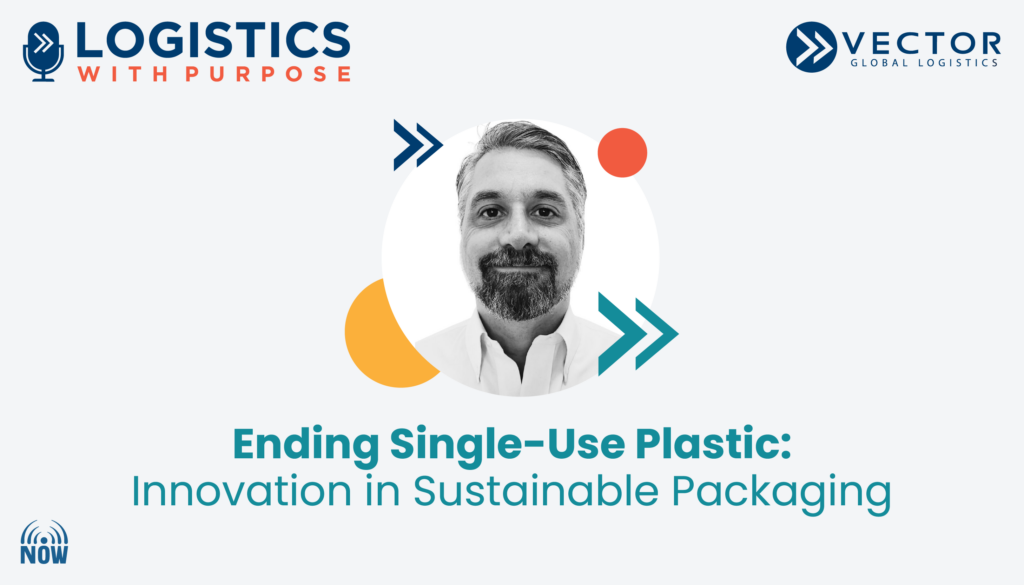
Thank you, Enrique. Thank you very much. Happy to be here for a second time. As you said, I remember one of the first interviews, I think it was the podcast in Spanish or I remember incorrectly, but that’s what I thought. Thank you very much, Amber. Really happy to be here today with you, and especially with our special guest. He’s a CEO of ClickIt by Simplo is, I would say, a innovation leader with more than 15 years of experience turning ideas into market readish solutions. He has founded multiple ventures, built award-winning teams, and consistently introduced market changing products across several industries. So this is Oscar Herrera. Happy to be with you today, Oscar. Welcome.
Oscar Herrera (02:02):
Hi, Jose Miller. Hi Enrique. Thank you for the invitation. I’m really glad to be here. Before we talk about purpose, I think it’s the better, and I hope we can be an interesting host.
Enrique Alvarez (02:13):
I’m sure you will. And I think Oscar, as Jose Miguel mentioned, you’re like a serial entrepreneur. I mean, there’s a lot of people claim to be serial entrepreneurs and I think it has gone a little bit of a cliche, but you are the real deal and we’re happy to have you here with us. So before we deep dive into you and your companies and what you’re currently doing, let me start with this new or newer segment. Well, actually it’s rebranded. It’s been there for a while, but Luisa, our fearless producer, has told me to rebrand it as the purpose sprint. So this is basically, I’ll ask a couple of questions, random questions, and you answer with whatever comes to your mind first. All right. Coffee or tea? Coffee. One thing you cannot live without.
Oscar Herrera (02:59):
Kyndryl.
Enrique Alvarez (03:00):
A place you’d love to visit next?
Oscar Herrera (03:02):
Portugal.
Enrique Alvarez (03:03):
Portugal. Any specific city in Portugal?
Oscar Herrera (03:05):
No, just the countryside.
Enrique Alvarez (03:08):
What sparks your best ideas?
Oscar Herrera (03:10):
Coffee.
Enrique Alvarez (03:10):
Coffee. All right. Cheers to that.
Oscar Herrera (03:13):
Yeah.
Enrique Alvarez (03:13):
Favorite book?
Oscar Herrera (03:14):
It will be The Will of Time.
Enrique Alvarez (03:16):
Well, thank you so much for being such a good sport. Jose Miguel, all years. So we can really kick in this amazing interview. And thank you, Oscar, for sharing those
Jose Miguel Irarrazaval (03:25):
Answers. So Oscar, you have built several companies across other years, renewable energy, designed new sustainable packaging, like the one that I mentioned at the beginning, always pushing boundaries and reinventing what’s possible or not. So looking at the entire journey, when did you first realize you weren’t just building products, but actually changing industries?
Oscar Herrera (03:49):
I think I didn’t realize it at first, not to be completely honest. What I did is I always found some gaps on the market or reaching to satisfy those gaps. Normally to do so, we need to invent something that was not there yet. When we found those spaces, we realized that the solutions that were on the market were not good enough to really solve. I’ve been an entrepreneur since 2009 and formally since 97. And every time we create our own solutions, so we can satisfy those needs. I believe that I start realizing it and we start receiving the innovation awards in Chile. So people are saying that you’re an innovator, so you start to believe them. And after that, I did a second degree on innovation and I realized that everything I was learning was something we already executed. So then as I say, okay.
(04:42):
And the only thing that can relate between all the companies that I have worked in or created is that they’re innovation focused companies. This is when I realized.
Enrique Alvarez (04:52):
Well, thank you so much for sharing that. And before we dive deeper into some of the things that you were just mentioning, let’s pause and get to know you a little bit more. Where did you grow up? What was your childhood like? Tell us a little bit more about your parents, anything that maybe have changed you to become the person that you currently are.
Oscar Herrera (05:11):
So I am from Concepcion. That’s the southern part of Chile. That’s where I was born and raised. I left Conceptuana when I was 18. I went to Santiago to study. I went to study business and it was something that was really trend topic at the time. So I just went to push myself to study in a university that was outside of my comfort zone.
Enrique Alvarez (05:29):
Which one did you go to?
Oscar Herrera (05:30):
Adul Fivanis. Yeah, I was the last generation of the Esquela Nevosis. If you
Enrique Alvarez (05:36):
Have
Oscar Herrera (05:37):
One failure, you’re out the SQ. So yeah, it was fun. I was-
Enrique Alvarez (05:42):
Yeah, that sounds very intense.
Oscar Herrera (05:44):
No, it was. That’s where I met my wife. I was part of the student council. I was with two friends, were owner of the photocopy services of the university. We create a newspaper of the university. We created student council of the university for Santiago. We a lot of stuff. I lived. I actually slept a lot of time in the university because we have a coach on the student council room. So yeah, I think growing up, things that I love didn’t came easy for me. I love rugby. It’s my passion. I’m a ragby coach here in the US. The fo late nights, current state champions.
Enrique Alvarez (06:21):
Great. Congratulations.
Oscar Herrera (06:23):
Thanks. It have been quite a journey. And I was really bad at sports. So I love rugby. I love sports. I was not good at it. But I pushed myself so hard to do something that I love that I was awarded the consistency award sport at school when I left school. So I think that’s something that really shaped me. It’s that most things that I love. I love to talk. I’m a starter. So every time that I love something, I found something in the middle and I have to overcome that song actually to be entrepreneur. Otherwise-
Enrique Alvarez (06:57):
Yeah, you don’t give up. You continue pushing. If you like something, you go and try to get it. So where do you think all those traits came from? Is it something that you learned from your parents? Is it something-
Oscar Herrera (07:08):
My father and my mother were that way. They were also entrepreneurs. They pushed themselves hard, each one in their own style, but there are people that will not give up because somebody told them. Santa I always remember that changed me a lot. When I was going from conception to Santiago, I spent one summer, I compete summer, just looking in the mirror and working the words that were really bad for a starter. So it took people like six or eight months when I arrived to Santago to realize I started because I was able to overcome it by sheer effort. I think that really showed me that you can, if you pursue something and you put your time and effort on it, you can accomplish it. A very young age. I was 18. So I think that is something that have helped me until now, that I truly believe that if I want something, I can do it.
(08:00):
After, I can tell you my wife, it only took me seven years for her to say yes, only seven years. And the first time I determined my love to her, she told me that it was the last match she will ever be with. And now last June, we turned 20 years being married. So it’s crazy.
Enrique Alvarez (08:17):
Congratulations. And again, as to your point, right? I mean, I think that’s a very important trade in an entrepreneur. And given that you’re a serial entrepreneur, you’ve touched a lot of industries, right? You’ve been in the outdoor gear industry and design and energy and now packaging. So you’re consistently spotting certain gaps or certain opportunities in the markets. And I was just curious, how do you do that? What’s your process for identifying things that are like, “This is an opportunity. I need to change it. ” And then, because we know from what you said that once you set your mind to something, you will basically die trying until you get it, right?
Oscar Herrera (08:53):
Yeah.
Enrique Alvarez (08:54):
So how do you figure out where to dive into?
Oscar Herrera (08:57):
So the first two entrepreneurship that I had, I would say it’s basically instinct. It was, “Okay, there’s something here. Let’s dig into it. ” After that, actually I have a process. I also help other entrepreneurs and I help them with the process that I have. And mostly when you have innovation, if you see big companies, innovative companies don’t have … It would take a moment every two months. What they do, they have some processes in places that promotes innovation. When I started with a new project, I put those processes in place and we execute them until we find all the information that is needed. For example, in the case of ClickIt, we work with different universities in the US, in Europe, in Chile to understand those caps, understand where the pain points, where are the pain points of the clients within the industry that we want to seize.
(09:45):
And we found a lot of things that were not done in the way that clients need to be done for them to really replace plastic with a single use that is workable, that it doesn’t hurt the consumer because it’s chosen to be sustainable. And after we saw those pain points, we just go against them. When you understand your pain points, it’s much easier to build a business model around them. That’s actually what we have done, not only in Qlik, but the last three companies that we build a business that really solves what we’re trying to solve, not only cosmetically.
Enrique Alvarez (10:17):
Nice. Well, and Jose Miguel, you wanted to, since you mentioned it already, Oscar, let’s dive into ClickIt, which is the company that’s actually been consuming you for a couple years now. And it’s interesting to hear that your approach is very scientific, right? It’s not just something that you do it aesthetically as you put it, but you see the opportunity, you assess it, you work on it, and then you jump in, which is very deep because there’s a lot of impulse right now. What’s very interesting that your process is more scientific than I expected, but it makes sense, right?
Oscar Herrera (10:51):
Yeah. Otherwise, it’s impossible to have, how do you say, constant change. It’s impossible to have a recommendment, that’s it. What we do is that within the processes that we have, even shipping processes, I try to implement as much as design thinking as possible, but that’s my preferred method, but also we do a lot of lean design. So yeah, when you put inside the processes, the process work for you.
Enrique Alvarez (11:17):
Right. And I think that’s something that a lot of business owners, me included, need to learn, right? I mean, the earlier you learn that the winning formula is more the process than other things, then the easier it will be and the better it’ll get.
Oscar Herrera (11:31):
Yeah. And that the process work for you and not you working for the processes. There’s a balance. I’m a very process oriented person, but sometimes I realize I’m more working for the process and I have to change that.
Enrique Alvarez (11:43):
Well, thank you so much for that. And this has been a great conversation already and we’re just starting. So let me just keep going. I’ll ask you about ClickIt. I mean, you’ve been working on ClickIt for five years. Company was born in Chile where we also have two offices and that’s why we wanted Jose Miguel, who’s in Ikiki now to actually take part of this interview. And we have had the honor to work with you and some of your shipments to the US. What innovations … Well, tell us what ClickIt is all about, what innovations are behind it, and what’s some of the patent alternatives to single use plastic and everything that you guys do at ClickIt?
Oscar Herrera (12:18):
Yeah. To explain Tinkit, we need to explain a little bit how compostability works. Right now, you can make three categories of compostable products. And please do not use the word biodegradable because everything is bidegradable. Plastic is biodegradable. It takes 1,000 years to buy degrade, but it’s biodegradable. So a car is biodegradable. It’s amount of time it takes to buy degrade. So when you take out the amount of time, it’s where you put the word compostable. So you’ve had two kind of compostable certifications. One is that is the most common use in the European Union. One is industrial compostable, and then it’s backyard composable. In the US, since next week, BPI is going to start issuing both certifications until now BPI only had the industrial compostable certification. But now, if I believe correctly, 15th, they will start issuing both of them.
Enrique Alvarez (13:10):
That
Oscar Herrera (13:10):
Way they can separate the two kind of compostability. So what does this means to go back to these three categories that are pretty straightforward, pretty is to understand. One is plastic. Thing is not compostable because it will not decompose in a timely manner. Secondly, you have industrial compostable products, PLA, agave, there’s a lot of technology behind that. Those products need to be collected and need to be sent to industrial compostable facility. You can also find us commercially compostable. Again, we’re watching trying to show it, not put the word industrial underneath, but in the end, you need to collect that trash and take it to a place to pass for another process to do it. And you have excellent partners for that Compost for Life here in Miami, renewable in the rest of Florida. But the issue is that most people doesn’t realize that the product that they have, they need to take it to a special place.
(14:01):
They just see compostable.
Enrique Alvarez (14:03):
And that’s the biggest category, I’m guessing. So when I’m in my house and I try to separate certain products, that’s what you’re talking about, industrial, compostable, because someone has to take them somewhere and … Okay. Yeah.
Oscar Herrera (14:16):
That’s the biggest, and especially in the US. In Europe right now, there’s a tendency to back here, and actually the new legislation is to make it more clear which products are buyer, which products are industrial. But here in the US, there are some states only with loss easily most probably going to finance PLA. So-
Enrique Alvarez (14:35):
One, the third category.
Oscar Herrera (14:36):
And the third category is the one where ClickIt is part of the solution of what ClickIs provide. We are a bankyard composable certificated products. That means that if our products end in a landfill, they’re going to decompose. How long it’s going to take? It depends a lot on the landfill. When you have a landfill, they put earth over it, it’s much faster. But in the end, what we promote is products that we replace plastic, and it will not take 100 years to decompose a normal land. But there are countries like Canada, they have industrial compostable bins in your houses, but we’re not there yet. The biggest change that we brought into the market, then we added other things. But the big change is that first of all, we explain to the clients what they’re really using so they can understand. We help them in which part of the sustainable journey they are.
(15:19):
There are companies that really, they’re the ones that are showing what a sustainable company have to look likes or 10s. And there are companies that are just starting and you need to respect both the same way, and you need to help both the same way. And what we introduced that is different is that everything we do is by a composal. So other big difference, we are really orienting the technology behind the products. We are a one-stop-shop mix. You can find 90% of your needs working with us. And what I mean behind the technology, for example, our caps, we produce them in China, but we also produce them in Chile. Since part of what we want to do have a social impact, we have been moving our production from Asia since we started, and we are help promoting factories that normally work with plastic to have their sustainable line.
(16:07):
In some cases, we even have partnered with them, we have a small order of their business. In other cases, we have done ventures, but in the end, what we do is we help to promote the offer because right now we know the demand is there, but the offer have been held by the same companies in Asia. So doing this, promoting the technology more than the factory itself, you can be agile enough to find the best solution for your clients. Right now, for example, producing Chile, we’re much cheaper than producing Asia.
Enrique Alvarez (16:39):
That is a really, really good news. And if I understood you correctly, Oscar, and of course, correct me if I’m wrong, but it sounds like you could be … Is it a B2C type of model or a B2B model? It sounds like it could be a little bit up both, but what is clicking B2B? Okay.
Oscar Herrera (16:55):
Right now. We have a B2C line, but we haven’t launched it because right now we have some important contracts going on, United Airlines, Acrotels, One Hotels, and several others. And so we’re completely focused on fulfilling those contracts and expectations.
Jose Miguel Irarrazaval (17:12):
I was thinking you’re basically trying to change behavior, consumer behavior.
Oscar Herrera (17:17):
You need to understand your audience a lot. For example, normally what happens is that in order to get into a client’s heart, we go through marketing or sustainable areas of our client. If we go for purchasing, it will be a much harder sell because with those two areas, they really understand the value we’re bringing. Part of what we do, for example, when we close a big deal, we create a full social network campaigns from our clients for them to use to explain to their consumers the change they’re doing. So we don’t only sell a product. Everything is certified. We give a marketing campaign as part of our offering. We have QR codes that you can scan the products able to show you how composable they are and everything is based on a third party that review all the certifications and they can actually show you a map of the nearest compostability center if you want to accelerate the process.
(18:10):
It’s not only like a product, otherwise you will never be able to introduce all this knowledge that is needed to get greenwashing out. So I think
Jose Miguel Irarrazaval (18:19):
That
Oscar Herrera (18:20):
The more important things to understand your clients need to adjust for those clients need and start of the person within your clients you need to talk to.
Jose Miguel Irarrazaval (18:28):
How do you educate people to use your naturally composable products correctly, especially when most takeaway packaging and that ends up in the trash within minutes?
Oscar Herrera (18:39):
So in the cases that I have the opportunity like today to reach those people through a platform, I always do some very easy examples. For example, it doesn’t make sense if you think about it to use a plastic exterior for five seconds, then threw it away for 500 years. So when you start understanding that, you start understanding a lot of things that we use that are actually not needed. What I want to explain a lot of people demonize plastic. Plastic is awesome. It’s the reason why we are having this conversation right now without plastic. I will not have this or will not be in front of a computer. The issue is when we using use plastic in a manner that it’s endangering the species. What I want you to say with that, if we take out single use plastic of the equation, we take out 50% of the plastic production that every year, and we don’t need it.
(19:30):
We don’t need single use plastic. It’s as simple as that. And actually people from my industry maybe will hate me, but bring your own Mac when you go to Starbucks. You don’t need, even though if they have a PLA coding, you don’t need to have us a Starbucks pack. Use reusable. Get me out of the market using reusable. That’s the best solution. And the other thing that we are doing when we use go to social networks, when we’re promoting this, and also we use our client’s talent to do this when they allow us, we have really easy to understand videos of what’s going on. We always try to use a positive language. There’s a lot of disaster language going on of what’s happening with landfills, and I believe people need hope instead of we are doing kind of scenario. Right now we are doing a refunder campaign.
(20:17):
We’re going to launch in January. And most of the videos we’re doing, they’re more related for the consumers to understand what we’re bringing to the table is different and why it matters more than this company, because again, people don’t know. If you see a paper cap that have plastic liner, you see a paper cup that have PLA and you have a papercap that is ours that have no liner at all, they look the same outside. So if people, president know beforehand, they will not know what they have in their hand actually has plastic. A lot of people doesn’t know that papercap have a plastic liner inside.
Enrique Alvarez (20:52):
No, and I think to your point, we’re demonizing plastic. You’re right. And that’s something that it’s very, I guess, refreshing to acknowledge and openly talk about it. And then the other thing that you mentioned, which I believe it’s very evident for anyone that kind of pays attention to what we’re doing in the world these days, and at least for us that we have children as well, it’s just we don’t need probably 60% of the things we want to buy and 60% of the things that we have. We just really don’t need them. So thank you for saying it out loud. And of course, thank you for predicating with the example and the amazing leadership that you have at ClickIt. We were introduced through our really good mutual friend, Miranoka from OCA Aquatics who was also here on our podcast. And I just have to take a minute or two to stop and acknowledge how amazing she is.
(21:41):
She’s great. She’s been an inspiration to us and I’m sure she has been for you as well. So if you’re listening out there, Miranoka, you should go and find that interview because it’s another amazing interview similar to the one that we’re having with Oscar. She became a B Corp member and she’s a huge proponent of B Corp movement. We were in part motivated to pursue B Corp certification as well. And I know that you did as well. How does this connect with ClickIt’s mission and how important is it for you? What does it mean? And how does it connect to the replacing single use plastic with eco-friendly solutions, B Corp in general?
Oscar Herrera (22:21):
Well, this is the second time I’m a B Corp. It’s not my second certification. It’s like my fifth because you just recap every couple of years. But Musuk House, our design house, 2009 was the 11th company to be certificated in Chile. We were part of the spearhead, introduced the movement in Latin America. We have a really good team at B Corp at the time, the same as now. There’s an excellent team there that-
Enrique Alvarez (22:45):
Yeah, amazing people. Yep.
Oscar Herrera (22:47):
Amazing people that help us a lot and early start and also make us part of the movement. So I don’t have a tattoo with B Corp on it- Not yet. … within the options, not yet.
Enrique Alvarez (22:56):
Not yet.
Oscar Herrera (22:57):
So a lot of people normally ask me, it’s too hard to be a B Corp. And so when you at heart are already a B Corp, it’s not hard to be a B Corp. It’s not hard to have a certification. But the reason is because you don’t need to hide anything on the rug. And I believe that everything we’re doing resonates completely with the B Corp values. And when you introduce, it’s the same we were discussing about the processes and innovation. When you introduce that in your soul of the company, even in the constitution of the company from there on, it’s much easier. And it’s like every decision you’re making, you’re consciously saying, okay, how does impact what we’re trying to accomplish on our triple impact? Absolutely. Totally financial impact. You get other equations. We’re discussing about the production in Chile a couple minutes ago.
(23:45):
One of the decision way we move our production from LATAM was the much nearer than it is for transportation CO2 emissions. So even though at that time before the tariff, we have a very similar landed cost in the US, we took the decision because for one side, we could lower the emissions and also the social impact that we could do at Chile, and it’s not only Chile, it’s Chile, Mexico, Brazil that we’re already having manufacturing there is much higher. So at the time, in one of the three pillars of Triple Impact that it was the financial side, it was the same result. The other two, obviously, it was much better to produce in Chile, and that’s why for us was a no-brainer.
Enrique Alvarez (24:26):
I wanted to, I guess, explore that a little bit. What has been the biggest challenge in your supply chain? I mean, you’ve moved from, you’ve shipped pretty much from all over, you’re moving it from China to Chile and you’re shipping to the US. What do you think is the most challenging part of the supply chain for you? And then maybe taking it a little more general and then just talking in general about your industry.
Oscar Herrera (24:49):
So I’ve been lucky enough to find good partners as yourself, so I don’t have big challenges. Also, again, because of the amount of gray hair I have in my head, before shipping anything, we already have the processes and we already had everything done on paper before anything else happened. That minimized the possible problems that you can have. You will have problems, especially regarding innovation. You always will have things that doesn’t go as you expected. The other day we have some students from the USF that we make innovation talk about it, and I showed them in the case of ClickIt, not only the products that were successful, I also showed them the ones that we didn’t launch at the end or we launched and it didn’t work out. But that’s normal because we’re bringing something different to a market that is brand new. So always you got to have those issues.
Enrique Alvarez (25:40):
Right.
Oscar Herrera (25:41):
But I don’t think something that is out of the norm until now we have been lucky enough to not have any.
Enrique Alvarez (25:46):
Well, you’re a very strategic person as well, but I think you’re right. At the end of the day, I think you have to be open to making mistakes. And I think it is important as an entrepreneur to make as many mistakes as you need to find the right alignment, as you mentioned it before.
Oscar Herrera (26:04):
Yeah. And I’ve been married for 20 years, so I have a beautiful wife that showed me my mistakes daily. So it’s easy way to get-
Enrique Alvarez (26:11):
We can all relate to that.
Jose Miguel Irarrazaval (26:15):
Well, go ahead, Jose Miguel. Both Clicket and Vector were sponsors at the PLD Southeast Florida event this year, supporting the growth of the P-Corp movement in the
Oscar Herrera (26:25):
US
Jose Miguel Irarrazaval (26:25):
Southeast region.
Oscar Herrera (26:27):
I believe one of the key things to be able to promote what we’re trying to do that is bringing good to the world through our businesses, not only by charity or in our daily manner, but also bringing good well to do is making human relationship with people that have the same mission-driven person like yourself. It’s not an easy journey, the one that we have decided to be upon. And the best way to able to tackle all the things that are happening in this journey is to talk with our people that are living the same things. And that happens at these events. I cannot tell you in this case how good they were, not only the event itself, but the beer time after the event, sharing news, sharing what we’re doing, sharing how we can help to promote this concept of business for good that a lot of people mix with charity and it’s not.
(27:16):
We want to win money. We want to do it in a way that is going to help to promote a better world. For me, these events, apart from it’s like go and plug myself into the world with energy, apart from that, it helps to share stories, to share mistakes so other people will not make the same mistake, other people sharing their mistakes with you so you don’t commit the same mistakes. So I can tell you from those kind of gathering is where among a lot of the relationship that we have business-wise come from. Like the relationship that we have right now as better being our partner for logistics can just sit down and talk about it. Yeah.
Jose Miguel Irarrazaval (27:53):
Yeah. So what I hear is basically you learning, we’re learning from each other’s mistakes, right? But what impact do you believe is collective efforts?
Oscar Herrera (28:03):
We have a lot of conversations with the people assert, can they recycle this? And after that, we became partners and we are promoting their businesses, now network, and they’re promoting our business in their network. And all that started with conversations being on the same BLD and this playing hitster, having a cup of wine and laughing. And now that became an official partnership. We are their clients. And at the same time, we are promoting their business and they’re moving operations apart from the US and Canada, they’re very strong. They’re moving operations now to Costa Rica and to Chile to our channels. That’s where you can have a tangible, something that you say, “Okay, this business came from the relationship that started in a conversation in BLD.”
Enrique Alvarez (28:43):
That is very important, right? Because people out there when they, at least in my experience, when they tell you about B Corp or everyone’s worried about the return on investment. So what’s a return on investment? And sometimes just being together with other like- minded individuals and creating all that alignment is what needs to happen, right? So that’s why I’m not only excited about AI, but I think that it’s going to be challenging and it’s going to change a lot of things. But at the end of the day, to your point, going out and having a beer with someone, it’s something that AI cannot do yet at least. And that’s something that really propels and fuels communities like the one that you’re starting and you’re leading and the ones that really need to take very seriously because the health of the planet depends on it. And speaking to the general packaging industry, which is huge around the world, I mean, what would you like to see change across the board in the next few years?
(29:39):
I mean, thinking future, what do you think the industry should do or change or?
Oscar Herrera (29:44):
So one thing that’s already happening that I mentioned is that the BPI, having both certification in the US is going to help a lot because people are going to start asking why and then going to understand the difference. So that’s something that is already happening. That’s It’s really good. If we want to dream, something we love to happen is that we can take a lot of the green washing out just by having a shared language. What I mean with this is that right now there’s different states making laws against plastic and we really appreciate them. But in the end, what’s going on with brands that we’re trying to oversee the problem more as a nationwide situation. For example, what you can express in one state is different how you’d have to spread the same or not. And that bring gaps for windwashing to get in, especially in those states without laws.
(30:35):
So if there’s a national wide law, I’m not talking about banning plastic, but you say, okay, this is composable, this is backyard, this is industrial. So people doesn’t take the lack of legal, as you say, reprimand for just lying to the consumers will be awesome. The rest is for the consumers to make their choice. Do not push anything to make
Enrique Alvarez (30:56):
Sure. Well, and it sounds you’re optimistic, right? At least I know I’m optimistic about the consumers because I see my children, I see who they hang out with. I see the kind of options that they’re making. And I feel you’re right. If we can somehow stop the lying, which is what greenwashing is, then people are able to make the right decisions on their own. And I think they’re going to start doing it more often. So great point. And we talked about a lot about greenwashing before we started taping and recording this show. And I think you referred to it as your arch rival,
Intro/Outro (31:29):
Greenwashing.
Enrique Alvarez (31:31):
And I think that’s probably the same for a lot of other packaging companies out there that are trying to do the right thing. And yet you’re competing with companies that may or may not have larger marketing budgets and they can just promote certain ideas that may or not be a hundred percent the truth. And that’s just something we need to eradicate.
Oscar Herrera (31:50):
Yeah. No, great washing is what really makes me be my arch rival, as you said, is that I have been in meetings with people that they believe they’re doing the right thing, not only for the planet, but for themselves, for their company they’re leading, and they have been lied about. And that’s like, come on, you have 80% of the market, 70% of the market that’s willing to buy plastic sell to them. But why are you trying to sell to the less amount of people right now that are still growing? Crazy, trying to sell a product that they’re not looking for. So that’s the thing that upsets me. And you see the face in the video call or in person when you explain that, okay, but you’re buying actually this plastic.
Enrique Alvarez (32:29):
Yeah, it’s hard. Yeah. Well, that’s a good action item for all leaders out there and business owners and employees out there. I mean, just take the time to check the sources, make sure that you really understand what the information’s all about and then make the decision, right?
Jose Miguel Irarrazaval (32:46):
Yeah.
Enrique Alvarez (32:46):
Speaking about ClickIt, before I let Jose Miguel wrap this up, what are some of your future plans for your company? I know there’s a couple of things coming up next year, so very exciting.
Oscar Herrera (32:56):
Yeah. We have, as I mentioned before, we have an awesome contract with AccoHotels. We’re executing that contract right now. They are leading everything that is sustainable. The way they’re looking to sustainability is really awesome. We have learned a lot. Also, we’re working with them at the same time, the same with United Airlines. But we’re going to do in order to execute the contracts even better, we’re going to do a WeFunder campaign that is going to be launched mid-January. So we invite everybody that wants to be a part of the company to be a part of that campaign. And also we have to have a really, really exciting 2026. Everything that is going on right now in our world with the chance that I mentioned with BPI, we know that the market is going to the right direction. It’s been doing so, I will tell you, some years now, but now you can see a lot of big companies moving to sustainable options that when we started conversations with them, when we landed in the US, for them was like, “Yeah, maybe.” Right now it’s like urgently we need to change this.
(33:57):
And that sense of urgency I think is what’s going to dictate 2026. We’re discussing something’s going to happen in the future. We’re going to discuss something that’s happening right now. So yeah, the invitation is open. When we launch our final campaign, we’re looking apart from having investing in the company, we are looking for ambassadors that really be breaks. We’re a mission-driven company. We have awesome clients, people that are changing the industry, and we will invite people that want to share that vision with us.
Enrique Alvarez (34:28):
Candles in, I have to fully support you and congratulations again.
Oscar Herrera (34:32):
Thank you very much, Entrique.
Jose Miguel Irarrazaval (34:34):
So as a wrap up, I would like to ask, what does the phrase logistic with purpose mean for you? I mean, generally speaking
Oscar Herrera (34:41):
From my point of view, it means two things. One is to reduce a mission as much as possible. And secondly, and that is doable and it’s not doable. When you’re bringing something or working with the big shipping companies, what the tools we have at disposal, they’re not huge. But the second one I think is the more important and the one that I feel working with Vector is that it’s about relationship. It’s about building those bridges to continue working and treat people fairly, having good relationship. And that’s actually what a BeCorp means. It means that I’m sure the people that are working at Vector are happy. I’m sure the people working at Vector, they feel much more motivated because what they’re doing is having an impact that people working in our logistic company. Purpose is not only can I reduce I’m KPIs. It means that the relationship, the partnership you are building, the sense of urgency when your client have an urgency, we finish there.
(35:34):
And we love that reaction. Right now we have an achievement coming from Vietnam that we’re working with you guys and the response because it’s something that we are not late, but they’re in the edge that we could be late and we don’t want to. And I can tell the response we receive from Vector is awesome. The update is not daily. It’s every three, four hours to give us the peace of mind that we need. So for me it’s that it’s not only KPIs, it’s about the relationship and work with people that are motivated, they’re happy in doing what they’re doing.
Enrique Alvarez (36:08):
Well, Oscar, thank you. Thank you so much for being here today. Thank you for giving us a little bit of your time. Thank you for the kind words as well. To your point, we love working with clients like you, clients that share our values, clients that want to change the world for the better clients that are really trying to make a positive impact on our planet. So thank you so much. How can our listeners connect with you and of course learn more about ClickIt?
Oscar Herrera (36:34):
So in the most easiest way, I’m again, very process driven. One of my processes, I don’t see any email without answer. So my email is erredra@theclickit.com or info@olit.com. I will receive it either way. So email is the best for me, or you can reach out through our social networks. But to be honest, for mutual response in the next hour, the emails is the best.
Enrique Alvarez (36:58):
All right. Well, thank you so much, Jose Miguel. Thank you so much. Always a pleasure talking to you. Any final comments, thoughts? What do you leave with after this very interesting conversation with Oscar?
Jose Miguel Irarrazaval (37:11):
No. I love what you said about being passionate about the work we do and relationship focus and relationship because that’s what basically long-term businesses are for, right? So thank you very much, Oscar, for sharing opening with us and sharing your experience. And we’re very happy to work with you. And this, I think Enrique was an awesome podcast.
Enrique Alvarez (37:38):
I know, this was a great interview. Oscar, thank you so much. And for everyone out there listening to Logistics with Purpose, if you enjoy conversations like the one that we just had with Oscar today, don’t forget to subscribe. Thank you everyone, and we’ll see you in two weeks. Thank
Oscar Herrera (37:52):
You very much, everybody. Thank you for this space.