How Freight Visibility is Reshaping Supply Chain Resilience
Special Guest Blog Post from Amazon Freight
For supply chains across the globe, goods in motion are promises in motion. When a palletised shipment is delayed or goes dark, the impact is felt not just in transport teams, but in customer service, inventory planning, and broader network performance.
In a conversation, economist Dr. Rebecca Harding and Chris Roe, Managing Director of Amazon Freight, explored how technology and collaboration are changing the way freight networks operate. While their primary focus was freight, their insights map directly onto the resilience challenges supply chain leaders face every day.
Old pressures, new data
In a study supported by Amazon Freight, every shipper surveyed agreed that technology is crucial to the freight industry’s resilience. While this isn’t a surprise, it’s an important reminder of the role that technology plays.
Roe shared a key example where Amazon Freight connected a customer’s system to its own system. Visibility on the end-to-end movement went from essentially zero to a high level of coverage. Instead of discovering problems only when a shipment failed to arrive, the customer could now see disruptions as they emerged and act earlier.
For supply chain teams, that move from partial, delayed information to live, end-to-end visibility changes how you can manage exceptions, allocate inventory, and communicate with commercial teams and customers.
What this means for supply chain leaders
Real-time logistics data allows teams to spot issues before they turn into missed delivery windows or stockouts. Patterns in on-time pickup and delivery, lane performance, and response to disruption give a clearer picture of where the network is fragile and where it is stable. This helps supply chain leaders focus their attention and resources where they will have the most impact.
Balancing service, inventory, and cost
Uncertain lead times often push organisations to build more safety stock or add manual buffers into planning. More reliable freight, backed by live tracking and clearer performance data, supports tighter planning cycles and more confident inventory decisions. That makes it easier to strike a better balance between service levels, working capital, and transport costs.
Collaboration and compatibility across the chain
Both Harding and Roe emphasised that technology only delivers its full value when organisations work together and systems are compatible.
For shippers, that means treating logistics providers as partners in resilience, not just transaction handlers. Sharing network priorities, pain points, and data needs helps both sides identify operational gaps and design better solutions. For supply chain leaders, it also suggests a future where standardised, verifiable logistics data can flow more easily across internal systems, from planning through to customer service.
In a world where uncertainty is unlikely to disappear, those who connect freight data, operational expertise, and collaborative relationships will be best placed to build supply chains that can adapt, recover, and keep their promises.
To take advantage of a vast freight network, reliable services and strengthen your supply chain, reach out to Amazon Freight’s sales team and create a free shipper account.
More Blogs
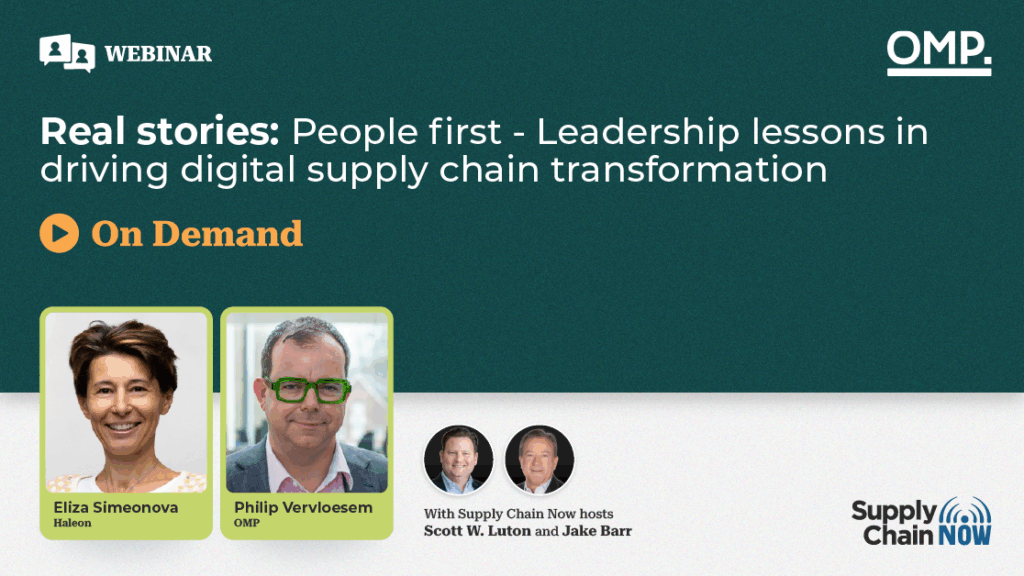
Leading Transformation in the AI Era: Why Digital Success Starts with People