

More
AI
October 21, 2025
Peak Season Logistics: How Smart Inbound Flow Drives Golden Quarter Profits
Special Guest Blog Post from e2open From demand sensing to dynamic allocation, here’s how leaders turn peak season logistics into profit Call it Q4, The Golden Quarter, or Peak Season—it’s the 100-day sprint through fall and winter holidays where profits soar, plans tighten, and one slip leaves you scrambling through January. Across peak season logistics, most companies obsess over outbound speed. Yet the real winners are brands that master inbound logistics flow months earlier. Getting the right inventory to the right locations isn’t glamorous, but it’s where the margins live. Every peak season playbook demands strategic evolution. Rerun last year’s strategy this quarter and you’ll sink—unless you’ve built sophisticated inbound logistics capabilities, airtight supplier partnerships, and precise forecasting to anticipate market shifts. With the right strategy, you can stride into the Golden Quarter. That means: Smarter forecasting that detects demand shifts before they hit Sharper allocation that puts inventory exactly where it’s needed Replenishment planning that maintains flow under pressure On Time in Full (OTIF) execution that keeps products moving and shoppers happy In peak season, accuracy wins. Miss inbound positioning, and your bottom line misses too. Inbound planning: The difference between stockouts and sales Golden Quarter demand…
supply chain planning
January 6, 2026
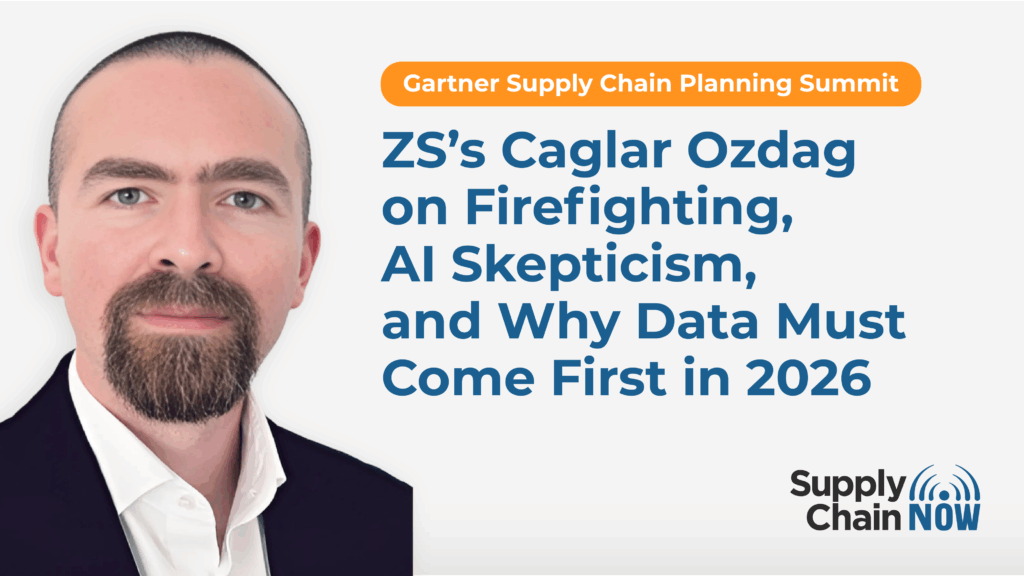
ZS’s Caglar Ozdag on Firefighting, AI Skepticism, and Why Data Must Come First in 2026
At the Gartner Supply Chain Planning Summit in Denver, Scott Luton sat down with Caglar Ozdag, a supply chain leader at ZS. Known for its deep analytics and technology expertise across industries such as life sciences, airlines, consumer goods, and agriculture, ZS has become a trusted partner for organizations looking to elevate their planning and manufacturing performance. Ozdag leads the firm’s supply chain practice with a focus on planning from detailed forecasting through detailed scheduling. As a former practitioner himself—having led planning operations at large global enterprises—he brings a grounded, real-world perspective to the challenges facing today’s supply chain leaders. Old Problems Persist—and New Ones Are Emerging When asked about classic and emerging challenges in planning, Ozdag didn’t hesitate: firefighting isn’t going away. From supply planning disruptions to last-minute schedule changes, firefighting remains a daily reality. “Life happens,” Ozdag noted. Plans rarely match reality, and organizations must constantly adjust. But today, a new layer has been added: AI uncertainty. Everywhere he goes, leaders are asking the same questions: “Is AI the right investment?” “Will the ROI materialize?” “Are we adopting the right tools, or just chasing hype?” This blend of enduring complexity and emerging skepticism has become a defining…