

More
November 6, 2025
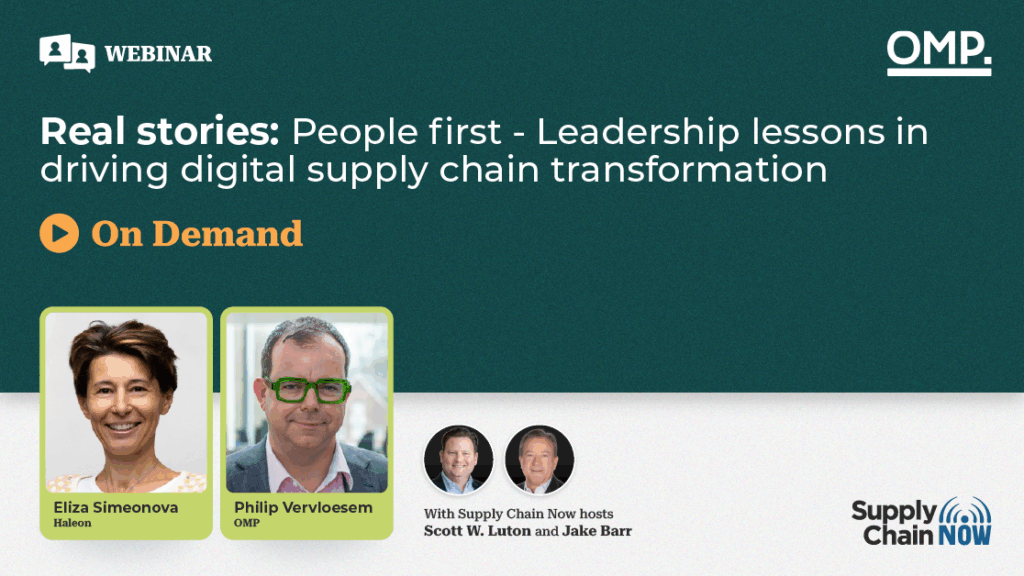
Leading Transformation in the AI Era: Why Digital Success Starts with People
In today’s supply chain landscape, digital transformation is no longer optional—but as the panelists in the latest Supply Chain Now webinar revealed, it’s also not just about technology. Hosted by Scott Luton and Jake Barr, this conversation brought together two powerhouse leaders: Eliza Simeonova, Quality Supply Chain Operations Officer at Haleon, and Philip Vervloesem, Chief Commercial & Markets Officer at OMP. Together, they tackled one of the most pressing challenges of our time—how to lead meaningful, people-centered transformation in an age increasingly defined by AI. A few insights stood out: Technology isn’t the hero—people are. True digital transformation begins with clarity of purpose, disciplined simplification, and leaders who stay close to the work. AI amplifies human intelligence, it doesn’t replace it. The most successful organizations empower their teams to collaborate with technology, not compete against it. Waiting for perfection is the biggest risk. Progress comes from experimentation, agility, and the courage to act before every variable is known. From redefining leadership mindsets to practical strategies for upskilling teams, this discussion offered an inspiring roadmap for supply chain leaders ready to embrace what’s next. Watch the full webinar on demand: Register to view the replay »Download the companion resource: 5 Must-Know…
healthcare logistics
August 4, 2026
Healthcare Supply Chains Need More Than Visibility — They Need Orchestration
When healthcare supply chains break down, the consequences are measured in more than missed delivery windows or higher procurement costs. They can show up as delayed procedures, frustrated clinical teams, wasted inventory, and, most importantly, compromised patient care. That urgency is at the center of a new Supply Chain Now conversation featuring Mark Holmes, Head of Global Supply Chain Market Strategy at InterSystems, and Michael LaRocca, Founder and CEO of Ready Computing. Together, they explore why healthcare organizations need a new level of supply chain intelligence—and how integrated data, automation, and AI can help hospitals move from reactive problem-solving to proactive orchestration. Why Healthcare Supply Chain Disruption Is Different In retail, a stockout may mean a customer chooses a different store. In healthcare, a missing item can mean a surgery is delayed or canceled. As Holmes puts it in the episode, not having the right product at the right time for the right procedure is a fundamentally different kind of failure—one that affects lives, outcomes, and hospital economics all at the same time. The business impact is significant. Holmes notes that globally, procedure cancellations related to supply availability can average around 10%, with some regions experiencing even higher rates. A…