

More
MODEX 2026
May 27, 2026
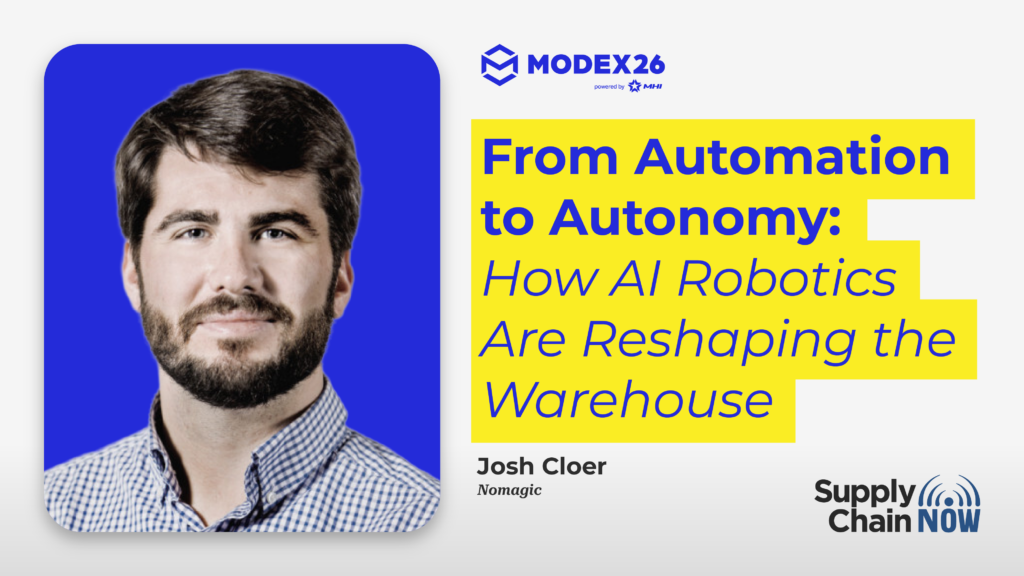
From Automation to Autonomy: How AI Robotics Are Reshaping the Warehouse
At MODEX 2026 in Atlanta, Scott Luton sat down with Josh Cloer, General Manager, North America for Nomagic, to discuss the next phase of warehouse robotics and the growing role of AI-driven automation inside modern fulfillment operations. While transportation costs and economic uncertainty continue to pressure supply chains globally, Cloer sees a major opportunity emerging inside the four walls of the warehouse. The Next Wave of Warehouse Investment According to Cloer, many organizations spent the last decade investing heavily in core warehouse infrastructure: automated storage systems, shuttles, and tote-moving technologies. Now, the focus is shifting toward connecting and expanding those systems. “What they’re moving forward with now is doing the rest of their warehouse,” Cloer explains. That includes: automated forklifts, robotic picking systems, mobile robots and AI-driven item handling. At the same time, smaller operators that may not have justified large-scale automation investments in the past are increasingly turning to more flexible robotic solutions. This evolution reflects a broader industry trend: warehouse automation is no longer reserved only for massive enterprises. More scalable and adaptable technologies are opening the door for a wider range of operators. A Different Approach to Robotics One of the most interesting parts of…
warranty management optimization
June 2, 2026
Your Supply Chain Isn’t Broken. Your Data Is.
written by Chris Cunnane with InterSystems Supply chain leaders are under constant pressure to move faster, reduce costs, improve resilience, and respond to disruptions in real time. Yet despite billions invested in technology, many organizations still struggle with stockouts, delayed shipments, excess inventory, and unreliable forecasts. The problem may not be the supply chain itself. It may be the data behind it. Most organizations today operate with more supply chain data than ever before. ERP systems, warehouse management platforms, transportation tools, supplier portals, IoT devices, and analytics dashboards generate a nonstop flow of information. On paper, this should create unprecedented visibility. But visibility is not the same as confidence. When inventory data is delayed, supplier updates are inconsistent, and demand signals are fragmented across systems, organizations are forced to make critical decisions using incomplete or unreliable information. The result is a distorted picture of reality, and costly mistakes follow. Companies expedite shipments they didn’t need. They over-order inventory “just in case.” They miss shortages that were hiding in plain sight. And they spend valuable time reconciling conflicting reports instead of solving problems. The Real Problem: Fragmented Data The challenge isn’t a lack of data. It’s that the data…