

More
digital supply chain
February 27, 2026
Five Key Supply Chain Trends for 2026: Navigating the Road to Transformation
This post is written by our friends at e2open. E2open is the connected supply chain software platform that enables the world’s largest companies to transform the way they make, move, and sell goods and services. Moving as one.™ Learn More: www.e2open.com. Supply chains are entering a pivotal stretch of highway into the future. It’s a route marked by regulatory detours, geopolitical potholes, and rising expectations for speed, intelligence, and resilience. The journey ahead demands connected data, embedded AI, and agile decision-making. Below are the five major “mile markers” defining the road to supply chain transformation, and how e2open helps organizations navigate the way forward with confidence. 1. Tariff and non‑tariff compliance risks: avoiding costly road hazards Tariff volatility and non‑tariff barriers create regulatory road conditions that can change quickly. For cost-focused leaders, this unpredictability can feel like driving through dense fog. One wrong move can result in delays, penalties, or unplanned expenses. Forward‑thinking organizations are installing automated guardrails: integrated trade compliance systems, dynamic landed‑cost modeling, and synchronized import/export workflows. These tools help reduce blind spots and ensure companies don’t veer into costly territory. The e2open Global Trade suite puts the world’s most comprehensive, continuously updated regulatory content directly…
foundational industries investment
February 23, 2026
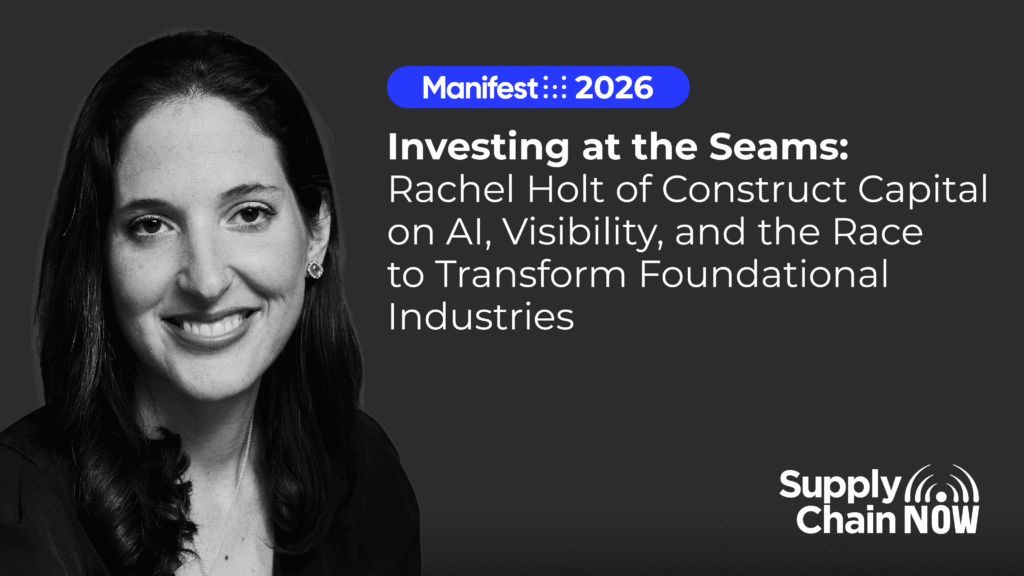
Investing at the Seams: Rachel Holt of Construct Capital on AI, Visibility, and the Race to Transform Foundational Industries
From Uber to Foundational Industries At Manifest 2026, Scott Luton sat down with Rachel Holt, Co-Founder and Managing Partner of Construct Capital, to explore how venture capital is fueling the next era of supply chain innovation. Construct Capital, now six years old, was founded in early 2020 with a bold thesis: transform foundational industries that represent nearly half of GDP: supply chain, logistics, manufacturing, mobility, infrastructure, and defense. When the fund launched, Holt recalls many skeptics asking whether supply chain and logistics were truly venture-scale opportunities. It echoed what she heard when she joined Uber in 2011, when transportation was considered slow moving and heavily regulated. Yet Uber went on to redefine personal logistics. Her final years at Uber brought a pivotal lesson. While the rides business operated with second-by-second visibility, the company’s e-bike and scooter supply chain operated in near darkness. Products shipped from China would disappear for weeks at sea, briefly reappear at ports, then stall again in customs. “We had no visibility, we had no ability to reroute,” Holt shared, as this Eureka moment would go on to help shape her investment focus. The Visibility Gap at the Seams Supply chain, Holt emphasized, is not monolithic.…