

More
July 10, 2020
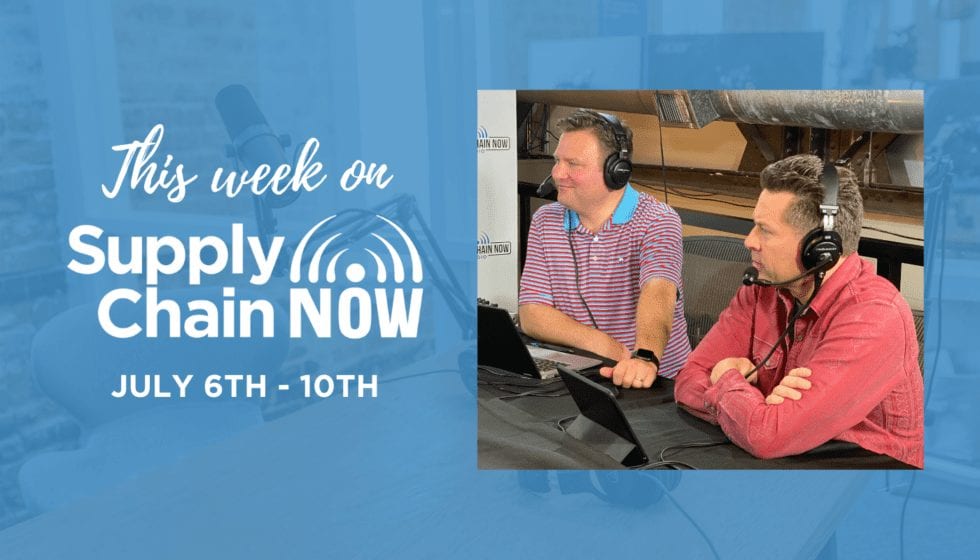
This Week on Supply Chain Now- July 6th – 10th
Another great week here at Supply Chain Now! Did you catch all the episodes? If not, you can check them all out here: We kicked off the week with This Week in Business History, where Scott looks back at some of the biggest historical events in business history for the week ahead, including the birth of the Coca-Cola Company. Supply Chain Now · “This Week in Business History for July 6th: The Birth of the Coca-Cola Company” Then on Tuesday, Scott and Greg welcomed John Buglino with Optessa to the podcast to discuss simplifying and streamlining operations. Supply Chain Now · “Simplifying & Streamlining Operations: John Buglino with Optessa” On Wednesday we published the Supply Chain Buzz, where Greg and Scott discussed the top supply chain news of the week, and were joined by special guest Tevon Taylor, with FedEx Supply Chain. Supply Chain Now · “Supply Chain Buzz for July 6th: Featuring Tevon Taylor with FedEx Supply Chain” On Thursday, we continued our new series, TECHquila Sunrise with Greg White, where Greg shares the latest investments, acquisitions, innovations, and glorious implosions in Supply Chain Tech every week. Supply Chain Now…

MODEX 2026
May 27, 2026
From Automation to Autonomy: How AI Robotics Are Reshaping the Warehouse
At MODEX 2026 in Atlanta, Scott Luton sat down with Josh Cloer, General Manager, North America for Nomagic, to discuss the next phase of warehouse robotics and the growing role of AI-driven automation inside modern fulfillment operations. While transportation costs and economic uncertainty continue to pressure supply chains globally, Cloer sees a major opportunity emerging inside the four walls of the warehouse. The Next Wave of Warehouse Investment According to Cloer, many organizations spent the last decade investing heavily in core warehouse infrastructure: automated storage systems, shuttles, and tote-moving technologies. Now, the focus is shifting toward connecting and expanding those systems. “What they’re moving forward with now is doing the rest of their warehouse,” Cloer explains. That includes: automated forklifts, robotic picking systems, mobile robots and AI-driven item handling. At the same time, smaller operators that may not have justified large-scale automation investments in the past are increasingly turning to more flexible robotic solutions. This evolution reflects a broader industry trend: warehouse automation is no longer reserved only for massive enterprises. More scalable and adaptable technologies are opening the door for a wider range of operators. A Different Approach to Robotics One of the most interesting parts of…