

More
March 8, 2025
6 Strategies for Building an Adaptive Supply Chain
Traditional supply chains react, while Adaptive Supply Chains are built to anticipate and evolve. Learn how these strategies can transform your supply chain and multiply margins despite today’s turbulent market environment. Supply chains are more than just something to manage. They’re a strategic asset to the organization – driving long term, sustainable growth by constantly adapting to a fast-changing world. In this white paper, you’ll learn: The three pillars that make up an adaptive supply chain Six practical strategies that can help you achieve the three pillars of an adaptive supply chain Real life use cases on how companies like yours are using these strategies to maximize operational performance, profitability, and sustainability Download the “6 Strategies for Building an Adaptive Supply Chain” white paper here to learn more
November 6, 2025
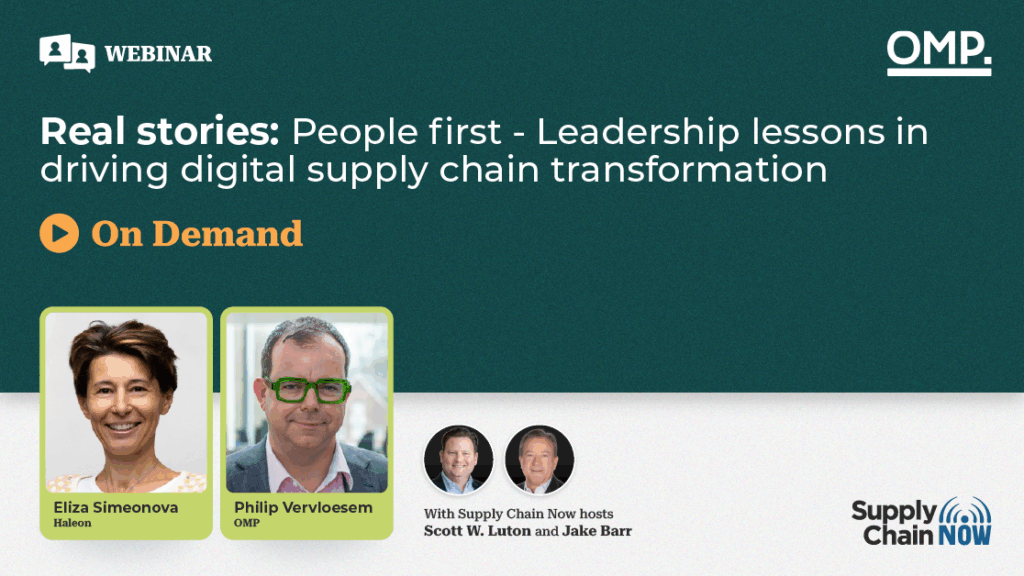
Leading Transformation in the AI Era: Why Digital Success Starts with People
In today’s supply chain landscape, digital transformation is no longer optional—but as the panelists in the latest Supply Chain Now webinar revealed, it’s also not just about technology. Hosted by Scott Luton and Jake Barr, this conversation brought together two powerhouse leaders: Eliza Simeonova, Quality Supply Chain Operations Officer at Haleon, and Philip Vervloesem, Chief Commercial & Markets Officer at OMP. Together, they tackled one of the most pressing challenges of our time—how to lead meaningful, people-centered transformation in an age increasingly defined by AI. A few insights stood out: Technology isn’t the hero—people are. True digital transformation begins with clarity of purpose, disciplined simplification, and leaders who stay close to the work. AI amplifies human intelligence, it doesn’t replace it. The most successful organizations empower their teams to collaborate with technology, not compete against it. Waiting for perfection is the biggest risk. Progress comes from experimentation, agility, and the courage to act before every variable is known. From redefining leadership mindsets to practical strategies for upskilling teams, this discussion offered an inspiring roadmap for supply chain leaders ready to embrace what’s next. Watch the full webinar on demand: Register to view the replay »Download the companion resource: 5 Must-Know…