

More
supply chain control tower technology
December 22, 2025
Top Microsoft Dynamics 365 Partners for Distribution and Supply Chain Management
This post is written by our friends at Winfosoft. Winfosoft is a globally recognized Microsoft Cloud Services Provider with more than 30 years of experience in ERP software solutions. Learn more at: https://winfosoft.com/ Choosing a Microsoft Dynamics 365 partner is a major decision for any distributor. The right team can help improve inventory visibility, reduce errors and give leaders clearer numbers to work with. Using the wrong one can slow things down and create more manual work. This guide explores partners with proven experience in distribution and supply chain operations. Each has a slightly different focus, so readers can see which model fits their business best. What Dynamics 365 Partners Specialize in the Distribution Industry? Microsoft Dynamics 365 combines finance, operations, sales and customer information in one system. For distributors, this means a single place to manage stock, pricing, orders and warehouse activity across locations. Specialized partners build on that core system. They design the processes and integrations that align with how distributors actually operate their businesses. This list highlights partners based on their clear focus on distribution, demonstrated experience with Dynamics 365 and independent coverage published in the last few years. 1. Winfosoft Winfosoft is a…
execution
May 1, 2026
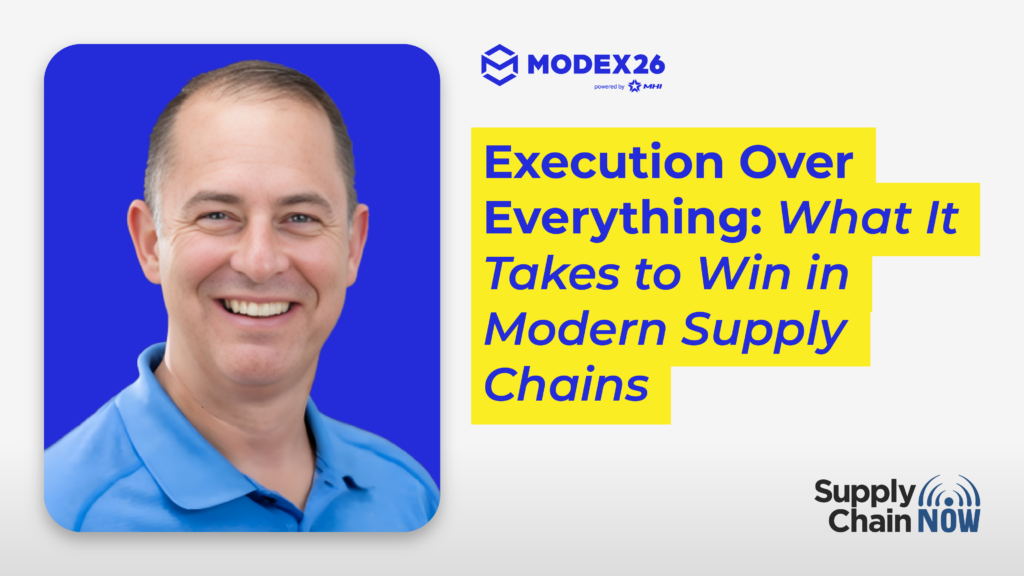
Execution Over Everything: What It Takes to Win in Modern Supply Chains
At MODEX 2026 in Atlanta, Scott Luton sat down with Tevon Taylor, Senior Vice President of Contract Logistics at Pegasus Logistics Group, for a candid conversation about what’s really driving success (and failure) in today’s supply chains. From tariffs and AI to warehouse inefficiencies and leadership mindset, Taylor’s perspective cuts through the noise with a simple truth: technology matters, but execution matters more. Disruption Is the New Normal If there’s one constant in 2026, it’s disruption. Tariffs, geopolitical uncertainty, and shifting trade lanes are no longer occasional challenges. They’re baked into the system. “You can’t stick to the old methods of running your supply chain. You must constantly find new ways to gain resilience,” Taylor explains. That resilience starts with flexibility. Companies that rely on rigid, linear networks are increasingly vulnerable. Instead, supply chain leaders must rethink how they design and operate their networks. Taylor emphasizes the need for multi-threaded strategies: nearshoring, domestic sourcing, and diversified transportation routes. In short, supply chains must evolve from static systems into adaptable ecosystems. AI Is More of a Requirement Than a Buzzword While some technologies come and go as industry cliches or flavor of the month, Taylor is clear that artificial…