

More
January 22, 2020
Key Parntership between Supply Chain Now and U.S. Bank
Supply Chain Now announced today that they will serve as the live streaming media partner for U.S. Bank, increasing exposure and engagement with the bank’s Freight Payment Index’s quarterly releases in 2020, starting with the release of the Q4 2019 report on January 22nd at 12 noon ET. VIEW FULL PRESS RELEASE HERE.
supply chain
January 15, 2026
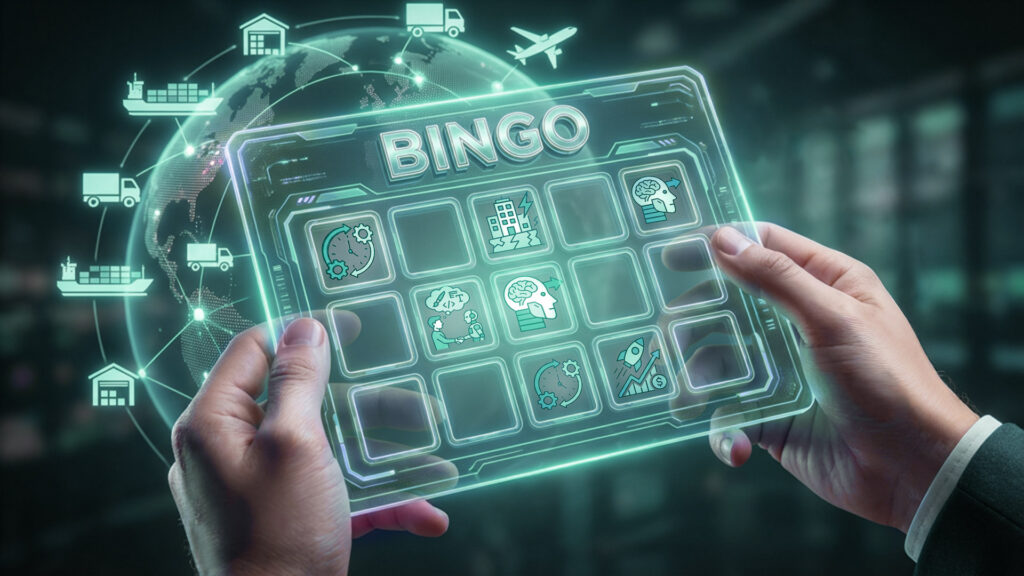
5 Supply Chain Predictions on our 2026 Bingo Card
Special Guest Blog Post written by Philip Vervloesem If your supply chain planning still runs on a monthly cycle, 2026 will be uncomfortable. We are operating in a polycrisis where change is constant, and responses need to be fast enough to keep up. From customer conversations, industry research, and leadership discussions at the Gartner supply chain conferences, a clear pattern has emerged: the organizations pulling ahead are not planning more often. They are embedding agility, intelligence, and speed into the way they make decisions. Here are five predictions shaping supply chain excellence in 2026 – our “bingo card” for what’s now table stakes. 1. Continuous, always-on planning is a must Monthly or quarterly cycles are no longer enough. The organizations that outperform treat planning as a continuous capability embedded in daily operations, and make it part of their governance and operational excellence. Imagine this: a sudden surge in demand hits or a supplier flags a delay. Instead of waiting for the next planning cycle, teams immediately evaluate options, share insights across functions, and adjust course. Planning stops being a calendar exercise and starts shaping real-time decisions. “By shifting from process-centric to decision-centric planning, we now run hundreds…