

More
agentic AI
January 19, 2026
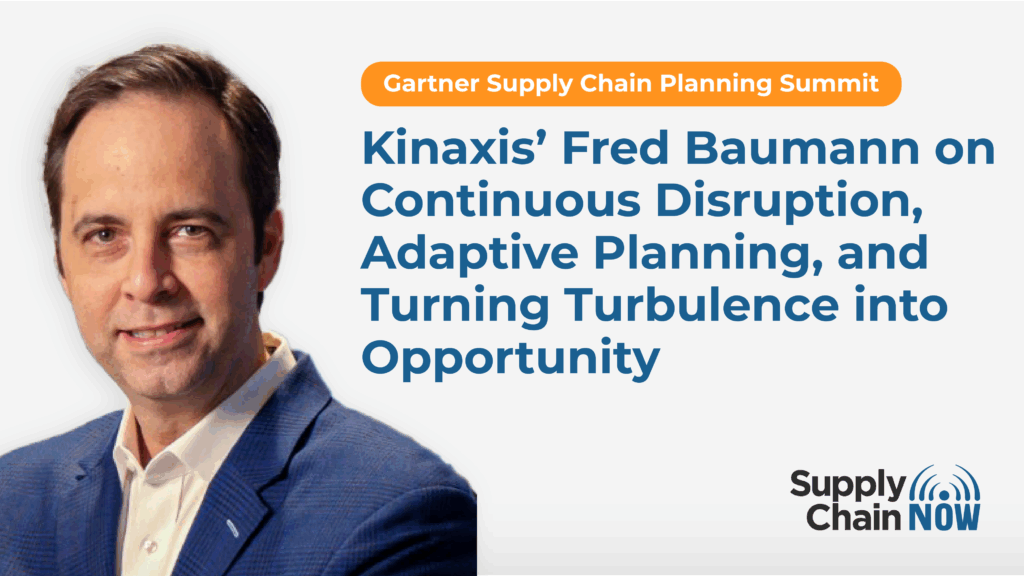
Kinaxis’ Fred Baumann on Continuous Disruption, Adaptive Planning, and Turning Turbulence into Opportunity
At the 2025 Gartner Supply Chain Planning Summit in Denver, Scott Luton sat down with Fred Baumann, Senior Industry Principal at Kinaxis, one of the world’s most recognized leaders in supply chain planning and orchestration. Kinaxis has spent over four decades shaping the planning landscape and has been named to the Gartner Leaders Quadrant an extraordinary 11 consecutive times—a testament to its execution strength and long-term vision. Baumann’s role at Kinaxis centers on helping chief supply chain officers and senior leaders shape their strategic transformation roadmaps, quantify value, and build the business cases necessary to achieve breakthrough outcomes. From Episodic Disruptions to Continuous Turbulence When asked about old and new challenges facing supply chain planning teams, Baumann observed a major shift: disruption is no longer episodic—it’s continuous. Historically, companies faced major disruptions every few years. Today, volatility and constraint-related challenges—whether driven by tariffs, sourcing changes, geopolitical shifts, or supply shortages—are unfolding weekly or even daily. This environment demands a new way of working. The speed of global business is accelerating, and uncertainty is at historic highs. As Baumann noted, organizations must now adjust their supply chains “much faster than they had to even last year.” The shift isn’t only…
automation
April 27, 2026
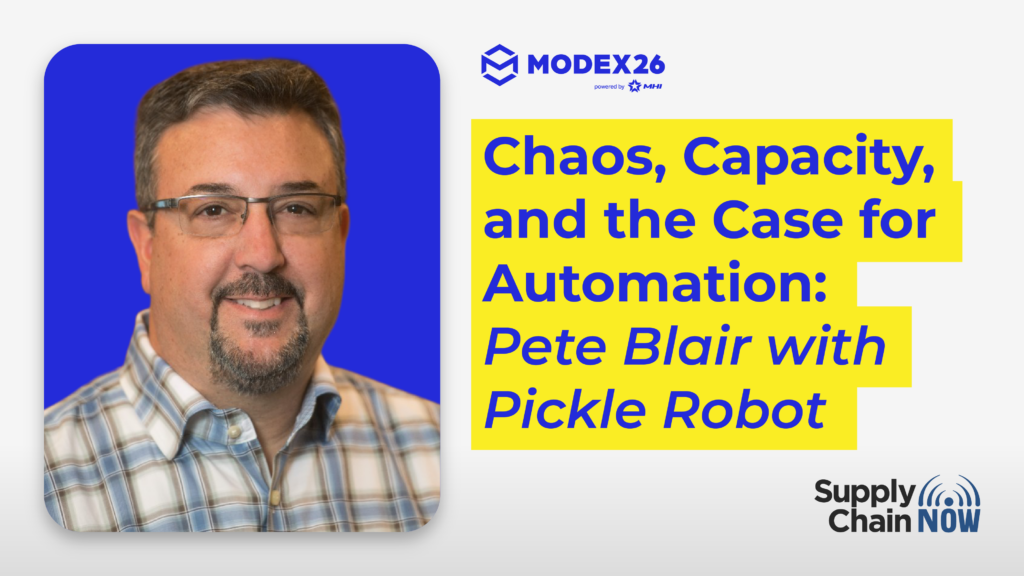
Chaos, Capacity, and the Case for Automation: Pete Blair with Pickle Robot
At MODEX 2026 in Atlanta, the energy was unmistakable. With thousands of supply chain professionals gathered, one theme echoed across conversations: uncertainty is no longer episodic. It’s constant and seemingly endless. In a candid discussion with Scott Luton, Pete Blair, VP of Product & Marketing at Pickle Robot, unpacked how organizations are navigating volatility, workforce challenges, and the growing role of automation in keeping operations moving. Navigating Tariffs and a Moving Target If there’s one word defining today’s global supply chain environment, it’s unpredictability. Blair points to tariffs as a prime example; and not just their presence, but their volatility. “The biggest thing we see… is the chaos of tariffs. It’s not so much that customers have to pay tariffs or not pay tariffs, it’s that they don’t know how to plan,” Blair explains. That lack of predictability is forcing organizations to rethink their networks in real time. Companies are shifting sourcing strategies, standing up temporary distribution centers in new geographies, and even making drastic decisions about whether importing goods makes financial sense at all. What’s particularly challenging isn’t the cost itself. But rather, it’s the inability to forecast. Supply chains, while resilient, aren’t designed for abrupt swings like…