
More
Red Sea
April 14, 2025
Supply Chain Now’s Guide to the Red Sea Crisis
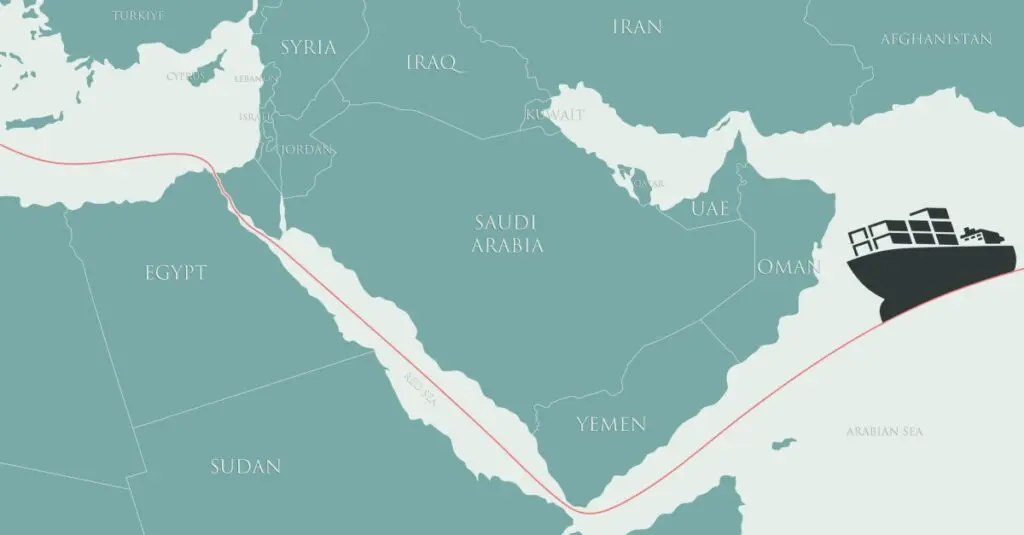
An estimated 12% of global trade worth more than $1 trillion traverses the Red Sea each year. When Houthi rebels started attacking commercial vessels in November 2023, ocean carriers began rerouting container ships around Africa’s Cape of Good Horn rather than through the Suez Canal on voyages from Asia to Europe. That greatly increased travel time and costs. As of March of this year, shipping through the Red Sea was still down 70% from before the attacks began, according to The Economist, with many ocean carriers still avoiding the Bab el-Mandeb Strait, which separates the Red Sea from the Gulf of Aden and the Arabian Peninsula. Maritime Industry Caught in the Crosshairs Houthi rebels launched attacks on ships in the Red Sea in response to Israel’s military operations in Gaza. The Houthis attacked more than 100 cargo ships between November 2023 and January 2025. The attacks, with missiles and drones, sunk two vessels and killed four sailors. In late October 2024, a headline in gCaptain read, “Red Sea Is Now So Dangerous Even NATO Warships Are Avoiding It.” “The United States Navy continues to send warships through the Red Sea, but its mission to protect merchant ships – Operation Prosperity…
MODEX 2026
May 15, 2026
Building the Next Generation of Supply Chain Leaders
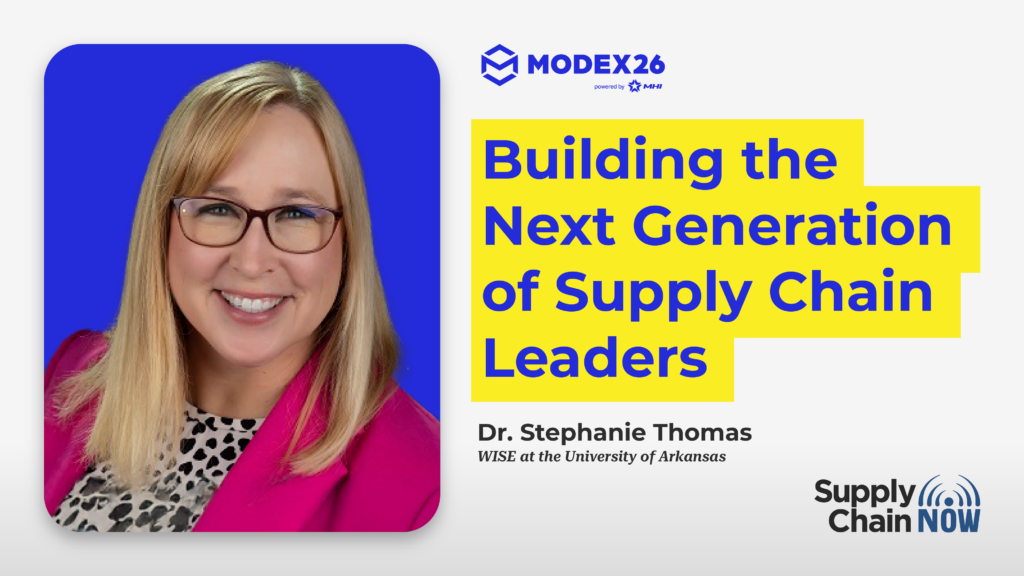
At MODEX 2026 in Atlanta, Scott Luton sat down with Dr. Stephanie Thomas, Associate Professor of Practice at the University of Arkansas and Founder & Executive Director of WISE, for a wide-ranging conversation about supply chain talent, AI, and the future of workforce development. One thing becomes immediately clear from the discussion: while technology may dominate the headlines, the future of supply chain still depends on people. Of course, that makes the ability for organizations to more effectively engage the new generations entering the workforce all that more critical. The Industry’s Biggest Question Mark: AI and Talent When asked about the biggest priorities facing supply chain leaders today, Thomas doesn’t hesitate: AI is at the top of nearly every conversation. “Everybody’s trying to unpack what is it going to do? How is it going to change things?” she explains. Organizations are wrestling not only with how to adopt emerging technologies, but also with how to prepare their workforce for the transformation ahead. From upskilling current employees to redesigning workflows, the talent implications of AI are massive. At the same time, the broader business environment remains highly dynamic. Geopolitical shifts, ongoing disruption, and rapid technological change are forcing organizations to…