

More

AI
September 25, 2025
The 3 Critical Questions Enterprise Shippers Ask Me About AI
Special Guest Blog Post written by Matt McKinney, Co-Founder and CEO of Loop I spend most of my time with supply chain and innovation leaders at major enterprises who are sitting on significant AI budgets but struggling to show measurable business impact in an increasingly complex and volatile supply chain environment. These conversations have evolved dramatically. A year ago, executives were asking basic questions about AI feasibility. Today, the questions have shifted to strategic implementation at enterprise scale. Based on hundreds of these discussions, three questions consistently emerge that separate companies making transformational progress from those stuck in pilot purgatory. How do we move from AI experiments to enterprise-scale impact? Most organizations have yet to see organization-wide, bottom-line impact from AI use. This is the strategic challenge keeping C-suite leaders awake at night. The problem isn’t the technology. It’s the application of the technology. Too many enterprises are trying to treat AI like a magic wand they can bolt onto existing systems. But garbage in, garbage out. If your underlying data is fragmented and inconsistent, AI won’t solve your problems; in fact they’ll get worse. At its core, anything automated is powered by…
reverse logistics
January 28, 2026
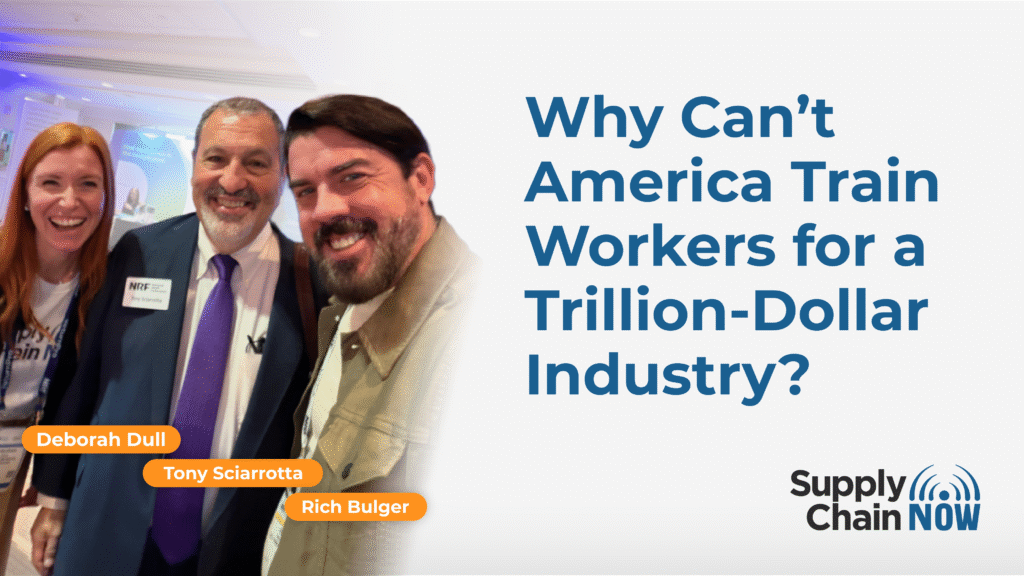
Why Can’t America Train Workers for a Trillion-Dollar Industry?
Inside the reverse logistics education gap and the economic blind spot keeping it invisible Special Guest Blog Post written by Deborah Dull Tony Sciarrotta has been asking the same question at industry conferences for years. As the Senior Director of Circularity and Reverse Logistics at the National Retail Federation, he knows what answer he’s going to get. But he keeps asking anyway. “Anybody in here go to school for returns management, reverse logistics, circularity? Any degrees in those fields the room?” It’s rare that anyone raises their hand. “That’s what’s wrong with our industry,” Sciarrotta told me at NRF Rev this January, the first conference under NRF’s new reverse logistics banner. “We still need to fix it.” The Numbers That Should Make Headlines Here’s what makes reverse logistics so fascinating: the scale is staggering, but the infrastructure to support it needs to be stronger. According to the National Retail Federation, American retailers processed approximately $890 billion in returns in 2024 which is roughly 17% of all retail sales – and it’s higher for ecommerce. But that number almost certainly understates reality. “We have a fragmented industry,” Sciarrotta explained. “Where are all those returns going? It has to be…