

More
National Supply Chain Day
March 9, 2026
National Supply Chain Day® Returns April 29, 2026 | Celebrating the People and Stories Powering the Global Supply Chain
National Supply Chain Day (NSCD)® returns on Wednesday, April 29, 2026 with Supply Chain Now, bringing together professionals across the industry for an annual celebration dedicated to recognizing and elevating the people, processes, and innovations that keep the world moving. Established in 2020, National Supply Chain Day® was created as a way to lift the supply chain industry up and propel it forward by spotlighting the stories, leaders, and breakthroughs that shape global commerce. What began as a single-day celebration has grown into an industry-wide movement that continues to inspire pride, visibility, and momentum across the profession. Supply Chain Now will host its annual National Supply Chain Day Livestream, led by SCN’s own Scott Luton (CEO & Founder) and Mary Kate Love (President & the visionary behind the creation of NSCD) with a keynote from Billy Ray Taylor and the announcement of two new award recipients. And, for the first time ever, organizations can officially register both virtual and in-person National Supply Chain Day events on the Supply Chain Now website. From the logistics behind everyday essentials to the complex global networks delivering critical goods worldwide, National Supply Chain Day® honors the professionals who connect the world. Livestream Registration…
September 17, 2021
This Week In Supply Chain Now: September 13th – September 17th
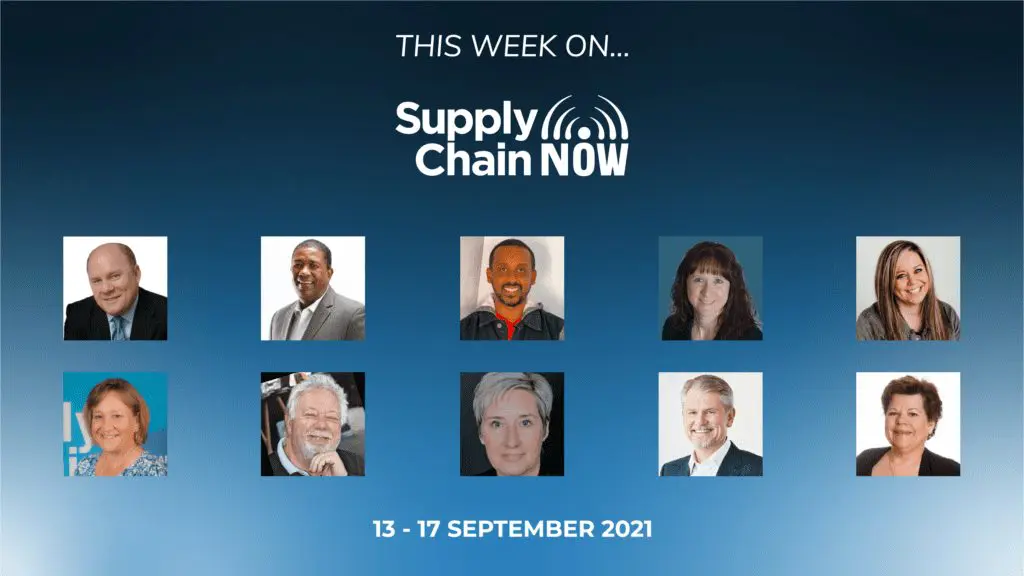
Stay up to date on all the latest conversations, interviews, and episodes we released this week here at Supply Chain Now! On Monday we started the week off with an episode of Supply Chain Now with Scott Luton and TEKTOK host Karin Bursa! The two welcomed COO of SAPICS, Jenny Froome, and the Business Development Executive at SAPICS, Tonya Lamb. On Tuesday, we published a new episode of This Week In Business History with host Kelly Barner. On Tuesday, Scott reflects on the 2021 global summit with Lora Cecere, Kelly Barner, and Kevin L. Jackson. These four talk about some of the most impactful conversations that happened during the event, including effective leadership and how it goes hand in hand with supply chain planning, and more. On Wednesday we released an episode of Logistics With Purpose. This episode features Henok Berhanu, Founder & CEO of Carry 117, and Ashley Bohinc, Executive Director of Carry 117. On Thursday we published a new episode of the Freight Insider with host Page Siplon. Page welcomed Christian Fischer, President and CEO of Georgia Pacific, to the show. On Friday, we published the podcast version of our Monday Supply Chain Buzz livestream, with special guest,…