

More

June 10, 2021
This Week In Supply Chain Now: June 7th – 11th
Keep up with all the latest conversations, interviews, and episodes right here on Supply Chain Now as we look back on everything that’s happened this week! On Monday, we released 3 new episodes! On Digital Transformers on Supply Chain Now, hosts Kevin L. Jackson and Scott Luton welcome Dr. Evaristus Mainsah, with IBM, to the show to discuss IBM think #2021, post-pandemic digital transformation, using AI to make your workforce even more effective, and exactly what drives innovation. On This Week in Business History, guest host Kelly Barner, Owner of Buyers Meeting Point and Host of Dial P for Procurement remembers key innovations, inventions, and firsts that took place between June 7th and 13th, including the questionable career of Samuel Slater, the tricky first passing of the Panama Canal, and how the Post Office stopped the shipment of children through their national parcel service. On Supply Chain Now en Spanish, host Enrique Alvarez interviews Sofia Rivas Herrera learning about her journey from curious child to industrial engineer to supply chain leader and much more. On Tuesday, we released 2 new episodes! On our Logistics with Purpose series, produced in partnership with Vector Global Logistics, as Pat Plonski, Executive Director of…
automation
April 27, 2026
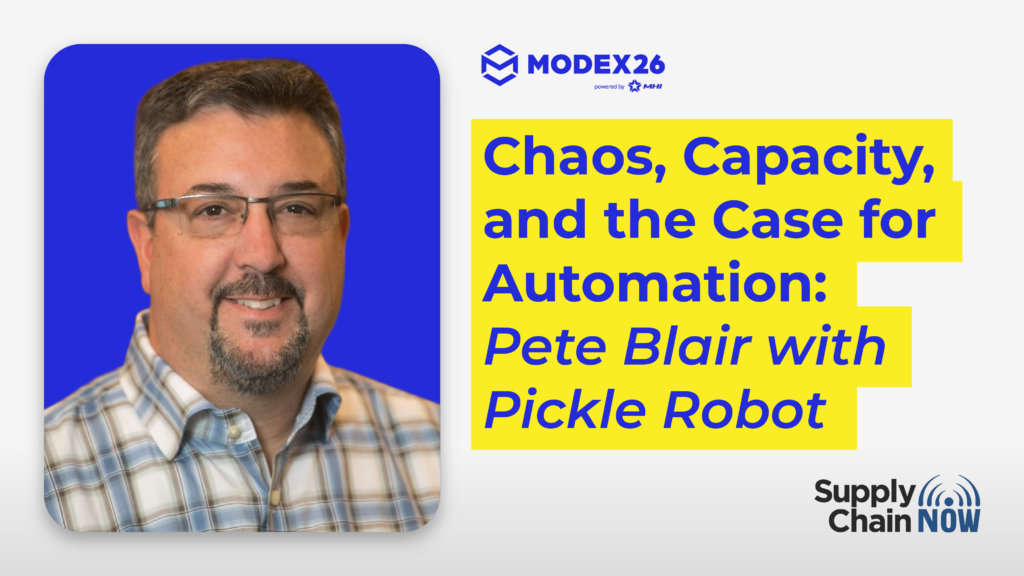
Chaos, Capacity, and the Case for Automation: Pete Blair with Pickle Robot
At MODEX 2026 in Atlanta, the energy was unmistakable. With thousands of supply chain professionals gathered, one theme echoed across conversations: uncertainty is no longer episodic. It’s constant and seemingly endless. In a candid discussion with Scott Luton, Pete Blair, VP of Product & Marketing at Pickle Robot, unpacked how organizations are navigating volatility, workforce challenges, and the growing role of automation in keeping operations moving. Navigating Tariffs and a Moving Target If there’s one word defining today’s global supply chain environment, it’s unpredictability. Blair points to tariffs as a prime example; and not just their presence, but their volatility. “The biggest thing we see… is the chaos of tariffs. It’s not so much that customers have to pay tariffs or not pay tariffs, it’s that they don’t know how to plan,” Blair explains. That lack of predictability is forcing organizations to rethink their networks in real time. Companies are shifting sourcing strategies, standing up temporary distribution centers in new geographies, and even making drastic decisions about whether importing goods makes financial sense at all. What’s particularly challenging isn’t the cost itself. But rather, it’s the inability to forecast. Supply chains, while resilient, aren’t designed for abrupt swings like…