

More

October 29, 2021
This Week In Supply Chain Now: October 25th – 29th
Stay up to date on all the latest conversations, interviews, and episodes we released this week here at Supply Chain Now! We started this week off with an episode of Digital Transformers with host Kevin L. Jackson. During this episode, Kevin sits down with three digital experts to discuss new approaches to establishing trust and provenance within a supply chain that is increasingly both digital and physical. This episode features Dustin McIntire the CTO of COMSovereign Holding Corporation. Eric Adolphe the CEO of Forward Edge-AI and Joshua Pendrick the CEO and Co-founder of Rypplzz. For Monday’s This Week In Business History episode, Kelly Barner talks about the political act that led to an increase in organized crime and the end of the Great Depression. On Tuesday, we released a new episode of Supply Chain Now with host Scott Luton and guest host Allison Giddens. They welcomed the head of Global Supply Chain for Peloton, Jennifer McKeehan, to the show. They discussed how the hybrid work environment is allowing the best leaders to shine by continuing to build strong, meaningful relationships, and much more. This week we released an episode of Logistics With Purpose with hosts Enrique Alvarez and Kristi Porter.…
May 12, 2025
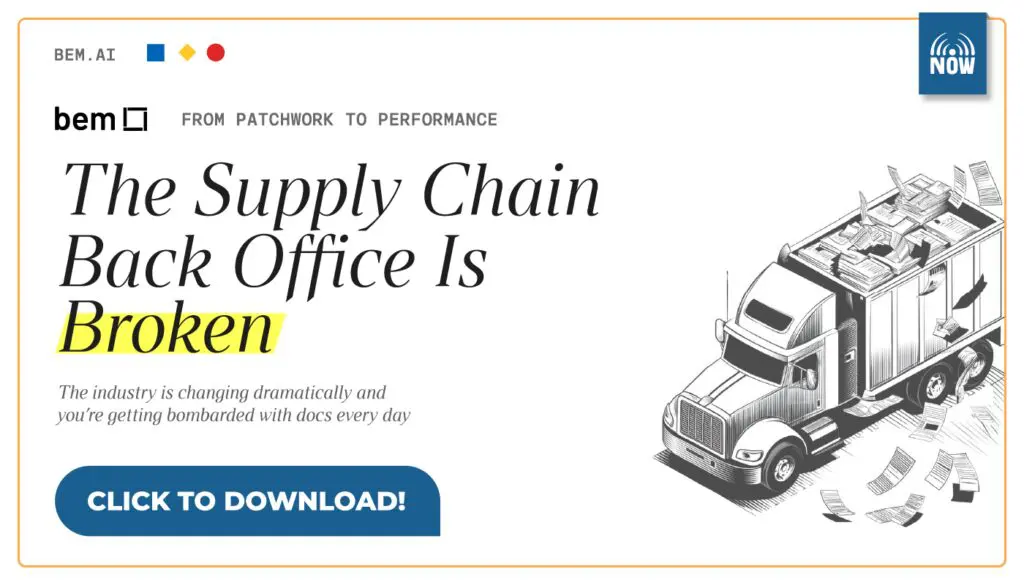
The Supply Chain Back Office Is Broken
Your TMS and ERP aren’t enough. Despite billions spent on supply chain tech, most teams still run on PDFs, spreadsheets, and email threads—creating manual chaos that slows everything down. This eye-opening white paper reveals how top supply chain teams are using an invisible layer of AI to streamline operations—no dashboards, no extra headcount, no noise. Download now to learn how to eliminate manual bottlenecks and give logistics teams their time—and sanity—back. Uncover the hidden gems – Manual workflows waste hours and create delays. Learn how to fix it fast. See real results – Cut shipment intake from 30 minutes to 10 seconds, without new tools or extra headcount. Discover smart automation – Learn how to turn messy emails and PDFs into structured data that flows seamlessly into your systems. Ditch manual chaos and see how an ambient back office that never sleeps can save your team thousands of hours, eliminate costly errors, and unlock the true potential of your supply chain. Download the white paper here to learn more