

More
May 1, 2020
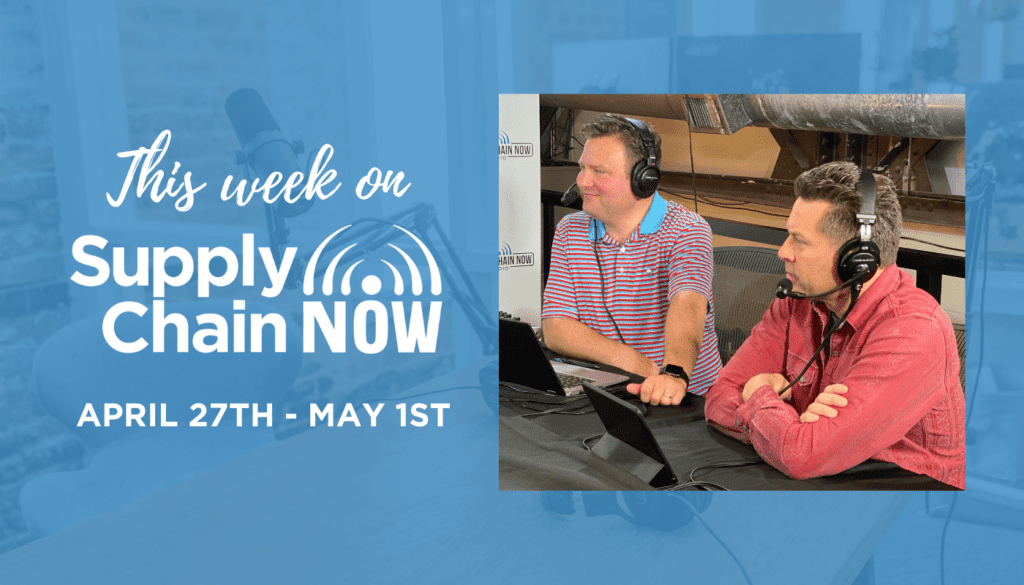
This Week at Supply Chain Now: April 27th – May 1st
BIG THINGS happening here at Supply Chain Now! Have you listened to all the episodes from this week? If not, no worries! Check them all out here: We started out the week wrapping up our last episode from MODEX 2020 with supply chain visionary Diego Pantoja-Navaja with Oracle. Supply Chain Now · “Supply Chain Visionary: Diego Pantoja-Navajas with Oracle” On Tuesday, Scott and Greg were joined by Enrique Alvarez and Adrian Purtill with Vector Global Logistics as they continued the Logistics with Purpose series with special guest Patrick Plonski with Books for Africa. Supply Chain Now · “Logistics with Purpose: Patrick Plonski, PhD with Books for Africa” Then we published the new and improved Supply Chain Buzz, with Scott and Greg sharing and discussing the latest news and events in Supply Chain and beyond. Supply Chain Now · “The Supply Chain Buzz: Week of April 27th” Scott and Greg were joined by Bobby Holland with U.S. Bank and Lee Klaskow with Bloomberg Intelligence on Thursday as they discussed the key takeaways from the Q1 2020 U.S. Bank Freight Payment Index. Supply Chain Now · “Analysis of Q1 2020 U.S. Bank Freight Payment…
technology
October 30, 2025
The Power of Partnership in Supply Chain Automation
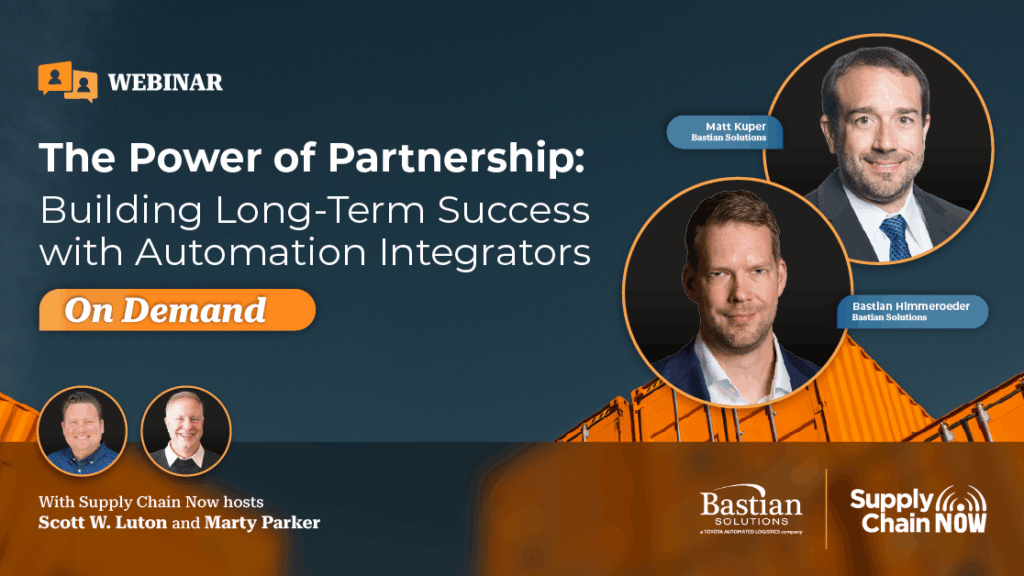
Key Takeaways from the Supply Chain Now Webinar with Bastian Solutions In today’s fast-changing world of logistics and manufacturing, one truth is clear: there’s no hiding from automation. Whether you’re a global enterprise or a growing regional player, success depends on choosing the right technology—and, just as importantly, the right partner. In a recent Supply Chain Now webinar, The Power of Supply Chain Partnerships, hosts Scott Luton and Marty Parker sat down with Matt Kuper and Bastian Himmeroeder from Bastian Solutions, a Toyota Automated Logistics company, for an in-depth conversation about how to unlock the true potential of automation through strong integrator relationships. Here are a few key takeaways that stood out: 1. Strategic Partnerships Trump One-Off Projects According to Bastian, the age of “one-and-done” automation projects is over. Today’s complexity demands long-term, strategic relationships between companies and their integrators—ones built on transparency, shared values, and a deep understanding of each other’s goals. 2. Culture Fit Matters as Much as Technology Matt emphasized that cultural alignment is the first critical element in selecting an integrator. Shared values, open communication, and mutual respect ensure that the partnership thrives well beyond implementation. 3. Experience and Support Drive Success Choosing a partner with…