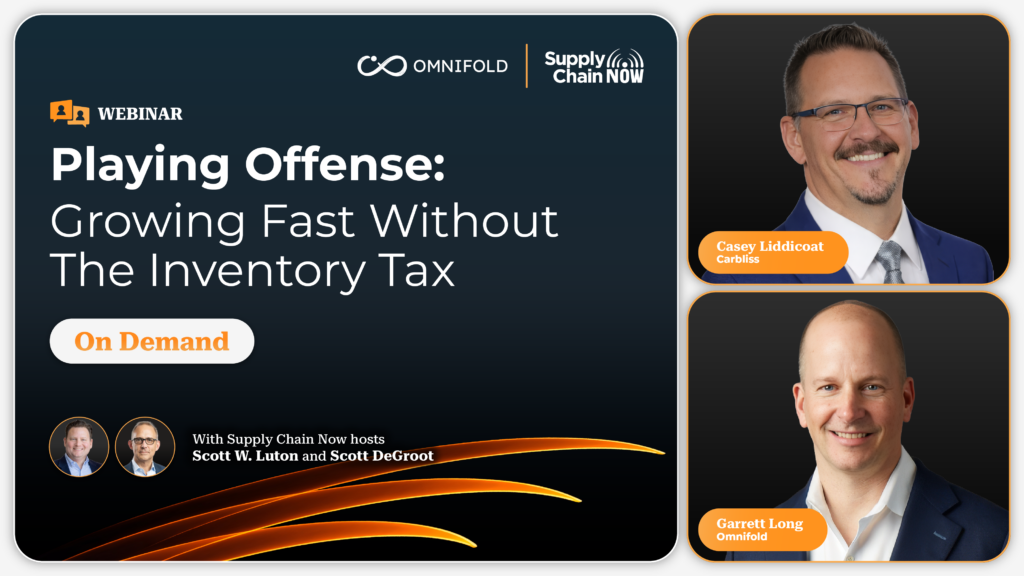

WEBINAR: Playing Offense: Growing Fast Without The Inventory Tax
In a few years, Carbliss went from about 40,000 cases to more than 4 million, from 6 flavors to more than 32, and from 40 distribution centers to more than 150, becoming one of the fastest-growing private companies in the country. Its forecast didn’t keep up. It was last year’s sales plus a percentage, built by the sales team in spreadsheets, and it couldn’t see what mattered most in a business like this. It missed how one flavor pulls volume from another, how a new state will behave, and what a distributor told a rep last week.
Every miss cost money. Running short meant lost shelf space and strained distributors. Overbuilding to be safe tied up cash in product with a shelf life.
That extra stock is the inventory tax. In this candid fireside conversation, Casey Liddicoat, VP of Operations and Quality at Carbliss, joins Scott Luton, Garrett Long, and [executive]. They talk through the forecasts that went wrong, what it took to move to a reasoning AI model built on the full context of the business, and why the team now trusts the number.
Webinar Key Takeaways:
Growth breaks the forecast first. A forecast built on last year’s sales stops working when you’ve grown 100x and are adding flavors, distributors, and states at the same time.
The inventory tax. How to spot it in your own operation: overproduction, emergency purchase orders, warehouse-to-warehouse transfers, and expired ingredients.
Forecasting with no history. How to plan a new flavor or a new state using what you know about the product, the market, and the network.
From defending the number to discussing the business. How the planner’s role and the S&OP meeting change when the forecast carries the context everyone used to argue about.
Where a different forecast shows up. Network expansion decisions, margin, stockouts, and the cash tied up in inventory.
More Webinars

Operational AI in the Supply Chain: How Context Empowers Agents and Humans to Operate Side by Side