
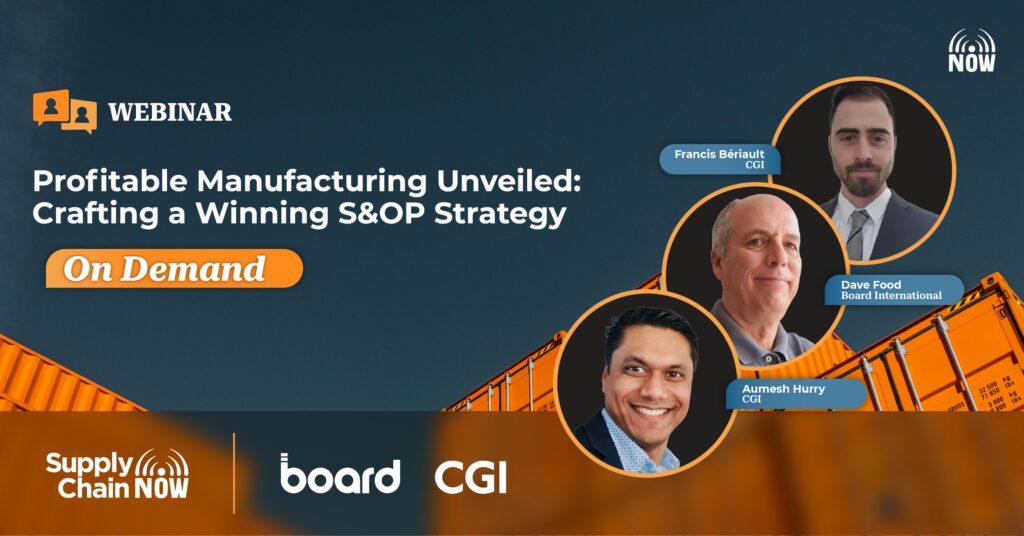

WEBINAR: Profitable Manufacturing Unveiled: Crafting a Winning S&OP Strategy
The manufacturing sector is undergoing a significant transformation, driven by fluctuating market demands, technological advancements, and the need for more resilient supply chains. In this context, traditional demand planning methods are proving to be insufficient for achieving operational efficiency and profitability. A sophisticated collaborative Sales and Operations Planning (S&OP) strategy has emerged as a critical component for manufacturers aiming to synchronize their production processes with market demand, while also ensuring financial sustainability.
This webinar delves into the essential elements of a successful S&OP strategy, focusing on three key areas:
- The Limitations of Traditional Demand Planning: This section addresses the critical shortcomings of conventional demand planning methods in today’s volatile market environment. It highlights the necessity for a more integrated, collaborative and flexible approach to planning that can adapt to rapid changes in demand and supply conditions.
- Innovative S&OP Strategies for Aligning Production with Demand: We explore the latest S&OP strategies that facilitate a seamless match between production capabilities and market demand. This part of the webinar will provide practical insights into how manufacturers can leverage these strategies to minimize waste, optimize resource utilization, and enhance customer satisfaction.
- Elevating Manufacturing Profitability through Financial Insight: The role of finance in manufacturing profitability cannot be overstated. This segment examines how financial insights and analysis play a crucial role in shaping S&OP strategies that drive sustainable growth. Attendees will learn how the integration of financial planning with S&OP processes can uncover opportunities for cost savings, investment, and revenue growth.
More Webinars

Procurement

Webinar
March 9, 2023
Balancing Cost, Risk, and Sustainability in the Midst of Uncertainty
Procurement leaders and category managers are facing a daunting challenge—balancing cost-cutting, risk management, and securing supplies with the tough goal of making progress on sustainability goals. With access to Smart Data strategy combined with powerful collaboration initiatives, procurement is uniquely poised to make an impact – while keeping costs low at the same time. Webinar Discussion Topics: – From Surviving to Thriving: The Importance of Sustainability – Understanding and communicating trade-offs – Accessing and leveraging the right data at the right time
webinar
Webinar
June 14, 2022
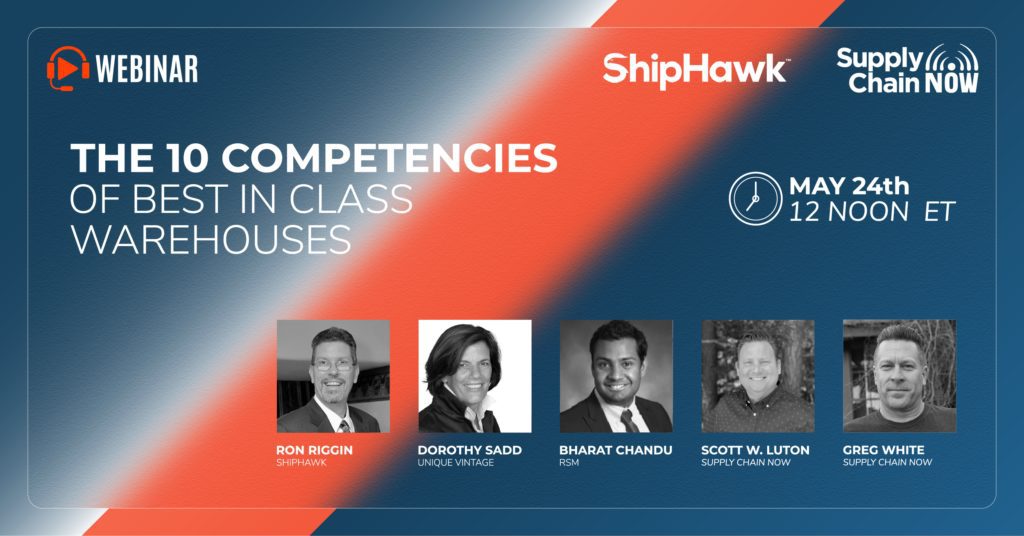
The 10 Competencies of Best in Class Warehouses
Best-in-class warehouses have evolved quickly from mobilization of the operation to automation. Learn the 10 competencies that an advanced warehouse exhibits, and that don’t require massive capital expenditures on robotics or software. Join a brand leader in their niche, a leading global consultant and an industry expert as they sit down with Supply Chain Now. Now to stay competitive, great warehouses have to focus well beyond basic capabilities with themes like visualization of what is happening and will happen in an operation, empowerment of the workforce, automation to improve but not replace workers, and more.