Share:

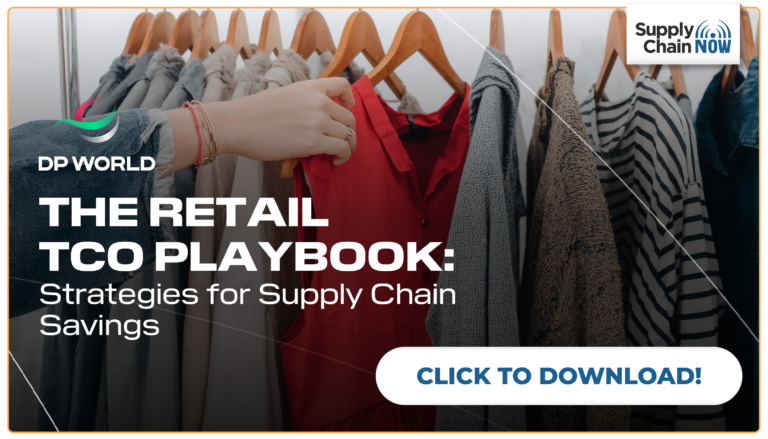
The Retail TCO Playbook: Strategies for Supply Chain Savings

Retail margins rarely disappear all at once, they leak out quietly across transportation, inventory, and returns. As ecommerce grows and return rates rise, retailers are facing higher logistics costs, volatile freight spend, and inventory positioned in the wrong places at the wrong time. Many organizations still operate without true end-to-end visibility, making it difficult to control cost or respond proactively to disruption.

This playbook shows how leading retailers are addressing total cost of ownership (TCO) as a strategic priority, not just an operational metric. Instead of massive transformation programs, it outlines practical actions that can uncover measurable savings in as little as 90 days through better purchase order control, improved visibility, and smarter network design.

Why download this white paper:

  • Identify where margin is leaking across transportation, inventory, and returns
  • Understand the three most effective levers for reducing supply chain cost
  • Learn how to reduce premium freight, improve utilization, and avoid markdowns
  • See how real-time visibility improves planning and service levels
  • Get a step-by-step 90-day pilot roadmap to validate savings
  • Build a finance-ready business case for scalable TCO improvement

By the end, you’ll have a clear framework to evaluate your current operations, prioritize improvements, and turn hidden supply chain inefficiencies into recurring savings.

Click here to download 

More

demand sensing
March 3, 2026

Key Demand Sensing and Forecasting Use Cases Across Industries

Special Guest Blog Post written by Chris Cunnane with InterSystems   In a world defined by rapid market shifts, volatile supply chains, and unpredictable customer behavior, traditional forecasting methods often fall short. Relying primarily on historical data is no longer enough. To stay competitive, organizations are increasingly turning to demand sensing and forecasting, an approach that blends real-time data, advanced analytics, and AI to anticipate demand more accurately and respond faster to change. This shift is not limited to retail or manufacturing. Demand sensing is transforming how organizations across industries plan operations, allocate resources, and improve service levels. Below, we explore key industry use cases where demand sensing is delivering measurable value, and why businesses should care.   Why Demand Sensing Matters Demand sensing moves beyond static historical trends. It incorporates current, high-velocity data signals such as sales transactions, weather patterns, logistics feeds, economic indicators, and even social sentiment to generate short-term demand forecasts that reflect real-world conditions. The benefit is clear. Organizations gain better visibility and responsiveness across procurement, production, inventory, and distribution. Instead of reacting to outdated forecasts, they can make timely decisions that reduce costs, prevent stockouts, and improve customer satisfaction. FMCG, CPG, Retail, & E-Commerce Fast-moving…
3PL
January 6, 2026

How a Supply Chain Management Data Gateway Benefits Almost Every Industry

Special Guest Blog Post written by Mark Holmes with InterSystems   A data gateway provides unified access to supply chain data from various sources, including enterprise systems, supply chain applications, data feeds, data warehouses, data lakes, data marts, and business entities. It helps companies meet their supply chain challenges head on and be ready for supply chain disruptions. Quick and easy access to live and historical data is critical for supply chain managers and practitioners, data analysts, stewards, engineers, and supply chain professionals in any industry. Here are just a few examples of industries that can benefit from a supply chain data gateway:   Fast Moving Consumer Goods and Consumer Packaged Goods In FMCG and CPG, the ability to make rapid, data-driven decisions is crucial for staying competitive in a fast-paced market. Companies can optimize their supply chain operations by using a data gateway that provides a unified and harmonized view of data. For instance, a logistics manager can monitor real-time data on inventory levels, customer orders, and transportation schedules to make better informed decisions and reduce lead times and costs while improving customer satisfaction. Healthcare In healthcare, a data gateway can improve visibility and inventory optimization by providing a…