Risk, Reinvention & Readiness: Between the Lines for February 2026
Last month, we launched Between the Lines, our Supply Chain Now book club, with a simple idea: the best leaders don’t just consume headlines, they read deeply, think critically, and stay curious. The response to our first edition reminded us how powerful shared learning can be!
This month, we’re building on that momentum with fresh selections designed to challenge perspectives, spark new ideas, and strengthen the way we think, innovate, and navigate an ever-evolving global landscape.
Check out a few of the selections the Supply Chain Now team recommends from February 2026:
Scott Luton: The 2028 Global Intelligence Crisis from Citrini Research
Imagine a short-term future where the very technology we hail as humanity’s next great productivity engine becomes essentially the source of a global economic crisis. “The 2028 Global Intelligence Crisis” from Citrini Research is a thought experiment that projects just such a scenario: by 2028, rapid and widespread AI adoption has supercharged productivity yet hollowed out the consumer economy, driving unemployment above 10% and triggering a deep market downturn as traditional spending collapses despite booming output. In this speculative, but unsettling, framework, AI doesn’t fail, it succeeds so overwhelmingly that the economy it was meant to power stops functioning the way we expect, exposing new structural mismatches between machine-led production and human-led consumption, amongst other things. Whether you view it as cautionary storytelling or a real risk worth preparing for, this narrative forces leaders to ask: What if the biggest danger isn’t AI falling short, but AI exceeding expectations without new economic and societal frameworks in place to support it?
Joshua Miranda: Liliana’s Invincible Summer: A Sister’s Murder by Cristina Rivera Garza
In 1990, Liliana Rivera Garza was killed by an ex-boyfriend at twenty years old. For over three decades, her murder went largely unresolved. Her sister, author Cristina Rivera Garza, refused to let that be the end.
Drawing on Liliana’s own diaries and letters, this Pulitzer Prize-winning memoir reconstructs her sister’s life with tenderness and fury — letting her speak in her own voice rather than be defined by her death. Beautiful, heartbreaking, and urgently relevant, it’s a book that will stay with you long after the final page.
Amanda Luton: Be Ready When the Luck Happens: A Memoir by Ina Garten
I’ve been a devoted Ina Garten fan since her Barefoot Contessa days on my beloved Food Network — back when I was in college and completely captivated by her simple-but-elevated approach to cooking and entertaining. I loved her effortless elegance, her New England sensibility, and the way she stayed so unapologetically true to her own style. Over the years, I’ve collected her cookbooks, made countless recipes (her chocolate cake truly is to die for), and even recently listened to her on Amy Poehler’s Good Hang podcast. So when her memoir, Be Ready When the Luck Happens, was released, I knew it was going straight to the top of my list.
What surprised me most is how much more there is to Ina’s story than most of us realize. Before she ever owned the Barefoot Contessa shop in the Hamptons, she survived a difficult childhood, married her husband Jeffrey while still in college, made audacious choices, and paved her own way through relentless hard work and an exquisite attention to detail. Her success was never accidental — it was built, step by step.
Throughout the book, Ina shares the twists, risks, and misadventures that shaped her journey from shop owner to bestselling author and beloved television host. It’s a quick, engaging read, but it’s also deeply inspiring. The life lessons are simple and powerful, especially my favorite- do what you love because if you love it, you’ll be really good at it.
For anyone building something, a career, a business, or a creative pursuit, this memoir is a reminder that success isn’t magic. It’s courage meeting preparation. And Ina’s story makes that truth both comforting and motivating.
And this month we’re proud to feature a special book from one of our very own Supply Chain Now co-hosts, Deborah Dull!
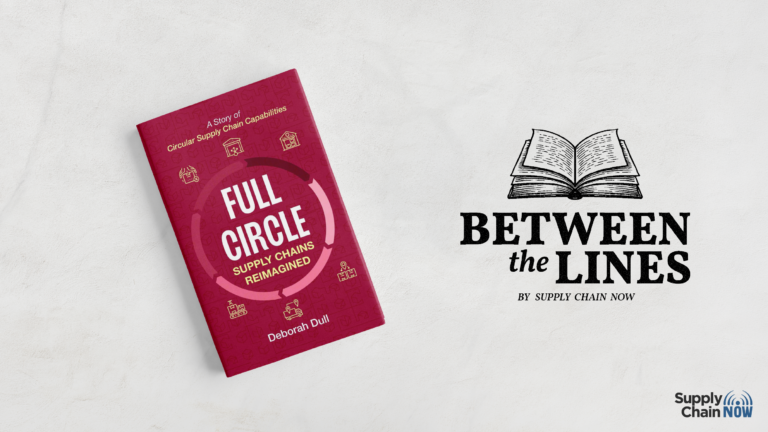
February Book of the Month: Full Circle: Supply Chains Reimagined: A Story of Circular Supply Chain Capabilities by Deborah Dull
When a global supply chain crisis paralyzes Maya Patel’s manufacturing company, she proposes a radical solution: what if they could repair and manufacture critical components locally, rather than depending on distant suppliers?
What begins as an emergency response quickly evolves into something more profound. Maya builds a network of repair hubs across London, connecting community repair with industrial resilience. As her team develops the technology to recover and recirculate materials locally, they create something revolutionary: a new model of circular supply chains that challenges the linear, extractive economy.
But powerful interests are threatened by this vision of local repair sovereignty. When manufacturers begin to push back against a model that extends product lifecycles instead of promoting replacement, Maya must navigate complex alliances to protect what they’ve built.
Full Circle: Supply Chains Reimagined is a story of transformation – personal and systemic – that reimagines our relationship with the products we use and the resources that make them. It explores how crisis can spark innovation, how repair wisdom can combine with cutting-edge technology, and how sovereignty over our supply chains might be the key to a more resilient future.
SO- Between the Lines wants to know… what are you reading?? Any great books that have gripped you or made you think lately? Books that you pick up over and over that you think everyone needs to read? Or have you published a book you’d like to share? Reach out to us at BTL@supplychainnow.com for a chance to be featured in next month’s edition of Between the Lines!
More Blogs

Five Key Supply Chain Trends for 2026: Navigating the Road to Transformation