What a Buyer Wants, What a Buyer Needs
Special Guest Blog Post written by Bernadine Henderson
Ms. Henderson, senior director of procurement at Protolabs, lifts the lid on buying in manufacturing and why relationships are central to it.
Simply put, the job of a buyer is really about buying the right thing at the right time for the right price. It sounds simple, but it really is very complicated because everything that’s going on in the world impacts the timing, the availability, and the price of the product.
This means that buying has recently got a lot more complicated. World events have very real consequences on global supply chains. Just one example is the way in which buyers have responded to tariffs in the U.S. by re-routing sourcing locations. It takes a certain amount of agility to be a buyer in 2025, and this quick responsiveness is helped along by one key ingredient, and that is strong relationships with suppliers.
Relationships Built on Trust
A widely held misconception is that buyers are only interested in getting to the lowest price possible. In fact, the most important thing to a buyer is for suppliers to bring solutions that deliver overall value. In my experience, a really strong supplier goes to the effort of understanding the bigger picture behind each manufacturing project.
The key is to get inside the head of a buyer by asking a lot of questions. It pays to get an in-depth understanding of what they’re looking to do with what they’re buying when it arrives in their factory. This is an opportunity to save they buyer a step along the way, add value, and ultimately help them streamline their supply chain.
Custom Solutions for Mutual Benefit
As an example, if we are buying a material that is only available from Europe and there are reciprocal tariffs on it, the value-add might be selling it at a landed cost, without the need for import compliance specialists. So, we might want to have a total landed cost price with the supplier taking ownership of the material all the way through. That is a solution that is beyond just the material price. It’s the total price and then the service that they’re providing as well.
Another example is the possibility of the distributor holding inventory for us, so there is a safety stock that we can draw upon if the need arises. Alternatively, they could cut the material and send it to us in specific sizes before we order it. These are all examples of adding value that may only arise if the buyer and supplier trust each other and communicate well.
Production Partnerships
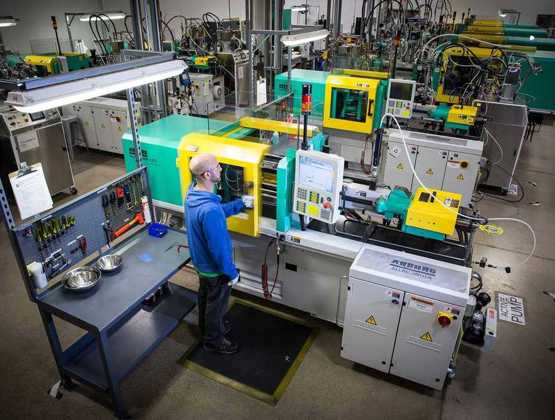
At Protolabs, we have the ability to be flexible with the solutions we offer. We partner with companies across some of the most innovative industries: aerospace, medical, consumer electronics, and more. Our comprehensive manufacturing model encompasses a high mix of capabilities, including those of our in-house factories as well as a global network of manufacturing partners. This gives customers the benefit of multiple locations and global scale with the ease of working with a single manufacturing resource.
As a digital manufacturer, our customers can order parts as they need them, and request batches or re-orders at any time, allowing them to save on inventory costs. As the companies we partner with scale from prototyping to production, we can tap into benefits such as quality at speed, helping them to bring industry-approved products to market quickly, cost-reduction advice from in-house production specialists, and the potential for volume discounts as part quantities increase. It all depends on what is most important to the project at hand. This flexibility aligns expenses more closely with actual production needs instead of incurring large, upfront costs.
Reliable, Every Time
The nature of the job means that buyers also place great importance avoiding risk. Our quality procedures are designed to help buyers to assess and reduce risk at every stage of the manufacturing process. Whether that involves quality control procedures, industry-specific regulatory compliance, specific inspection reports or material certificates, we add extra value by assisting with custom certifications on request.
Overall, it’s the sharing of information, the two-way communication and the longevity of the buyer-supplier relationship that opens up the possibility to be flexible with our offer. We know that no two buyers are alike; neither are two companies, and that there are individual needs related to every market, every industry and every production project.
Learn more about Protolabs and explore customized production solutions for buyers.
More Blogs

Freight Audit & Payment: The Anchor for Supply Chains in Turbulent Times