Why Data Sharing Is the Missing Link in AI-Powered Supply Chains
Artificial intelligence (AI) is rapidly reshaping supply chain operations. From improving demand forecasting and inventory management to increasing operational efficiency, organizations across industries are investing heavily in AI to gain a competitive edge. Yet many companies overlook a critical requirement for AI success: access to trusted, high-quality data shared across the supply chain ecosystem.
Supply chains have always relied on collaboration among suppliers, manufacturers, distributors, and retailers. In the AI era, that collaboration must become more intelligent. Organizations need timely, secure data exchange, both upstream and downstream, to provide AI systems with the information required to generate accurate insights and recommendations.
When suppliers share real-time information about inventory levels, delivery schedules, and raw material quality, manufacturers can improve planning, reduce risk, and respond more quickly to disruptions. Likewise, when retailers share data about customer demand, inventory positions, and satisfaction levels, manufacturers can better align production and distribution with actual market needs. The result is a leaner, more agile, and more profitable supply chain.
Despite these benefits, many organizations are still hesitant to share data. Concerns about security, intellectual property protection, competitive exposure, and integration complexity continue to create barriers. However, these challenges can be addressed through strong data governance, clear ownership policies, effective security controls, and trusted technology platforms that simplify data integration across diverse environments.
Technology is only part of the equation. Building trust requires a culture of transparency and collaboration, supported by clear agreements, defined responsibilities, and ethical standards for data use. Organizations that successfully establish this foundation can unlock new levels of visibility, responsiveness, and innovation across their supply chain networks.
The future of supply chain management lies in intelligent, connected ecosystems powered by AI and trusted data sharing. AI provides the analytical capabilities, but data sharing creates the connections that make those capabilities valuable. Trust is what enables the entire system to work.
Read the full article to explore how organizations can overcome trust barriers, establish effective data governance, and use secure data-sharing strategies to maximize the value of AI across the supply chain.
InterSystems Can Help
For over 45 years, InterSystems has helped businesses unlock value from data – quickly, safely, and at scale. Our AI-enabled supply chain decision intelligence platform predicts disruptions before they occur, and optimally handles them when they do, so you will be ready to manage the unexpected with confidence. It includes a real-time data gateway that unifies disparate data sources, and a set of next-generation supply chain solutions that complement your existing technology infrastructure to accelerate decision-making and time to value, driving efficiencies throughout your entire supply chain. Learn more at InterSystems.com/SupplyChain.
More Blogs
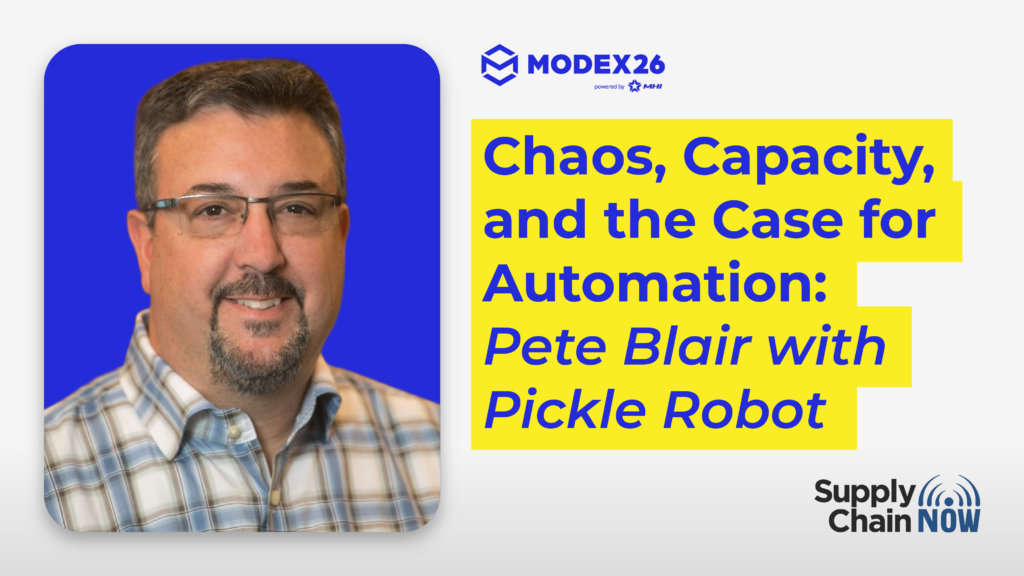
Chaos, Capacity, and the Case for Automation: Pete Blair with Pickle Robot