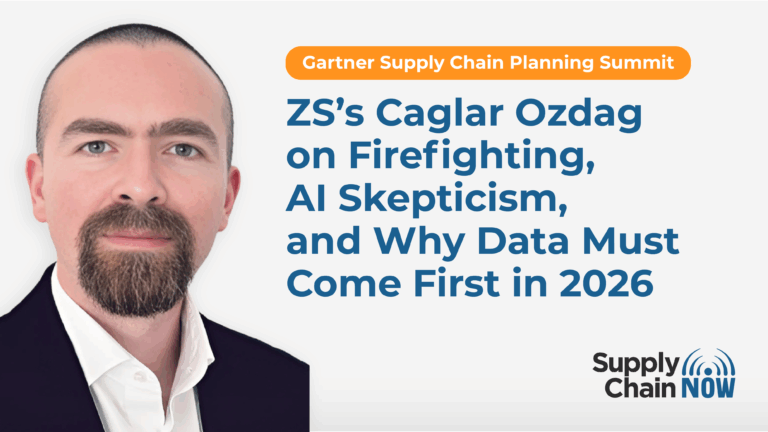

ZS’s Caglar Ozdag on Firefighting, AI Skepticism, and Why Data Must Come First in 2026
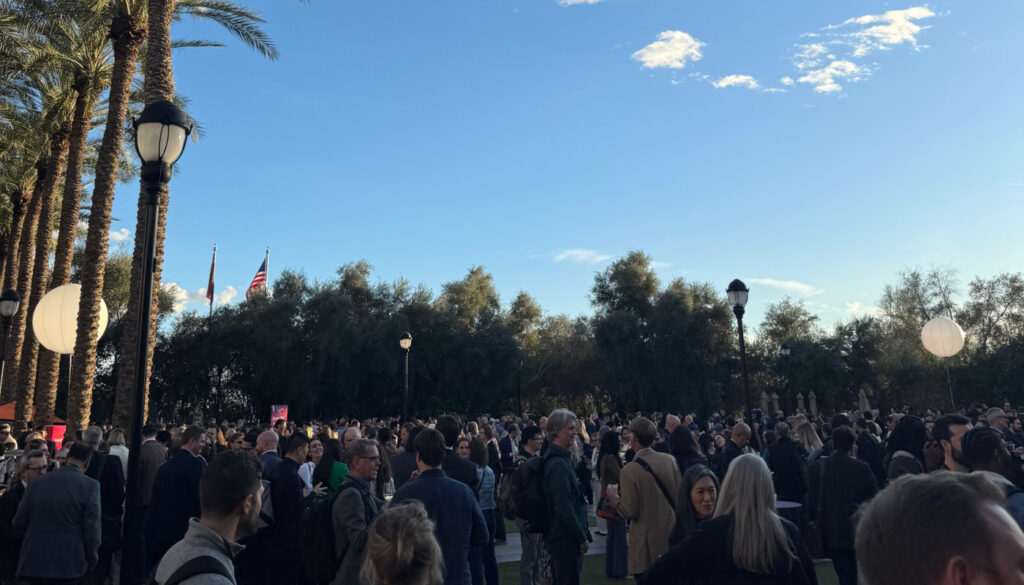
At the Gartner Supply Chain Planning Summit in Denver, Scott Luton sat down with Caglar Ozdag, a supply chain leader at ZS. Known for its deep analytics and technology expertise across industries such as life sciences, airlines, consumer goods, and agriculture, ZS has become a trusted partner for organizations looking to elevate their planning and manufacturing performance.
Ozdag leads the firm’s supply chain practice with a focus on planning from detailed forecasting through detailed scheduling. As a former practitioner himself—having led planning operations at large global enterprises—he brings a grounded, real-world perspective to the challenges facing today’s supply chain leaders.
Old Problems Persist—and New Ones Are Emerging
When asked about classic and emerging challenges in planning, Ozdag didn’t hesitate: firefighting isn’t going away.
From supply planning disruptions to last-minute schedule changes, firefighting remains a daily reality. “Life happens,” Ozdag noted. Plans rarely match reality, and organizations must constantly adjust. But today, a new layer has been added: AI uncertainty.
Everywhere he goes, leaders are asking the same questions:
- “Is AI the right investment?”
- “Will the ROI materialize?”
- “Are we adopting the right tools, or just chasing hype?”
This blend of enduring complexity and emerging skepticism has become a defining theme of the 2025 planning landscape.
How ZS Is Helping Companies Break Through
Despite the challenges, Ozdag is energized by the work ZS is doing—especially in prediction and advanced analytics. If firefighting is inevitable, he emphasized, the goal should be to minimize it.
ZS applies advanced machine learning to supply planning, inventory modeling, cashflow forecasting, and scenario analysis. This offers leaders clear visibility into operations over the next three, six, or twelve months. For Ozdag, these predictive insights are transformational.
“If I had this capability a decade ago when I was at 3M,” he said, “I would have used every single aspect of it.” Visibility, he argued, is the strongest antidote to firefighting.
The One Thing Organizations Must Do in 2026
Reflecting on the recent webinar with ZS and Supply Chain Now, Ozdag shared one core takeaway he wishes more organizations would prioritize: invest in the data layer.
He described it as a “cake and candle” situation—without the foundational layers, the top enhancements don’t matter. For supply chains, that foundation is a semantic data layer.
With clean, connected, properly structured data, organizations can unlock:
- Machine learning
- GenAI applications
- Predictive and prescriptive insights
- Faster, more confident decision-making
“Data drives everything,” Ozdag emphasized. “Get the ontology right, and everything else—AI included—will come.”
Where to Learn More
Ozdag encourages leaders to visit ZS.com, where the firm’s supply chain and manufacturing page offers insights, thought leadership, and contact information for the team, including Ozdag and his colleagues. We also invite you to check out a recent Supply Chain Now webinar, featuring Caglar Ozdag and Jim Lee with ZS, hosted by Scott W. Luton and Karin Bursa, entitled: “Reengineering Supply Chain Planning: How to Get More Bang for Your Buck in 2026”: click here.
We also invite you to listen to the audio version of this interview with Scott W. Luton and Caglar Ozdag: click here.
More Blogs
Why Track and Trace Is Essential for Modern Supply Chains