October 17, 2023
retail

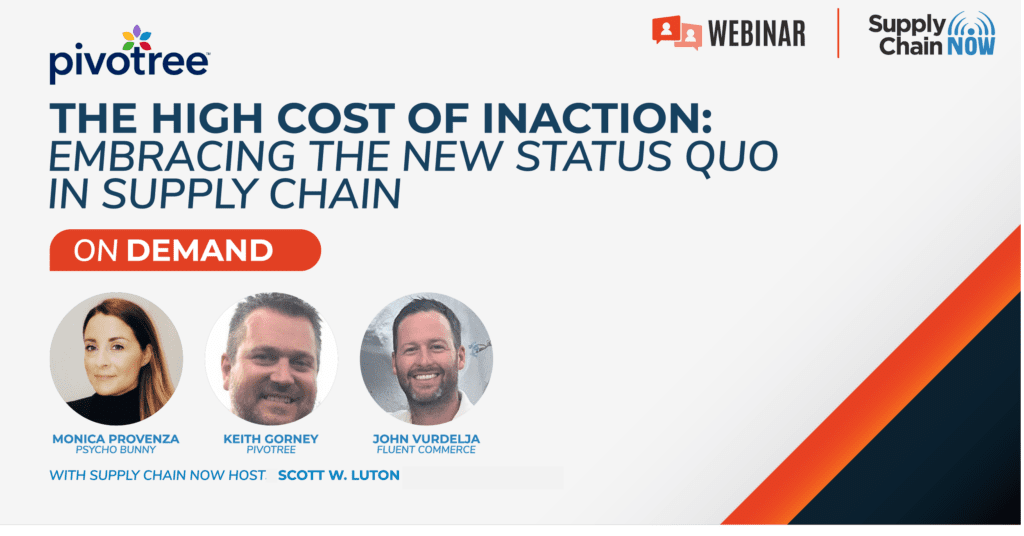
WEBINAR: The High Cost of Inaction: Embracing the New Status Quo in Supply Chain

Share:

WEBINAR: The High Cost of Inaction: Embracing the New Status Quo in Supply Chain

In today’s ever-evolving retail supply chain landscape, businesses face relentless challenges that demand swift adaptation and evolution. Failing to proactively embrace new paradigms and cutting-edge technologies can result in substantial costs due to inefficiencies, missed opportunities, and a loss of competitive edge. This issue is particularly pronounced in the retail sector, where failing to meet customer expectations carries the risk of customer dissatisfaction, eroded trust, potential business loss, and long-term damage to your brand’s reputation.

In this webinar, we introduce you to the ‘New Status Quo’ in retail supply chain management. We’ll emphasize the critical importance of establishing an integrated ecosystem of solutions, leveraging microservices, and forging strategic partnerships to drive operational excellence and unlock transformative outcomes.


Key Takeaways:

  1. Gain insights into the steep costs associated with inaction in the retail business landscape and understand its impact on your operations.
  2. Discover how Pivotree and Fluent are joining forces to address the pressing issue of declining customer experience caused by fulfillment-related challenges.
  3. Explore the Fast Start Retail Solution and learn about the tangible benefits and value it can bring to your business.


Join us for this informative webinar to stay ahead of the curve and ensure your retail business thrives in the dynamic world of supply chain management.


More Webinars
resiliency
play-button-webinar
webinar-person
Webinar
February 26, 2024

Achieving the Next-Gen Control Tower in 2024: Lessons Learned from the High-Tech Industry

In today’s world, many industries are recognizing that effective operations are not solely the responsibility of a single organization. Instead, the best outcomes tend to come from effective collaboration with all supply chain partners—including internal operations, channel partners, suppliers, logistics, and global trade providers. The high-tech industry is at the forefront of this trend leveraging control towers to transform its supply chain networks to foster collaboration and decision-making, and better respond to potential disruptions such as delivery delays, supply shortages, and demand signal shifts. In this webinar, we will explore how the high-tech industry is paving the way for future supply chain success and how you can apply this model to your organization. Join our panel of experts to hear about real-world use cases from various industries and discover best practices to achieve true end-to-end visibility and collaboration, enabling you to predict and respond to disruptions and align with strategic objectives.  
Digital Transformation
play-button-webinar
webinar-person
Webinar
September 19, 2025

Real stories: Fast-tracking value, a pioneering digital transformation with impactful results.

Discover how Arxada, a specialty chemicals company, accelerated its planning transformation using OMP’s advanced platform and EY’s turnkey implementation approach. This session, hosted by Supply Chain Now’s Scott Luton and Jake Barr, highlights how focused execution, anchored in a strong business case, enabled rapid value realization across inventory, service levels, and planner efficiency. Learn what made the solution compelling to leadership and how collaborative delivery drove measurable impact. Join us and learn how to: Unlock Rapid Value – How a phased planning approach can deliver quick wins without the long timelines or high costs of traditional transformations. Build Planning Maturity – How to structure your transformation roadmap from foundational to advanced initiatives for step-by-step growth. Boost Performance with Integration – How unified, AI-driven planning tools improve service levels, optimize inventory, reduce costs, and enhance forecast accuracy. Simplify & Accelerate – How automation, scenario modeling, and industry-proven templates reduce complexity, lighten workloads, and speed deployment.