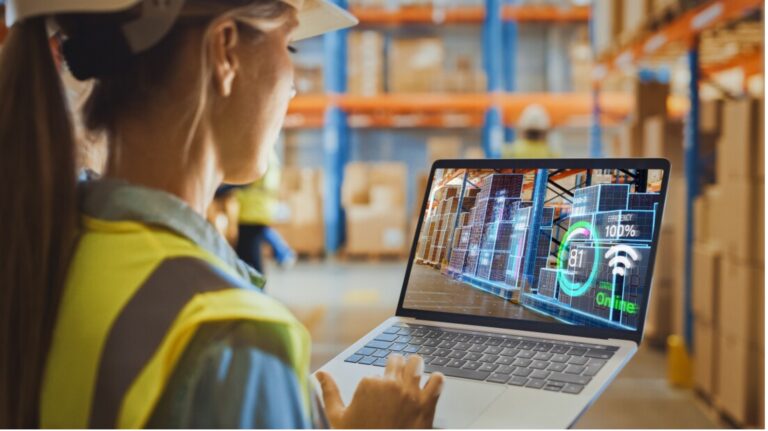
How a Supply Chain Management Data Gateway Benefits Almost Every Industry
Special Guest Blog Post written by Mark Holmes with InterSystems
A data gateway provides unified access to supply chain data from various sources, including enterprise systems, supply chain applications, data feeds, data warehouses, data lakes, data marts, and business entities. It helps companies meet their supply chain challenges head on and be ready for supply chain disruptions.
Quick and easy access to live and historical data is critical for supply chain managers and practitioners, data analysts, stewards, engineers, and supply chain professionals in any industry. Here are just a few examples of industries that can benefit from a supply chain data gateway:
Fast Moving Consumer Goods and Consumer Packaged Goods
In FMCG and CPG, the ability to make rapid, data-driven decisions is crucial for staying competitive in a fast-paced market. Companies can optimize their supply chain operations by using a data gateway that provides a unified and harmonized view of data. For instance, a logistics manager can monitor real-time data on inventory levels, customer orders, and transportation schedules to make better informed decisions and reduce lead times and costs while improving customer satisfaction.
Healthcare
In healthcare, a data gateway can improve visibility and inventory optimization by providing a connective tissue between your data sources. This provides a foundation with unified and harmonized data, along with real-time advanced analytics, to optimize medical and supply fulfillment and limit procedure cancellations.
Third-Party Logistics
In the 3PL sector, a data gateway can significantly enhance decision-making by providing a unified and harmonized view of data. By integrating data from different sources, logistics managers can make more informed decisions about when and how to fulfill orders. Additionally, the real-time data access and analytics capabilities of a data gateway can help in identifying and addressing issues as they arise, such as delays in transportation or shortages in inventory.
Application and Solution Providers
For application and solution providers, a data gateway can reduce customer implementation times and lower operational costs. By providing a low-code, self-service data gateway front-end, software providers accelerate time to revenue and improve customer satisfaction.
Wholesale Distribution
In wholesale distribution, a data gateway can help optimize inventory levels and improve supply chain visibility. By providing a unified and harmonized view of data, distributors can gain a comprehensive understanding of their operations, from supplier relationships to customer demand. This can help in identifying inefficiencies and implementing changes to improve operations and customer satisfaction.
Automotive
Automotive manufacturers face a myriad of challenges, but having access to anticipated supplier disruptions to ensure parts availability is one of the most notable challenges. With a data gateway, you gain visibility across your suppliers, enabling you to provide accurate data for actionable insights through a prescriptive control tower to drive a resilient, agile, and intelligent supply chain.
Manufacturing
A smart factory relies on IT-OT integration. With a data gateway, you can easily combine data from OT systems and real-time signals from the shop floor with enterprise IT and analytics systems to enable manufacturers to improve quality and efficiency, respond faster to events, and predict and avoid problems before they occur.
Public Sector
Government agencies are engaged with supply chains from multiple perspectives. They monitor food, drug, and public safety, transportation, materials and other sectors for real-time visibility and decision support. They provide supply chain logistics for agencies as they deal with thousands of suppliers and need real-time insights to drive efficiency. And they support maintenance, repair, and operations (MRO) for agencies that need to track and maintain assets and infrastructure across multiple sectors of the economy. Access to real-time, unified data makes all of these processes more efficient and compliant.
Final Thought
A data gateway makes it faster and simpler to integrate, harmonize, and normalize disparate data and deliver it to the right consuming users and applications at the right time and in the proper format to accelerate time to value. Read the full blog about the value of a data gateway here.
InterSystems Can Help
For over 45 years, InterSystems has helped businesses unlock value from data – quickly, safely, and at scale. Our AI-enabled supply chain decision intelligence platform predicts disruptions before they occur, and optimally handles them when they do, so you will be ready to manage the unexpected with confidence. It includes a real-time data gateway that unifies disparate data sources, and a set of next-generation supply chain solutions that complement your existing technology infrastructure to accelerate decision-making and time to value, driving efficiencies throughout your entire supply chain. Learn more at InterSystems.com/SupplyChain.
More Blogs
The Sustainability Voice Missing From Most Boardrooms