
More Blogs
reverse logistics
Blogs
January 28, 2026
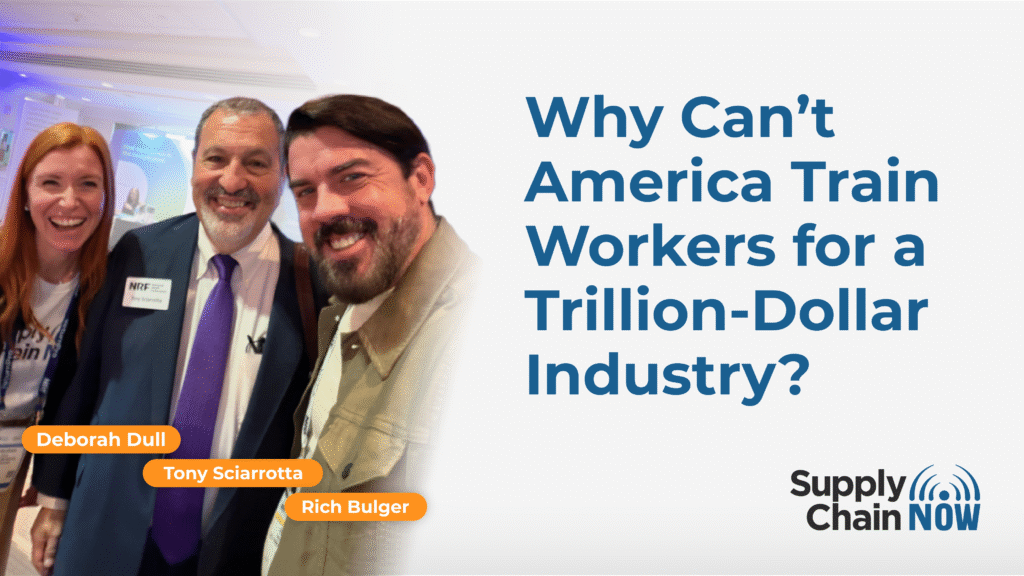
Why Can’t America Train Workers for a Trillion-Dollar Industry?
Inside the reverse logistics education gap and the economic blind spot keeping it invisible Special Guest Blog Post written by Deborah Dull Tony Sciarrotta has been asking the same question at industry conferences for years. As the Senior Director of Circularity and Reverse Logistics at the National Retail Federation, he knows what answer he’s going to get. But he keeps asking anyway. “Anybody in here go to school for returns management, reverse logistics, circularity? Any degrees in those fields the room?” It’s rare that anyone raises their hand. “That’s what’s wrong with our industry,” Sciarrotta told me at NRF Rev this January, the first conference under NRF’s new reverse logistics banner. “We still need to fix it.” The Numbers That Should Make Headlines Here’s what makes reverse logistics so fascinating: the scale is staggering, but the infrastructure to support it needs to be stronger. According to the National Retail Federation, American retailers processed approximately $890 billion in returns in 2024 which is roughly 17% of all retail sales – and it’s higher for ecommerce. But that number almost certainly understates reality. “We have a fragmented industry,” Sciarrotta explained. “Where are all those returns going? It has to be…

MODEX 2026
Blogs
May 11, 2026
Beyond the Robot: Why Software Is Driving the Next Wave of Warehouse Automation
At MODEX 2026 in Atlanta, Scott Luton caught up with Mike Harris, VP of OMRS at Ocado Intelligent Automation, to explore how robotics, software, and evolving customer expectations are reshaping modern warehouse operations. While robots may grab the spotlight, Harris makes it clear: the real value lies beneath the surface, as in the intelligence that powers them. Rising Expectations and the Cost-to-Serve Challenge Warehouse operators are under increasing pressure from both ends of the supply chain. Costs continue to climb, while customer expectations are rising just as quickly. “Cost to serve is continuing to increase and customers expect things faster and completely accurate” Harris explains. This dynamic creates a constant balancing act. Organizations must improve speed and accuracy while controlling costs, a challenge that requires more than incremental improvements. It demands smarter, more adaptive systems. Flexibility and Long-Term Thinking Take Center Stage In today’s volatile environment, Harris sees a clear shift in how companies approach automation investments. “We’re finding that customers are looking to invest in technologies and partners that they want to stay with for a while,” he notes. Rather than chasing one-off solutions, organizations are prioritizing long-term partnerships and scalable platforms that can evolve with their…