Intro/Outro (00:02):
Join the Supply Chain Now community for more supply chain perspectives, news, and innovation. Check out supplychainnow.com, subscribe to Supply Chain Now on YouTube, and follow and listen to Supply Chain Now wherever you get your podcasts.
Scott Luton (00:18):
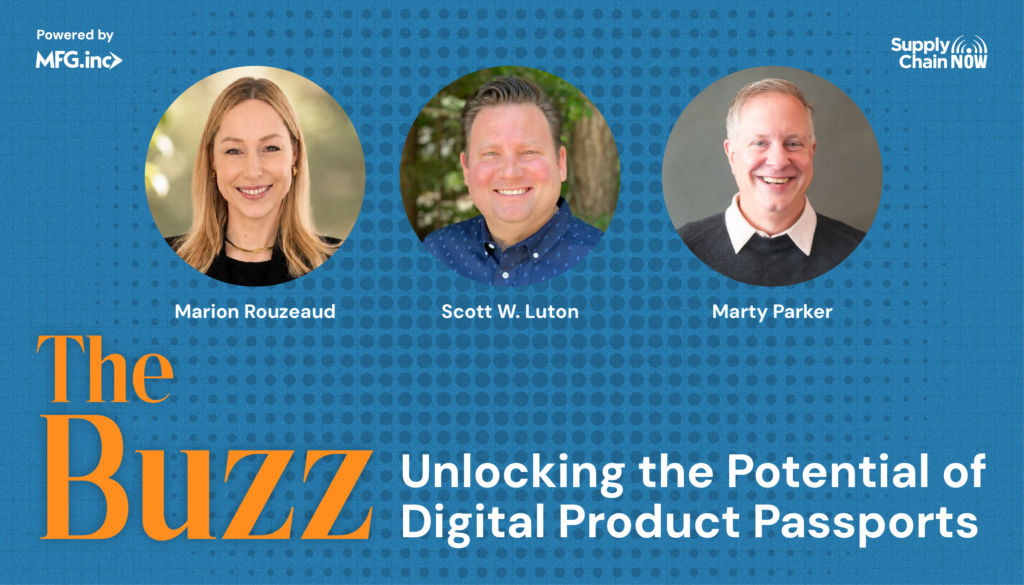
Hey, good morning, good afternoon, good evening, wherever you may be. Scott Luton and the one and only, Marty Parker with you here on Supply Chain Now. Welcome to today’s live stream. Marty, how you doing today?
Marty Parker (00:30):
Doing great. It’s beautiful outside, my friend, and just thrilled to be here with you.
Scott Luton (00:34):
Same. It makes two of us, and gosh, it is so nice to get a break from all the hot weather we’ve had over the summer. And Marty, no hurricanes for the first time this deep in the season in what, like a hundred years or something, Marty?
Marty Parker (00:47):
Yeah, thank goodness. Had the rough Noreaster this week, but no hurricanes.
Scott Luton (00:52):
That’s right. And of course, hopefully everybody up there in the Northeast is going to come back from that really strong. But hey folks, on today’s show, it’s the buzz where every Monday at 12 noon Eastern time we discuss a variety of news and developments from across global supply chain and business. News that matters is what we like to call it. And all month long here in September, the buzz has been powered by our friends at MFG Inc. A highly experienced, unique firm that is helping manufacturers grow without the grind. You can learn more at mfg.inc. And of course, MFG is short for manufacturing, one of my favorite sectors. We’re going to have a big flavor of manufacturing today, Marty. So we’re going to be diving into all kinds of topics, including these questions we’re going to be answering. Hey, how will US retail sales play out in the holiday season this year?
(01:39):
Stay tuned. We’ll find out. What are some of the big manufacturers doing to navigate this current bumpy landscape? And bumpy is being kind, I think. What good is customer feedback if you don’t do anything with it? And we’re going to be talking about visual product passports. What are those things and why are they so really important right now? To stay tuned, we cover all that much, much more. And Marty, we just were enjoying a conversation pre-show with our special guest today, Marian Wu with Deepa. You’re going to enjoy her perspective on a variety of topics for sure. Marty, great show here today. Are you ready to go, my friend?
Marty Parker (02:15):
Let’s do it, Scott.
Scott Luton (02:16):
You are always, always ready. Did you have either Wheaties? What’d you have for breakfast this morning, Marty? Because I got to borrow some energy tips from you, Marty.
Marty Parker (02:27):
Oh, I hate this, but I drank a protein shake because I was busy this morning. So I kind of skipped out on breakfast, drank a shake, and here I am.
Scott Luton (02:37):
All right, Marty, next time we’re going to coordinate our breakfast discussion and make sure we hit on when you have something really exciting. So folks, buckle up for a great edition of The Buzz powered by MFG Inc right here on Supply Chain Now. So before we bring Marian in, and folks, awesome guests here today, we’re going to hit four things on the front end really quick. And I’m going to start with the 189th edition of What That Said, our almost weekly newsletter. It dropped on Sunday, I think it was, Sunday morning. Actually it was, and I’ll tell you why. I know that in just a second. So a couple data points, Marty, I’ll share with you. We’ll see what you were tracking. Get this. For August 2026, retail sales in the US increased 1.2% month over month to some 740, almost $774 billion. That rebounded from a 0.5% decline in July.
(03:26):
Even better news, Bain & Company projects US retail sales for November and December 2026, the big holiday months grew by 4.5% year over year, which really is a meaningful increase above the historical norm. I think on average pre-pandemic, a good growth year was like 3.5, 3.6%. Moving over Marty to the automotive sector, this European electric vehicle sales have surged more than 50% year over year, at least according to August numbers, according to our friends at Simafor, as of course buyers are responding to all those ever increasing gasoline prices. And then get this as we move from retail to automotive to the VMAs. Now we might be a bit clairvoyant, Marty. I don’t know, but I’ll tell you why. So we usually include a line from a song in each edition with that said, especially as we’re promoting upcoming programming. It’s something we’ll have a little fun with.
(04:23):
Yesterday morning we included a line from Madonna’s hit song back in the day, Into the Groove, which is probably, I don’t know, 30 years old maybe. And wouldn’t you know it? Last night, Madonna became the oldest artist to win Artist of the Year, like one of the big events last night at the Spruce young age of 68. So congrats to the material girl that continues to go where no one else has gone. So all of that folks is in, all that and a lot more is in the addition of Wi That Said. Marty, did you get a chance to dive into our most recent newsletter?
Marty Parker (04:55):
I did. I love the bit on quantum computing and using that for finding rare earth minerals. I had no idea that you could do that and it’s something we’re really desperate for as the economy’s been growing.
Scott Luton (05:09):
Marty, that’s an excellent call out. Folks, you’ll have to get the real story by checking out newsletter, but there’s a variety of firms and leaders that are coming together to use and leverage quantum computing to solve the rare earth metals crunch and minerals crunch that we have. Certain players have really cornered the market both in the mining and the refining. So it’s great. Hey, Marty, do you think we’re ready for the quantum age? I think we got a lot of prep to do, don’t you think?
Marty Parker (05:35):
Absolutely. I’m not ready for Madonna being 68. That’s where I am right now, my friend. I’m 92. I know I don’t like it, but for Madonna to be 68, oh my gosh.
Scott Luton (05:47):
It hurts my heart too. It hurts my heart. Folks, she’s still got the moves. Go check out the replay of the VMAs. You’ll be impressed and hey, I’m proud of her. Okay, so we got three more things to go. I want to share some events. We got event season coming back after the summer hiatus. Check out here what our friends at CSCMP are up to. So we invite you to join Catherine Hintz from our team who will be at Edge next week in Nashville. That’s October 4th through the 7th. You can discover all sorts of actionable strategies and real world solutions for your everyday challenges. They’re also going to be inspiring keynote speakers, unique educational sessions, exclusive access to some of the industry’s top leaders. You might just see Dakbar, John Wayne Global Supply Chain there in person. You don’t want to miss one of Supply Chain’s premier events and you can register now with code Edge300 to save 300 bucks.
(06:41):
So you can venture over to cscmpedge.org for more. Wait, Marty, there’s more. Folks, if you don’t like Nashville, you can’t get out next week. Come join us in Vegas in February. The best minds of supply chain logistics all ship out to Manifest Vegas 2027, just five months from now. And that’s going to be here just like this morning, just like this. There’s still time to join in the fund before prices increase, right? You can save a whopping 1,100 bucks off the onsite registration fee, which is 200 bucks off the current price all by using this special link. Go to manifestvegas.com/scn and get your discounted registration. So I got to ask you, beyond CSCMP and beyond Manifest, Marty, I know you get out, you’re asked oftentimes to come keynote or come sit on panels, you name it. What’s the next event on your docket, Marty? It’s
Marty Parker (07:34):
Actually a week from today on October 5th, we have our supply chain advisory board meeting for UGA, and we’ve got a panel coming on the latest and greatest in procurement. So students are real excited to hear about that.
Scott Luton (07:49):
Outstanding. Procurement is cool again, has been for years now. And I tell you, you’ve been doing some incredible things with that, you call it an advisory board, right? A full of supply chain leaders. I think we’ve had a couple on shows over the years. Folks, if you want anything to do in the supply chain, the growing supply chain ecosystem at the University of Georgia, got to reach out to the one and only Marty Parker. Is that right, Marty?
Marty Parker (08:13):
Absolutely. Marty Parker, UGA, you’ll find me and message me there or message me on LinkedIn.
Scott Luton (08:18):
Awesome. Hey, I look forward to your key takeaways from that procurement conversation with those movers and shakers, and we got to get some UGA students back on soon. We’ll have to do that. All right, so one more thing before we bring on our incredible speaker here today. Just last week we had John Warf with EasyPost join us for a great conversation. I love what he and the team are doing out in industry, helping shippers really of all sizes and in all sectors. Check this out. And then we talked about this last week. One merchant leveraged Easy Post Guard and they were able to recover $460,000 in a matter of days from a shipping insurance standpoint. And in fact, sometimes Marty, I’m not going to pick on anybody here, sometimes when I think of insurance claim, I can think of months and months, especially to recover half a million dollars basically.
(09:03):
It took fewer than five days to resolve this claim for this merchant. So folks don’t be in the 40% of eligible shipping claims pool, that’s right, 40% is estimated, that are never filed because the old way of doing things is so troublesome and manual. We won the 22,000 shippers that trust Easy Post Guard shipping insurance for the modern age. You can check out the case study that we dropped right there in the chat. All right, so Marty, really quick before I introduce our guests, I got to tell you, I’ve been ignoring the comments. I better catch up really quick. So Trisha, happy buzz day to all, and I echo what she says. Hey, say hello, let us know where you’re tuned in from. Derek Staples tuned in from, I think that’s Belleville in beautiful Ontario, Canada. Derek, you think it’s Belleville? You think Marty, we’re saying it right?
(09:51):
Bellville?
Marty Parker (09:51):
I don’t know. I would guess so. That’s what I would’ve said.
Scott Luton (09:54):
Me too. So Derek, let us know. There might be a more eloquent pronunciation of that beautiful part of the world, but great to have you here as well. Trisha dropped link to MFG Inc. That’s terrific. Dave, he’s giving us some coffee cheers. I need another cup. Marty, how about you? Absolutely. Another cup of coffee? So Frida is tuned in. I hope I said your first name right. Freda from Jakarta, outstanding here via LinkedIn. Let us know your take on the conversations here today. Trisha has dropped the link to With That Said, thank you for that. Hey Alan, great to see you. Also from beautiful Ontario. Alan, do you happen to know Derek up there? And are we pronouncing Bellville correctly? Let us know. We’ve got, oh, I know who this is. This is our friend from Shropshire, Andrew. Andrew. Now Marty, really quick, do you know that October is Cybersecurity Awareness Month?
(10:46):
Did you know that, Marty?
Marty Parker (10:47):
I did not.
Scott Luton (10:47):
Well, Andrew here from Shropshire is a cyber pro and he’s joined us on the buzz in just a couple of weeks. And I bet this is Felix from Scotland. Correct me if I’m wrong, but Felix, great to see you. I love the analysis you’re putting out there. And finally, Derek says, “That is right.” But Marty, if I can find anything, I can find a way to mispronounce a town or a name or you name it. So it’s good to know we’re properly pronouncing things. Is that right, Marty?
Marty Parker (11:15):
Absolutely. I’m glad to see someone from Scotland. My first boss was from Scotland, Grent Gilletly, and he made an appearance in my comedy show, by the way.
Scott Luton (11:27):
Really?
Marty Parker (11:28):
Yes, he did.
Scott Luton (11:29):
Oh, okay. So folks, Marty has about seven books he could write at any given point in time, because I’ve been hearing story and anecdote and chapter and chapter at a time over the last, I don’t know, five years, maybe longer than that. So we’re going to hear about his first boss ever from Scotland and great to see you, Felix. So Marty, now that we’ve knocked out A-Block, shared some resources and some views with folks and see, hang on a sec. Shrop Sheer. I get that wrong all the time. Andrew, thank you. Shrop Shear. Okay. Takes a third or fourth time sometime. Thanks for that, Andrew. So Marty, we got a great guest here today right there on the buzz on Supply Chain Now. Marian Wusseau is an author, strategic advisor, and founder of Deepa, an independent advisory practice helping organizations unlock full potential of digital product passports.
(12:21):
Now with more than 15 years of international experience in the manufacturing industry, she has held global leadership roles spanning business strategy, product marketing, and sustainability management. Folks, you’re going to enjoy her perspective and expertise here today. Let’s welcome in Marian Rousseau, founder of Deepa and author of Deepa, Rethinking the Way We Buy Things with Digital Product Passports, which is one of the very first books dedicated entirely to the topic. Let’s bring in Marion. Hey, Marian, how are you doing, my friend?
Marion Rouzeaud (12:51):
Hello. Thank you so much for having me.
Scott Luton (12:54):
You bet. Marty, we had a great conversation in the pre-show with Marian. I think we got a lot to get to here today. But folks, I want to start with this, Marian and Marty. Little fun warmup question. So I’ll share this earlier on social this morning to start the week because I think it’s a good though to start the week with. So on this date, on September 28th, 1997, Apple launched its iconic Think Different campaign. Now, there’s lots of different messages that was part of this campaign, but at its core, it really celebrated folks. It called, “The misfits, the rebels, the troublemakers, the round pegs and the square holes, the ones who see things differently.” And there’s a whole bunch more to that that really celebrated how these folks have changed the world and continue to change the world. So Marian, I love this message for so many reasons.
(13:40):
I think it really is a important one on a variety of levels. How does it resonate with you, Marian?
Marion Rouzeaud (13:45):
I think it makes me think a few years ago, being a woman in manufacturing, I know this is something that for you is not something that you have lived, but it was very hard to arrive in a very manly industry. And as I told you before, being very introverts, I think I felt very different. And it took me, I think, a lot of years to understand that this was actually my strengths, something that would give me value, make me think differently. Yes, I directly think about my personal kind of trauma at the beginning and year after year, being very shy at the beginning, being scared about doing a presentation in front of two, three, 10, 20 people, and then ending up in conferences and feeling totally fine after seeing that other male, older, stronger were actually also vulnerable and having also the same difficulties that I had.
Scott Luton (14:43):
So Marty, I think two things before I get your reaction. Number one, I think we got to celebrate whatever leaders really empowered, brought Marian into the conversation she needed to be a part of and empowered her because we see the big change and impact she’s making now and that may never would’ve happened if not for whatever leaders really celebrated folks that though different and including different personalities. And then secondly, Marty, I’d love to get your reaction to the Think Different campaign from back in the day.
Marty Parker (15:12):
So this is out there, but I don’t know if you remember the Island of Misfit Toys.
Marion Rouzeaud (15:17):
Yes.
Marty Parker (15:18):
I think that was Santa Claus’s Coming to Town, I think was the name of the movie. And it just brought out that even in our differences, we can value each other. And I think we really need that in this day and age where a lot of our differences have been highlighted in a bad way. And that just makes me think of how we can be unique in our unique selves, like Marian said, and value each other for that.
Scott Luton (15:43):
Marty, very eloquent. I wish we’d all take both of y’all’s perspective to heart and be more bridge builders rather than wall builders because we need it so much in industry and far beyond. So very well said, Marian and Marty and folks, love to get your thoughts. You can also check out, I shared a core video commercial from this campaign back in 97. Go check it out and give me your thoughts. Even got a current who spent, I think eight years at Apple is ready to join us, Marty, and share some stories. So we’ll see. We’ll see if that happens. Okay. We got so much to get to here today. So much to get to here today on the Buzz powered by our friends at MFG Inc. And I’m going to start here in the B block. We’ve got three stories we’re going to work through and I’m going to unpack.
(16:23):
We’re going to get Marty and Marian to give us their takes, and then we’re going to dive into all things DPP in the C block with Marian. But first, let’s talk about one of our favorite industries, manufacturing. So some of the manufacturing trends that we all know and love were front and center at IMTS in Chicago a few weeks ago. This is an event that brings really tens of thousands to the city each year. And here’s a few highlights from this interesting read via manufacturing dive. Some of these you already know, but just bear with me. But first, and this is the first of those, automation is booming. As you might expect, demand is roughly, get this, 4X 2018 levels driven partly persistent labor shortages. Adoption is set to accelerate on top of what we’re seeing already. Manufacturers expect advanced technology usage across operations to jump from 26% today to 68% by 2030.
(17:19):
And to that end, to some degree, there’s still an enormous runway. Now, I got to doubt this number a little bit, but they reported that an estimated 80% of US manufacturing facilities have no automation today. That is hard to imagine. Now, AI is of course creating physical demand in the form of things like data center construction. That spending just for data centers has tripled in three years. You got to think about all the different ways, we’ve talked about this before, all the different demand that drives for things like turbines, power equipment, electrical components, and a lot more. And as we all know, labor remains a catalyst, bringing back full circle, roughly 400 to 500,000 US manufacturing jobs remain unfilled, which continue to strengthen the business case for automation. And then one last note before I get Marian and Marty to react here. According to the Federal Reserve Board, US manufacturing output dropped a touch in August.
(18:12):
In fact, it dropped 0.3% after increasing seven consecutive months. So Marian, you spent a bunch of time in the manufacturing arena. React to some of these trends if you would.
Marion Rouzeaud (18:23):
It’s coincidental, but I’ve been a few times at IMTS with Hexagon, so I’m very familiar with the events and I speak 10 years ago and I see the same trends simply accelerating. It was already at that time about data collection, connectivity, IoT, automation already. And I see basically now the next steps was having this data, having the connectivity and making now the smart move, activating these technologies and having AI stepping in to optimize, to make things more intelligent and really to bring that additional layer of machine learning and automation at this next level.
Scott Luton (19:09):
So Marty, I tell you, the world gets much smaller. It’s amazing. Every time Marian’s been at this event and spoke at this event, I wanted to react to some of those key takeaways from at least one firm there at IMTS.
Marty Parker (19:20):
Yeah, so I’ve been in this manufacturing world for 40 years and labor shortages. Yeah, wow. Labor shortages have been around forever, and we hear so much bad stuff in the news right now about data centers and AI, and it’s great to hear something good. I mean, even if it’s just 60% of American manufacturing isn’t automated, that’s a disaster for us on the world stage in terms of competition. And we’re one of the top manufacturers in the world even after some decline over the few years. So I think it’s fantastic news to address this problem that we’ve had for so long.
Scott Luton (20:00):
Well said, Marty. An outstanding bigger picture perspective. And see, that’s at least book number 727 about the manufacturing industry with 40 years of experience in there. You know your stuff. All right, so Marion and Marty, we’re going to talk a little bit more about manufacturing in one second, but I want to. I have not seen this name on the buzz chat in a long time. Dr. Rhonda Bampenza Zimmerman. Dr. Rhonda says, “Hello, SE and folks. It’s been awhile. Excited to hear what’s going on.” Rhonda, it’s been forever. And by the way, Marty and Marian, Rhonda is passionate, does many things, but self-health and taking care of your physical and your mental health, she’s helped a lot of people over time. So Rhonda, great to see you today, my friend. So don’t take me and Marian and Marty’s perspective. Go check out the original article. Trisha’s dropping the link to each of these right here.
(20:44):
Thank you for that, Tricia. All right, this next story, I’ll make everybody hungry with this graphic I purposefully chose. Look at those McDonald’s fries. Oh my gosh, Marty and Marian. So we’re going to talk about the F&B, food and beverage sector of the manufacturing industry, and we’re going to focus on what some of these F&B companies are doing to find more success in this current disruptive age. Now at a recent event, the team over at Supply Chain Dive spoke to leaders from several of these manufacturers, and I’m going to share some of the key takeaways. You’ll have to go to the article to find all of them. Cost cutting is a big common theme. Constellation Brands has generated $600 million plus-plus in procurement, logistics, and operation savings since 2023, and they got another 200 million targeted. AI is moving deeper into operations. General Mills, a famous cereal company, maybe Marty next time will have a bowl of one of their delicious cereals for breakfast.
(21:39):
General Mills is applying AI to demand forecasting, logistics planning and manufacturing optimization as part of a big supply chain overhaul expected to generate $1 billion in savings by 2030. This won’t surprise anybody. SKU rationalization, it is back. Nestle is one of the many organizations deploying it. Nestle is cutting underperforming SKUs and consolidating distributors in China. After its assortment, it just became too complex and commodity pressure may be easing. Here’s some good news, Marty and Marian. So Mondelez International says that the cocoa market has moved into oversupply. That’s a big reversal after years and years of shortages and volatility. So that’s a little bit of good news. All right, so Marian, when we walk through some of those initiatives, at least taking place in food and beverage and other places in the industry, your reaction, Marian. I
Marion Rouzeaud (22:29):
Think following the first article, we see this usage of AI now really becoming operational, where we have this at all level thinking smart forecasting, using AI also for logistic freight, supplier consolidation. So it’s really something now that you can use along the product life cycle at all levels of the organization. So I think this is really having a very accessible way to add an additional intelligence to your processes.
Scott Luton (23:01):
Well said, Marian. Well said. All right, so Marty, we’ve heard none of those were ground shattering and new exciting rocket science, but your thoughts, Marty.
Marty Parker (23:10):
Yeah, I feel like in the article it wasn’t all just cost cutting. There was a lot in there that was around being strategic with your suppliers, and we’re going to get into this with DPP, looking at the full supplier from start to finish, but I think it’s a good thing. I don’t know about you, but I’m tired of them just reducing packaging size as the strategy. I bought a box of cereal that was about the size of a book the other day, and Scott, you know this as a single guy back in the day, cereal was probably like two or three meals a week, right? Right. Easy. And the size of the boxes I’ve seen recently, you just dump the whole thing in a bowl. It’s crazy. So being more strategic I think is going to make a lot of sense.
Scott Luton (23:56):
I’m with you. Cereal and instant potatoes and ramen noodles. I don’t know, but that was a big part of my single diet. I’m not trying to disgust anybody out there, but okay, Trisha dropped a link to this article. Folks, there’s a lot there. Check it out. What are we missing? What do you agree with? What do you disagree with? We’d love for y’all to share your feedback with us. And by the way, one quick, if you don’t know that McDonald’s makes the absolute best French fries in the world. Actually, let me check in. Miriam, would you agree with that? Do you agree with McDonald’s?
Marion Rouzeaud (24:27):
No. Even under pressure, I would never admit that. No, no, no, no, no. Okay.
Scott Luton (24:34):
Fair enough. Fair enough. And Marty, how about you?
Marty Parker (24:38):
Scott, you need to get some French fries in Europe. I mean, the fresh ones, the real ones that are made from local sourced potatoes, that’s what you need.
Scott Luton (24:48):
Fair enough. Hey, fair enough. And what I’m hearing from you both is maybe my French fry knowledge is like my chocolate knowledge, which I love chocolate in the states until I had it over in Africa for that matter, and it is like night and day. So okay, I’ll go check out some french fries too.
Marty Parker (25:06):
And on chocolate, aren’t you glad they’re bringing chocolate back now that it’s in supply? That’s been one of the strategies is to replace chocolate with a lot of chemical stuff, and so I’m thrilled we’re going to be getting our chocolate back.
Scott Luton (25:19):
Me and you both. Me and you both. Okay, so Marian and Marty, one more story I want to tackle. This was kind of a neat one. Folks, if Retail Brew is not on your radar, you’re really missing out. In fact, they’ve got a variety of different publications, including, I think HR Brew is one, different functional areas of leadership. Go check it out. So as reported by our friends at Retail Brew, Quantum Metrics surveyed 1,500 US and UK consumers. Check out some of these key takeaways here. Retail has a listening gap. So one in three consumers say they don’t feel heard by digital brands even when companies actively solicit feedback. Consumers, well, they still want humans. One in three shoppers contacted customer support directly rather than completing a feedback form, and 50% said direct contact was the most effective way to be heard. AI, you knew this was going to come up.
(26:10):
AI may actually feel more attentive. That’s interesting. 37% of consumers surveyed believe ChatGPT understands their feedback better than the retailers do. Ignoring feedback can cost the customer, 56% rather, abandon the brand when it repeatedly ignored or failed to act on their feedback. So really ignoring feedback can cost the brand. And finally, customer experience. Well, that helps drive loyalty. Separate research found that 59% of shoppers abandon the brand after a single bad experience, just one, while 93% are likely to buy again from companies that deliver really good customer service. Now there’s a lot here, Marion. I’d love for you to react to any of that that was captured in the survey.
Marion Rouzeaud (26:58):
I think it’s a key point that we have to touch with the DPP because we speak about a product talking to a machine, but also involving a person behind it. So we have this kind of connection that has to be made, but DPP has to be read by a machine, but has also to be understood by a person scanning a QR code, for instance. So I think there’s really a difference to make between the visibility of the data and then having a person understanding the data and then having this type of engagement, right? So having some of feedback, a discussion, an activation of the information that he has read. So yeah, I think there’s difference between the visibility and then creating an engagement and relationship as sort of communication, machine to machine, machine to person.
Scott Luton (27:48):
So Marian, quick follow-up question. I know this is kind of ad hoc, but if companies out there, not just retail, but if companies out there aren’t going to act on the feedback they get, whether they’re surveying employees, if they’re surveying customers or suppliers, whomever, if they’re not going to act on it, should they just not even do it in the first place? Marion, what would you say to that?
Marion Rouzeaud (28:07):
I’m a very direct health term, so I like. You better don’t do it in my opinion with my character. Either you do it right, either you don’t do it. I agree. I have open quality measurement most of my life. I think it’s also what we mentioned was that the DPP objective was that the greenwashing also consumer empowerment directive is trying to get the trust back. And this is, I think, the first step. If you ask something, if you try to get the feedback, do it properly. And then once you get the feedback, you have to have the next step, which is the actions because sometimes you just get the feedback, but nothing really happens afterwards. So I think this is really kind of a long-term engagement trust strategy.
Scott Luton (29:00):
Well said, Marian. Well said. All right. So Marty, react to all these takeaways and more from this piece in retail brew.
Marty Parker (29:07):
Yeah, so it’s incredibly difficult to build a brand and incredibly expensive. So to take a risk of not listening to your customers is disastrous because you’ve spent all that time building it and then you gave a high percentage of the ones that abandon it. I think it also needs to be easy to complain. One of the easiest apps I’ve seen to complain is DoorDash. DoorDash a lot. You hit a couple of buttons. If there’s a problem, you may not get your food, but you get your money back pretty quickly. And so brands really need to make it easy, whether that’s talking to a person or talking through AI or filling out a form. A lot of times forms are not easy. So just make it a couple of buttons so that you can get the information as quickly as you can.
Scott Luton (29:53):
So Marty, I’m going to have to switch. I’m going to have to switch because I use Uber Eats a lot and I rarely complain ever, ever, ever. However, my last experience wasn’t really easy to stop the order. The subs we were ordering, they only had wheat bread. And I hate wheat bread, but it was really tricky to try to cancel the order and then kind of submit a replacement order. So I’m going to give DoorDash a try to your point, Marty. We’ll see. Okay, so Marian and Marty, one more thing, two more things before we move on. We’re on supply chain now on LinkedIn, folks. We polled our audience, our SEN global fan, and it said, “Hey, when a brand asks you for feedback, what do you expect next?” 47% of the votes so far is open for another week, said nothing, honestly. They don’t expect anything.
(30:38):
And then the second, the follow-up response was they do expect a follow-up from the brand, 40%. So folks go venture over to supply chain now on LinkedIn and cast your vote. Then lastly, before we switch over to all things DPP, check out Rhonda’s, Dr. Rhonda’s. So going back to those fries, those delicious McDonald’s fries, Dr. Rhonda says, “I’m with Scott. Add a vanilla ice cream cone too. Perfect pick me up. Had that yesterday after a run. McDonald’s fries, 100% my favorite.” Okay. Rhonda, thank you for that. I really appreciate it. And I’ll tell you, when you get them fresh right out of the fryer, oh, they got it. That I’m convinced french fries is what led McDonald’s global growth, nothing else. All right, so before we dive into our next segment with Mary on all things DPP, I want to share one more resource with folks from our friends at MFG Inc.
(31:28):
We’ve spoken quite a bit today about the talented workforce in a couple different ways, one of my favorite things to talk about. When it comes to advancement, I’ll know many frontline leaders, they earn promotion by excelling at their work, right? Delivering on results, but leading effectively requires different skills at different times. Check out MFG Inc’s frontline leadership certificate, which builds those vital skills online in about three hours of time on a weekly basis. That ain’t bad. To learn more, visit mfg.inc/training. All right, so Marion, I’ve got about 27 questions for you today. I can’t wait to learn from you and Marty here on the rest of the buzz. And I want to start with the digital product passport registry. So I was doing a little digging, you already know this, but it has gone live as of I think July across the EU, right? So this announcement was 20 July 2026.
(32:23):
So that is an interesting backdrop, but I’d love to start our conversation here in the C block by asking you, what are some of the basics that our audience should know about the digital product passport landscape?
Marion Rouzeaud (32:35):
Yeah, so for someone who never heard about the theme, maybe the easiest way to present it would be to take a passport, like a human passport, imagine it for a product. We spoke about connectivity, the internet of product that we forget that we don’t have most of the time data behind the product. So a product doesn’t really have an ID card. So let’s imagine that every product that we produce today would come on the market with this passport that would be a living record. So the big difference with your printed passport would be that this is an evolving passport that is digitally available online, that depending on who you are, depending of the stakeholder who need the information on the passport, you could open it and get any type of information that could be useful to your role. So may you be a consumer, but also anyone on the value chain in the product life cycle.
(33:36):
So it can be a repair, a recycler, of course all the suppliers. And that would be something that would help, as we mentioned before in the article that you have highlighted today, these optimization, these AI additions because you would have trusted data that you could work on for products that we would produce in the future.
Scott Luton (33:59):
And is it an effective way to say this kind of like a digital story that travels with the product throughout its lifetime? And to your point, it evolves. It can be updated. Is that a good way of thinking about it, Marion?
Marion Rouzeaud (34:11):
Most of the time I speak about the ideal scenario of what a DPP should become. This is really where I am and what I would like the conversation to be because if we limit ourself about what a DPP is today, my fear is that we end up having a compliance tool. I have done a lot of auditing in my life working in sustainability where you have to track back and to work on your upstream suppliers and then you end up with a lot of Excel file that no one really looks at because they’re very complex. In that case, I think the DPP is supposed to become something that can be activated by all these stakeholders. So you write something that would start with the material, really the base of the materials, the component coming in your product, and then really update along the life of the product, knowing that a product should have ideally multiple lives because the first objective of the DPP and the ESPR regulation in Europe is to try to accelerate circular economy.
(35:17):
Of course, I come from the angle of sustainability, which is my own why, let’s say my passion, what I work for. But I have also this angle, as you said, of manufacturing, innovation. I’m very passionate about technology, product management. So how can we make the best product possible that would have the highest value for the longest time? And that means that these DPP would also support that circularity and ensure that we keep as much as possible products in the life cycle or at least that we can follow up until the next design, let’s say having a real feedback loop into the innovation and technology teams.
Scott Luton (35:59):
Marian, I love that. And anything that fuels Marty, practical circularity forward. We were talking in the pre-show about how many of these themes here today are only going to grow in their major importance in the years to come. And so I further appreciate Marian’s perspective there. Your thoughts, Marty, just on as we defined what DPPs are to start with, Marty.
Marty Parker (36:23):
Yeah, the word digital really jumped out at me because like Marian, I’ve worked in product management and what usually goes along with a product is an infinite amount of paper, MSDS sheets and pages about product packaging and about components of products and the opportunity for that to be digital and to be readily available. I mean, even within a company, not outside the company, but within a company, it was almost impossible to keep track of this. And so now Marion mentioned circular economy. Now we can have the whole thing. We can have the whole picture and we’re going to need that as we have more and more people and we’re having more and more impacts on the environment. And that’s really exciting. I would’ve loved to had that many, many years ago.
Scott Luton (37:12):
Yeah, I’m with you. A lot of folks, whether you’re talking about circularity and the circular economy or you’re talking about the re-economy, reuse, recycle, and I know that’s not where things should start and stop. However, as I understand it, Marian, information in these digital product passports that help users understand how to repair or how to reuse or how to recycle, that’s critical information. I can’t wait till it’s more commonplace. All right, so Marian, we are talking with someone that wrote the book on this stuff. So folks check this out. I shared this earlier, wrote the book on Dipa, Rethinking the Way We Buy Things with Digital Product Passports. This came out in January and I bet it’s going to be a bestseller if it isn’t already, Marion. So I’m curious, I can guess, but I’m going to ask you why because I don’t want to assume anything.
(37:59):
What prompted you to write this book here?
Marion Rouzeaud (38:01):
I think I already answered a little bit. I think the passion I have for sustainability, and the first chapter is really about the waste crisis and our linear production pattern and the overproduction, the planned obsolescence and all the production challenges we face today are my entry points, but I’m very scared that we will not see the opportunity that the digital product passport is bringing to the world if we narrow it as a compliance tool. And then this is really the idea of the book is to try to have an introduction to the benefits of what the DPP could be. So as I said, it’s an ideal scenario of the potential of a digital product passport that goes beyond what is planned today by regulation. That means really starting with what would I like to see into DPP as a consumer, but also as a company.
(39:05):
So how can I use the DPP as a strategic advantage? So I really have the two angles. Of course, I have the consumer angle in mind in the title with thinking how you buy things because I didn’t want this to be only about production, but it’s about bringing back awareness on the production patterns we have today and how we all can change this with rethinking our consumption patterns. So I’m trying to have it really clear with kind of overview of production cycle and then the product going into the consumption cycle and bridging both in a comprehensive way.
Scott Luton (39:42):
Marty, Marian said a couple of times, well, first off, you know she is passionate about this topic and even more so passionate about driving good change out there. And to that last point, Marian’s mentioned a couple times, Marty, how we’re going to lose if this is only about compliance. It’s got to be a tool for all of us to change how we think when it comes to design and much, much more. But what’d you hear there in Marion’s why, Marty?
Marty Parker (40:08):
Yeah, Stephen Covey talked about begin with the end in mind, and I think that’s really what Marian’s talking about here. And in the pre-show, I was talking about how it reminds me a lot of ISO 9000. And in the early days, that was a lot of paperwork, it was a lot of auditing, but in later iterations it became more of a process improvement tool, looking at preventive quality, using things like Lean Six Sigma, measuring things. And let’s hope that, as Marian said, that pretty quickly in the cycle that DPP moves more towards this sort of proactive approach rather than compliance approach.
Scott Luton (40:46):
Well said, Marty. Well said. Okay. And folks, I think we have dropped the link right there in the chat so you can go out and get your own copy of this great read. And Marian, this thing’s everywhere. It’s in Amazon, it’s in Walmart. I think the link we’re putting goes straight to the book landing page so folks can kind of figure out on their own how to procure it. You must have had. So based on what you’ve shared with us, Marian, I bet you had a big time book distribution plan and you followed it by the letter. Is that right, Marian?
Marion Rouzeaud (41:17):
As I say, it’s my first experience or writing, so I didn’t have a lot of plan. I know the topic very well and I knew this was something important for me and for apparently others, but I was quite surprised by the requests I received and the interest people have. So no, there was not a big plan behind.
Scott Luton (41:40):
Well, it’s really cool to see the reaction to what the industry needs to better understand as we move into being able to more effectively leverage many of the ideas and themes that you’re talking about. And I bet it’s very rewarding for you given something how personally passionate you are about the subject matter. But let’s do this. You’ve developed this DEPA framework, right? And I want you to, if you would walk us through this framework at a high level, including why the sequence, and I think I’ve got this right, why, how, what, why that sequence is so important. Miriam, tell us about this framework.
Marion Rouzeaud (42:16):
So the framework just is an extraction of the book. So the book is structured on interviews and has the three sequences that now are also available in the framework format. And the three sequences are a translation of DPA simply as a reminder. The why, how and what are the famous golden circles from Simon Sinek, so it’s nothing new, but it helps us to understand why we would use and why we would like to have a DPP strategy. So I will take the angle from a company, but you can use it in the same way as an individual, as a consumer, as I said, but especially for companies to understand the value of a DPP, the sequence is extremely important if you want to avoid, as we said, the compliance trap. The compliance trap is simply having a list of indicators, go in and find them, collect the data, publish them and forgetting about them.
(43:13):
But then you forget really the beginning and the end of the process, which are the why and the what to do next. So if I go through the three canvases that you can simply download for free and then use in a workshop with your team or with a consultant, the first step is, as we mentioned during this liveshow, start with your why, understanding what your customer in their case of a product for a specific product and a specific sector and a specific context, what are your customer looking for? And of course here you work with your marketing team. It’s all about your weeks, understanding your market, understanding your differentiation point, and you end up in terms of priorities for this product. I always like to remind everyone that for me, the DPB has always to be thought in terms of triple bottom line. As a sustainability advocate, you always think environmental, social, and of course on the economic side, and you try to really simplify your thoughts about what is important for me for that product.
(44:15):
I give you an example as toy company, safety for the parents buying toys for their children maybe would be my number one. Then I have toys that are really like wood toys, very durable. So priority number two, durability, longevity of the product. And then as a simple example, it’s a kind of eco-friendly company that has a positioning on sustainability-driven customers. So they have to be environmental friendly. What does that mean? So you have first to understand that’s important for you. How do you translate that in a storyline with facts and data behind it that you can really end up doing marketing and communication plans that you can prove points, not only having certification suddenly available that no one will use afterwards. So this is the base of your strategy that will go there in the measurements canvas. So the second phase of the Deepak framework, which is basically creating your DPP.
(45:16):
That means you have to translate the priorities into indicators and metrics and ensure that in addition to the mandatory legal requirements for your specific sector, you are also totally allowed to add additional data points. And so if they’re part of your strategy, how would a parent see that this is a safe? So maybe some certification, what type of hazarded substances? How can you prove in a good way that not only you have to ensure that your technology, as we said before, the innovation product management team have done the correct job because it’s one thing to claim it’s safe and to really have a real toy that is safe, but also having then all the, as we mentioned before, Marty, you said it’s important that it’s easy to understand, that it’s most intuitive for someone reading the format of the data to understand, okay, this is what is linking me to safety.
(46:14):
Some might be in the category of the material composition, some might be in the compliance certification. So imagine that you have a complexity of simple priority going into a passport that is classified in indicators category that are not one-to-one matching. So that’s most of the time interesting to do with a consultant, but that will be extremely key to do with all the department of a company so that the product management, the marketing teams know already who is working on what. So at the end of the day, we can position and market the product correctly with the fact in the DPP. And then last point, which for me is the most important, but I think it’s totally underestimated is what do you do next? Because having done all these effort of data collection, checking and auditing the accuracy of the data, doing all the DPP layouting and IT legal development to be compliant and then not having a roadmap strategy or even a company strategy on what doing with that, what you can do with that, it’s to me like a really nonsense.
(47:24):
And this is where I use, as I told you before, for me, the infinite circle to me is the best way to visualize the circular economy because the circularity to me forgets totally the consumption phase, which is a full circle. So the best way is simply to download the adaptation canva to see it because you have basically the infinite loop. So you start with design, manufacturing, transportation, the point of space, and then you continue with the usage, the maintenance, the repairing phase, and then you go back to the production cycle where you should have a plan already for remanufacturing and the recycling is out of the infinite loop. You have to be sure that the product at some point comes back. And this is to me a visualization that is extremely important for the responsibilization of the actors at the beginning of the product life cycle.
(48:21):
Today, I mean, most of the company I work with and I visited and worked for aerospace, players, automotive, electronics, medical device, energy, all of them were working with us to enhance their production cycle. So as we said, we mentioned connectivity, automation, feedback loops, AI, where you basically have this feedback loop between you design better, it’s going to be produced in a more efficient way with your manufacturing process, and then you get the quality measurements, feeding back in better design. But we forget that manufacturing is responsible of what you put on the market. And this is where the DPP changed the game because the manufacturer, the OEM is responsible of the DPP and the DPP appears at the moment of sale where the product goes to the consumption cycle that most of the time is totally forgotten. So you work in a linear way, you put your product on the market and you forget about it.
(49:22):
It’s not your business anymore. Today, there is a requirement that you already say, is it repairable? How is it supposed to come back? There’s an entire process of thinking in at the design phase upstream how to bring a product back. And if it’s not you directly, then the information in the DPP has to be available and usable for the actors that would do then the job. So as we said, the repairs, all the maintenance efforts, all the refurbishing, retrofitting efforts, and then coming back to manufacturing again. So that’s the entire idea to map the stakeholders for a specific product so you understand better who are the players that you have to collaborate with during this product life cycle. And then understanding from the priorities you map in your illumination phase, from the measurement that you will have to work on, what can I do? How can I make an improvement plan at each of these phases where I have potentially an influence and with who do I have to work to make the best collaboration effort?
Scott Luton (50:34):
All right. So folks, we’ve got an overview there of the framework. For more detailed, go get the book and then go set up a conversation with Marian. I bet you’ll be glad you did. And all right, so really quick, Marty, react to that. For me, it’s going all the way back to the toy example, right? And by the way, I think Toys R Us is making a comeback. I think I saw 150 stores are opening for the holiday season, so we’ll see if they take advantage of digital product passports. But Marty, what’d you hear as Marian was laying out that framework?
Marty Parker (51:05):
Yeah, for me, it’s all about strategy and companies have all these discreet, disparate strategies like sustainability strategy, product strategy, sourcing strategy, manufacturing strategy, and it feels like the DPP is going to bring those things together and allow you to have them coordinated in a much better way.
Scott Luton (51:26):
Yep. Well said, Marty. All right, so hey, we’re going to have a fast and furious finish because we’re right at it. So Marian, two questions for you. Number one, what is one action? Just one action. There’s others I know, but one action that supply chain leaders got to take in the next 30 days related to this march forward of DPP, all things DPP. And secondly, how can folks connect with you, Marian?
Marion Rouzeaud (51:48):
Simple things simply to see, evaluate their product positioning and do maybe a testing with one of their products. Simply see, evaluate the data they have and start understanding, maybe use the DPA framework to evaluate what their DPP strategy could look like. And I’m reachable on LinkedIn and I guess you will share my profile.
Scott Luton (52:13):
I sure will folks. Trisha shared the link. Actually, that was a link to the announcement by the EU. She shared the link to the book here. The folks go check out the book for sure. And as Marian might be clairvoyant too, Marty, Marian may be clairvoyant too because Tricia did drop the link to Marian right there on LinkedIn. And folks go make sure you connect or follow her today. And Marty, while I’m asking, how can folks connect with you on the LinkedIn top voices? I love all of your supply chain and leadership and business observations. How can folks track you down, Marty?
Marty Parker (52:47):
Yeah, just Google Marty Parker UGA or Marty Parker LinkedIn, and you can easily message me or email me.
Scott Luton (52:54):
Outstanding. And I think Trisha is dropping the link to Marty’s LinkedIn right here. I highly encourage you follow connect with Marty there for sure. All right, one last thing. And Marian, I knew even an hour, if we had a full dedicated hour to all the things you’re doing, we would not have nearly enough time. So we’ll have to have you back soon, Marian, and continue our conversation. But in the meantime, folks, I also want to encourage you to go check out our award-winning resource hub. We continue to invest more and more in written content. And if you can’t find what you’re looking for, give us a shout because feedback is indeed a blessing. All right, so as we start to wrap here today on the last buzz edition of September, that’s hard to believe. I want to thank Marian Wassal, founder of DEPA and author of DEPA, Rethinking the Way We Buy Things with Digital Product Passports.
(53:46):
Marian, I’ve really enjoyed your perspective here today, my friend.
Marion Rouzeaud (53:49):
Thank you so much for the invitational.
Scott Luton (53:51):
You bet. And we’ll have you back soon. And of course, my terrific friend, co-host, the guy that’s got at least 72 books already between his ears, LinkedIn top voice, Marty Parker. Marty, thanks for being here, my friend.
Marty Parker (54:04):
Thrilled to be here. I think you need a podcast on writing a book. You’ve got one coming. Marian’s done one. All my friends are doing it in supply chain and leadership. So I see a future podcast on that, Scott.
Scott Luton (54:16):
Let’s do it. Let’s do it. I’m trying to learn from Marian and her bestseller. So we’ll have a meeting and we’ll get all the best practices out there. But big thanks to Marian and Marty. Big thanks to Tricia and Amanda behind the scenes. Appreciate what all they do every day. Big thanks to our friends at MFG Inc. Folks go connect with Ray and Jamie and the team over there. You’ll be glad you did. And most importantly, big thanks. Dr. Rhonda’s back. Rhonda, come on back. We had a bunch of folks here with us today. Big thanks to our SEN GlobalFam, our global audience for being here with us. And folks, you got homework. I know it’s Mondays. Monday’s tough as is, but hey, take one thing you heard here from Marian and Marty. A lot of good stuff. Take one thing, share it with your team, do something with it.
(54:57):
Deed’s not words, right? That’s how we’re going to keep transforming global supply chain. With that said, on behalf of the entire Supply Chain Now team, Scott challenging you to do good, give forward, be the change that’s needed. We’ll see you next time right back here on Supache Now. Thanks everybody.
Intro/Outro (55:13):
Welcome to Supply Chain Now, the number one voice of supply chain. Join us as we share critical news, key insights, and real supply chain leadership from across the globe. One conversation at a time.