Share:

“Industries need to find a way to move into the predictive area first: focusing on the customer, inventory, and cost.”

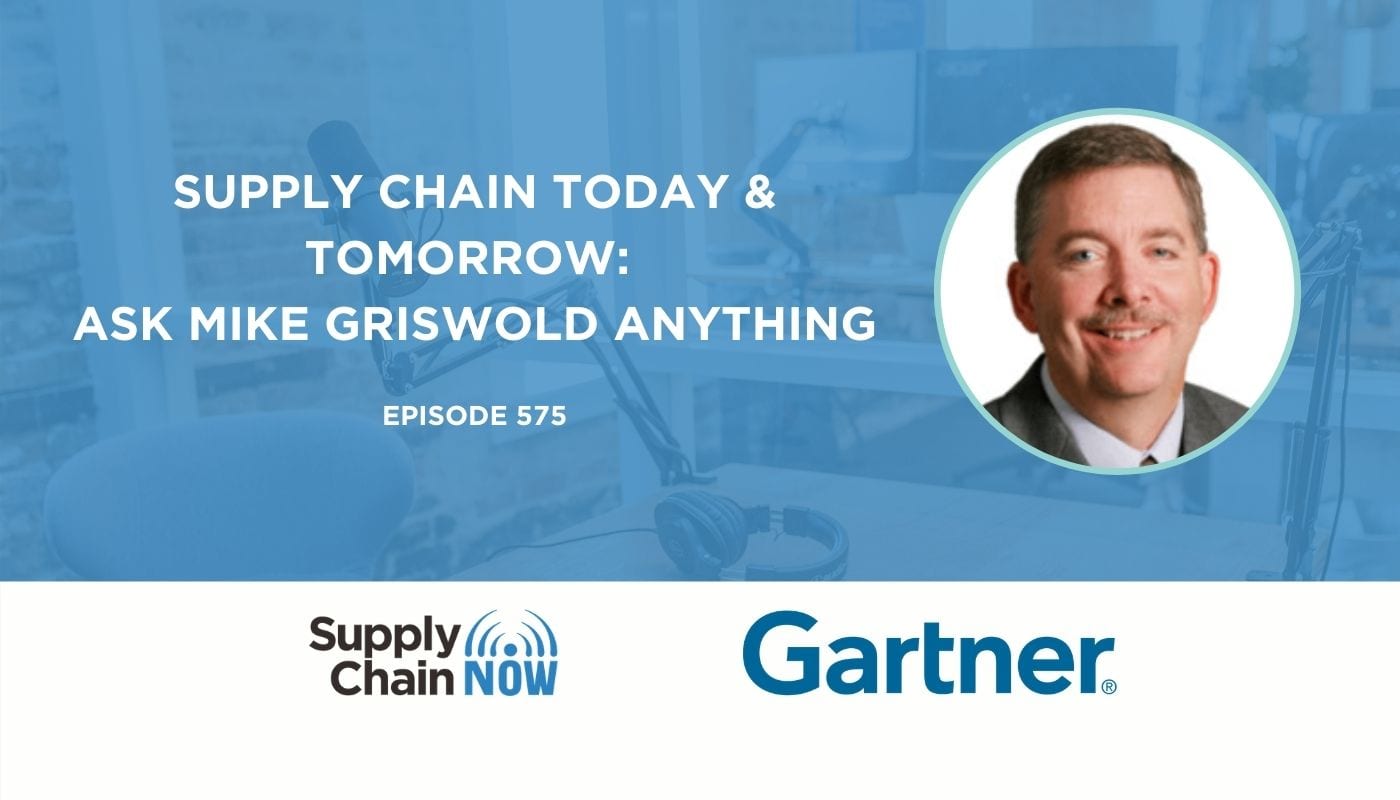
– Mike Griswold is the Vice President of Research at Gartner


Mike Griswold is the Vice President of Research at Gartner, specializing in retail with a particular focus on forecasting and replenishment. He is responsible for Gartner’s annual Top 25 Supply Chain ranking and joins Supply Chain Now on a monthly basis to discuss the latest in retail supply chains from an analyst’s perspective.

In this hour of anything-goes exchanges with Mike, the Supply Chain Now community brought their best questions for this highly qualified guest to answer. From healthy v. unhealthy inventory to basketball to designing network capabilities, Mike has a perspective you won’t want to miss.

In this conversation, Mike answers questions from Co-hosts Greg White and Scott Luton and the livestream audience about:

· During COVID, inventory was full, and we kept adding products at a faster rate than they were moving back out. How can we manage situations like this?

· How do you view demand driven material requirement planning, focusing on strategic inventory, decoupling, and buffer-level management materializing in a complex supply chain setup, given a transition from traditional MRP setup, focusing on statistical forecasts to market demand?

· How do you see the future of sourcing roles after all these pandemic and digitalization driven changes take place? How many years do we have to live with a question mark?

More Podcast Episodes
SaaS
play-button-podcast
podcast-blue-microphone
Podcast
April 15, 2024

Why The Grass Isn’t Greener: Neon Logistics TMS Selection Story

Selecting the right Transportation Management System (TMS) solution can be crucial for businesses. Finding a solution with the right balance of cost efficiency, visibility, good customer service, scalability, risk management, and analytics can be a difficult decision. Sometimes you get it right- and sometimes you get it wrong! In a recent episode of Supply Chain Now, hosts Scott Luton and Mary Kate Love welcomed Cody Graham, founder and president of Neon Logistics, and Anthony Ceritelli, senior director of Customer Success with Turvo, and discussed their unique business relationship. Neon Logistics initially partnered with Turvo for a TMS implementation but later switched to a different tech platform. However, they found the new platform fell short of their needs and returned to Turvo. The switch to the new platform cost Neon Logistics around $1 million in total costs, including time, additional vendors, and lost revenue from customers. Join us for this conversation, and learn from Graham’s unique experience. Find out more about how it’s not just about implementing a software solution; it’s about choosing a strategic tool and partner that aligns with the organization’s goals and values, and facilitates continuous improvement in the supply chain.
Digital Transformation
play-button-podcast
podcast-blue-microphone
Podcast
April 22, 2024

Digital Asset Innovators: Bringing Blockchain Education into the Mainstream

From product verification and quality management to smart contracts and financial clarity, blockchain is a technology solving a variety of data-centric issues. In this episode of Digital Transformers, our host Kevin L. Jackson presents Digital Asset Innovators – a series from the National DigiFoundry that aims to highlight those individuals and organizations that are innovating across the digital asset ecosystem. Joining for this episode are Bryant Nielson and Ryan Williams – two experts at the very heart of blockchain progress. Discussions kick off with the inherent association of blockchain with Bitcoin in the public eye, despite cryptocurrencies being just one single application among many. “It’s impressive. It is impactful. But it’s not the whole forest. Blockchain is the forest,” Nielson explains. The guest speakers then turn their attention to the need to bring blockchain into the educational mainstream, providing students with knowledge to code smart contracts and develop tangible, in-demand skillsets. Further, Nielson and Williams also highlight the potential opportunity to tokenize and gamify learning, leveraging shortening attention spans and the societal drive towards digital dopamine hits for educational purposes. With the spotlight on blockchain-based learning growing, both interviewees also outline the importance of standardizing qualifications and certifications. Here, The…

Supply Chain is Boring – Episode-575

Share: