Intro/Outro (00:03):
Welcome to supply chain. Now the voice of global supply chain supply chain now focuses on the best in the business for our worldwide audience, the people, the technologies, the best practices, and today’s critical issues. The challenges and entities Stay tuned to hear from those making global business happen right here on supply chain now.
Scott Luton (00:33):
Hey, good morning, everybody. Scott Luton and Allison Giddens here with you on supply chain. Now, welcome to today’s show Allison, how are we doing?
Allison Giddens (00:41):
I’m I’m good. How are you
Scott Luton (00:42):
Doing wonderful. I’ve really enjoyed some of these episodes. We’ve done together. You keep bringing these, these Hollywood stars to supply chain. Now we’ve got another
Allison Giddens (00:51):
One. You, your autograph, if you ask
Scott Luton (00:55):
Seriously, an industry, autograph book is what we need, and today’s a continue that trend as we’re gonna be diving into the story of a manufacturing leader, doing big things in the industry. That’s based right here in Georgia. One heck of a, a guest lined up, right?
Allison Giddens (01:09):
Yes. I’m excited. I’m really pumped.
Scott Luton (01:11):
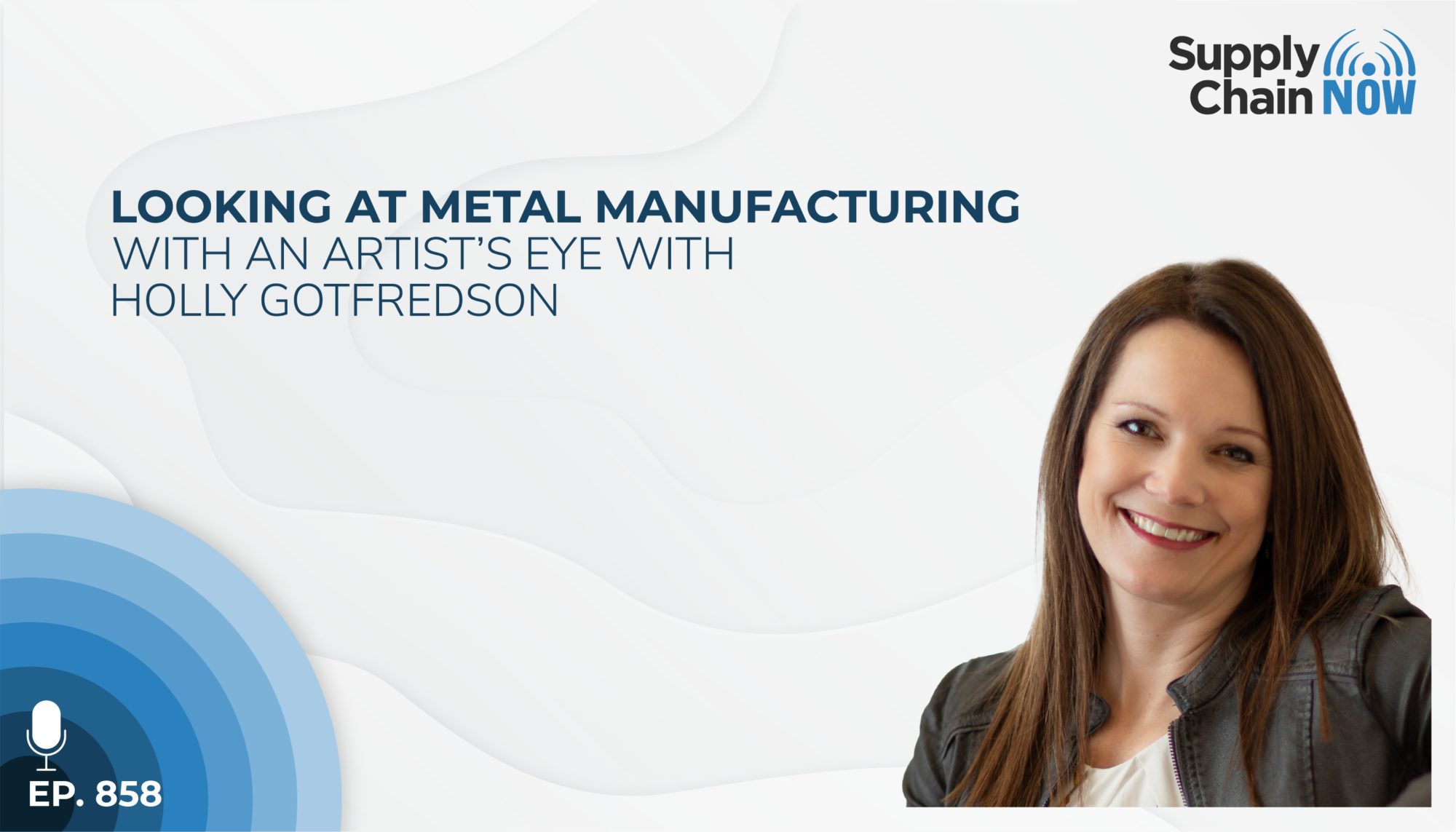
We are too. So with that said, Hey, we don’t wasting time around here. Let’s dive right in. Wanna welcome in our featured guest, Holly Gotfredson president and owner of both American metal craft, Inc. And in finishing dynamics, LLC. Holly, how you doing?
Holly Gotfredson (01:27):
I’m doing great. Great to be here. Thanks so much for having me today.
Scott Luton (01:30):
You bet. Well, great to have you back as we were talking pre show, of course Allison’s is, is one of our favorite repeat guests. She’s been on a bunch of shows. She, Allison you’re shooting up the charts in terms of occurrences,
Allison Giddens (01:41):
Right, right. In between him Michael’s Jackson and Madonna. Right. Is that
Scott Luton (01:45):
So yeah, something like that. Yes. I like that proud gen X reference there, but Holly, uh you’re you know, you’re also a repeat guest and we were talking pre-show we think that you appear somewhere in around the 54th or 55th episode, and it’s really cool to reconnect with you and share every, all the good stuff it’s happened since then.
Holly Gotfredson (02:05):
Yeah, absolutely. Yeah, it was, it was really fun doing that initial podcast when supply chain now was just getting started and you’ve done a great job, um, growing its presence. I mean, I see all your posts everywhere and you produce such wonderful podcasts. So I’m, I’m really excited to be a part of this today.
Scott Luton (02:23):
I appreciate that we get $7 per post. So I stay I’m kept, of course, I’m kidding. I stay on social media, cranking ’em out, right. It is fueled by passion and, and, and really having the chance to sit down and rub elbows and learn from, from leaders. Like both of y’all here, that’s the secret sauce since best part of attorney. And we get a chance to do that again over the next hour. So, Holly, I appreciate that. Appreciate your time. And of course, Allison, so let’s see here, Allison, we’re gonna start with one of our favorite and most traditional questions, cuz it’s like a, such a level setting question. So Holly, tell us, where are you from? Where’d you grow up and you gotta give us some of the anecdotes of your upbringing.
Holly Gotfredson (03:02):
Absolutely. Well y’all might have already noticed that I talk kind of slow. So guess where I’m from. I’m from south Alabama. Um, I actually grew up on the outskirts of Birmingham. Okay. And kind of a rural area. And you know, I grew up in the early seventies, so kids were still playing outside until nine o’clock at night. Wiffle ball was the favorite sport of the time. I remember getting the first Atari and my favorite game was pitfall. I don’t know if you guys remember pitfall. Yes. But I can still hear the music in my head. When I think about it, DUNS and dragons, I love that I was kind of a nerd growing up and really got into that and Battlestar Galactica and buck Rogers in the 21st century when I wasn’t outside riding bikes, I was inside watching sci-fi and James Bon eventually with my dad. So the seventies were pretty cool. Fellow gen Xers preach, you know, love that out whole time. So
Scott Luton (04:00):
We I’m, I’m having some cultural flashbacks here, uh, cultural flashbacks, but Holly. Yeah. So you surprised me, I thought you were gonna say you grew up in Georgia, but it was Alabama. And you said it was just outside of, of Birmingham. Is that right?
Holly Gotfredson (04:13):
Yep. In a little, uh, area called Kaba Heights. And of course I’ve got extended family and mobile and uh, a little bitty town called Macintosh, which is about 20 miles outside of mobile. So we head south pretty regularly to see all my extended family.
Scott Luton (04:29):
Very cool. You know, Birmingham, OB, obviously you’ve been there. Holly. I bet you’ve been there, Allison. It really is a cool city to do business in and it’s, and from what I can tell, it seems like in recent years it’s been very vibrant and it’s growing and it does business, you know, not in an old fan way, old fashioned way. There’s a lot of technology and, and uh, some forward looking leadership that make up the city of Birmingham. So I love that Holly. So you learn something new every day. One more question about sure, Alabama, Allison, you know, we’re obligated to ask this because, and Alabama comes up, we gotta talk about barbecue. It’s it’s a rule, a regulation. So what was so growing up for you, what, what did that mean in Alabama? What, what was your paying us a plate of barbecue?
Holly Gotfredson (05:15):
Hmm. I feel like there was a restaurant. I think it was the golden rule. Barbecue.
Scott Luton (05:20):
Okay. Sounds good.
Holly Gotfredson (05:21):
Been it’s been a while, but there were quite a few, uh, places to choose from. Yeah. There’s a catfish place in south Alabama that, oh my gosh. They give you enough for five people. And I mean, if you leave that place hungry, it’s your own dang fault, you know, there’s some good eat in Alabama. Let yes, there is. Let me just tell you,
Scott Luton (05:42):
Thank you for making us hungry. This I soul.
Holly Gotfredson (05:45):
Yeah. Thank you. I had a Caesar salad for lunch. I appreciate it.
Scott Luton (05:49):
All right. So Allison one, before I toss over to you, one more question about your upbringing. We wanna learn from you and kind of hear your perspective. And we all have those really significant individuals and figures that, that play a influential role early in our journey, right? Whether they impacted any of your decisions or what you’re doing now or, or just who you are as a person, who would that be for you? Holly?
Holly Gotfredson (06:12):
So I have two people that come to mind immediately. And the first is my dad. He grew up in, you know, south Alabama as well. And, uh, went to UAB and graduated with a business degree, one of the first of his family to attend college. And he, he was really influential in the sense that, you know, he took me on business for trips with him, you know, he was, he was in pharmaceutical sales. So when he had a day trip close to home, he would take me and we would call on, you know, different pharmacies and different doctors’ offices. And something that I noticed about him was that, you know, he, he knew these people and he wanted to formulate a relationship with them. He wasn’t in there trying to really sell them a product and over and over, I would see the same people.
Holly Gotfredson (07:01):
And he had such a, a nurturing, good relationship with these people. Um, he’s just a kind, very gentle man. And I just, you know, that really shaped who I became, um, treating, trying to treat everyone that I meet with, with kindness and looking for that long term relationship. Mm. Um, and the other person that I would say that really had a great influence on me was my great aunt ma bless her soul. She lived until she was 97 years old. Wow. And she was a young woman in the twenties and thirties and something that was, I really thought was great about her. Was she kind of, um, bucked the norm. She didn’t get married at a young age. She waited until almost 30, which at that time was, oh my goodness. You know, you’re an old made by then. And she, she worked and she was in real estate and she kind of made her own way.
Holly Gotfredson (07:53):
And when she got married and she and her husband went into business for themselves together in real estate. And so she was always just someone that I could go to and talk to as a, as a mentor, as I was kind of growing up, especially when I went to college and was trying to adult for the first time and, and find my way, um, I could always count on her to be brutally honest, to give me really good, solid advice. And, you know, she kind of, she was, I admired her because she was a go getter. You know, she, she got out there and did what she wanted to do, um, despite cultural norm norms of the time and what was expected of her and really kind of paved the way for, I think the next generation of, of women in all kinds of different fields.
Scott Luton (08:40):
Wow. I’d love to. So 97 years old, she lived in a full life, a, a life of impact. Sounds like to me, I mean, I feel like just in the last couple minutes, I’ve got to, to, to know aunt may and yeah, I see exactly. I feel a little bit of why we love people like that. So we’re gonna have to connect after the episode. I’d love to learn more. And we, we do a business history podcast around here and we kind of lift up figures that never, that had big impact, but never got the recognition they deserved. And aunt may seems like she’s one of those, uh, special folks. So we’ll, we’ll connect after, uh, today’s show. Alison sounds great, man, with that opening, there’s so much more that we wanna learn from Holly. Uh, what, what’s your thought on aunt ma there, Allison
Allison Giddens (09:24):
Man, I wish I knew an ma I right. I feel like I, yeah, I’ve got, I’ve got a few women relatives that in the same boat kind of bucked the trend and did that. Weren’t weren’t necessarily the norm. And, uh, I think it, they’re not truly appreciated I think until the next generation or at least that’s really what, when I’ve come to, to experience. But
Scott Luton (09:47):
Yeah. Agreed. I, I gotta, I gotta add one. So my grandmom, who’s still with us wanna say she’s 94, uh, she’s a fighter, her name, Hazel Rutland. And she was very special on my end kind of in a, in a similar vein as your aunt may, but in particular, she was always at rebel. Some of my favorite moments as a kid was doing people, watching with my grandma, uh, cuz she had this innate sense of humor and some of it should have made you stayed in, you know, but we just had these best times laughing into
Allison Giddens (10:20):
The company should never stay in.
Scott Luton (10:22):
Right. It’s true, Alison. Right. So, so where are we going next with our dear friend? Holly Alice.
Allison Giddens (10:27):
So Holly, I am curious, cause I, I do know a little bit about your educational background, which I find fascinating and so feel, feel free to, to walk us through that, but to also tell us a little bit about prior to what you’re doing now with American metal craft and finishing dynamics, what what’s a role or two that significantly shaped your worldview? Mm
Holly Gotfredson (10:49):
Sure. Well, I lived in the art world for quite a bit of time. Um, I graduated from the university of Georgia with an art history degree, you know, because that’s how you get to metal manufacturing apparently. I mean, you know, but it was my, you know, I, I really thought I was gonna live in the art world for the rest of my life. I wanted to be a curator. So I started at the high museum of art. I took the first job opening that they had, which oddly enough was accounting, but it got my foot in the door. And while I was there, um, I really learned a lot about perspective and that, you know, when you look at a painting and also in, in studying art history, when, when you’re looking at a painting you’re using analytical and critical thinking, you’re, you’re thinking about the time in which this piece was created.
Holly Gotfredson (11:36):
You’re thinking about the artist’s life. And you’re also thinking about sometimes the symbolism and the meaning behind the painting. And so as I was at the high museum and as I was working and, and looking at all these different works of art, I happened to be there when the 96 Olympics, um, happened in Atlanta and we, uh, procured this beautiful show that was inspired by the Olympics. It was called the rings exhibition. And I mean, you talk about some of the most beautiful and some of the most famous artwork in the world, um, was had come in for this exhibition and walking around and looking at those different works of art. I could just imagine all the different perspectives that people brought, you know, and that’s, that’s the beauty of, I think every interaction that we have is, you know, if we’re open to learning and sharing our perspective with one another, I mean, what a beautiful thing and, and what a great thing that is because we learn and we grow from one another when, when we create that doorway. And so that definitely had an influence in shaping my worldview
Scott Luton (12:45):
And they really quit Holly. Before you get to that second one, you painted such a picture there. And Allison, if you noticed, as she was sharing, it was like, you could see her, re-imagining the rings and re-imagining those experiences. Did you see that? Alison?
Allison Giddens (12:59):
Oh yeah. Oh yeah. The picture was painted and I I’m, I meant to use that pun
Scott Luton (13:06):
And, and it’s so true, you know, if, if we, if we really lean in to, uh, other points of you, other perspectives across the spectrum, you know, one of our favorite, I beat this like a dead horse, Holly, but it’s very, apropo here. One of my favorite conversations of 2021 is we sat down with a, uh, supply chain practitioner who got his start studying classical art. Right. That’s what his degree was in. And of course, supply chain, the industry is using that background. Cause one of the things that we all know we gotta do, we gotta be creative with how we approach old and new challenges these days. So I love that art professionals, art students, majors, you name, it are in manufacturing and supply chain. I think it’s a beautiful thing. No pun intended.
Holly Gotfredson (13:50):
It’s able too,
Allison Giddens (13:51):
Like it seems a natural progression, you know, if you really think about it well, yeah, that makes total sense.
Scott Luton (13:57):
Right? Absolutely something for everybody, for sure. And we need all, all, if your left brain, right. Brain doesn’t matter back brain, front brain, we need everyone, uh, in global industry. So Holly, thank you for letting us kind of cut in for a second before you shared your second experience here, but please continue.
Holly Gotfredson (14:15):
Yeah, I absolutely. And, and just to add to that, you know, yeah. I completely agreed that. And what I found through my journey into, uh, metal manufacturing and metal coding is, is you’re exactly right. I mean the artistry of what we do and talking to architects and talking to designers and building things, you know, project deliver on a that I never imagined. Those are works of art. If you think about it, as well as environments for the occupants and for the stakeholders that are, you know, part of that project. Right? So it’s, it’s just, I love the whole process and, and the creativity that’s involved.
Scott Luton (14:53):
We can tell
Holly Gotfredson (14:54):
The second thing that, you know, really stuck with me and kind of shaped my worldview was when I left the high museum, I went into marketing and advertising for about a decade. I worked in the real estate industry for quite a while. And one of the things that I learned, I’m sure you go, I remember in oh seven and oh eight when the economy crashed and the housing market just was in the pits. And my office was a wonderful office. I had the privilege of working for an incredible agent, um, who taught me a lot of things about business and about leadership. But one of the things that really stuck with me is that’s success is possible. No matter the circumstances. Hmm. What I watched her do when the chips were down was just inspiring where a lot of people were starting to get out of the real estate industry completely because they were afraid of the future.
Holly Gotfredson (15:48):
She dug in harder and pivoted. And so rather than, and working and looking at residential and commercial real estate, as she had always done, she went and got retrained to be a short sale foreclosure and relocation specialist. Wow. So she continued her success despite the economy being in the toilet as it were. And to me that just, I loved the fight in her. Mm. And so, you know, I really loved, um, I loved kind of looking at how she handled that situation. So especially in the times that we’re living in today, that’s always stuck with me that even when things look grim, this is an opportunity for us to pivot and to grow and to learn and to innovate. Um, and that’s definitely something that we’re doing at both American metal craft and finishing dynamics. So it’s, it’s been an opportunity for us,
Scott Luton (16:41):
Holly, what very well said, I mean, inspiring what you just shared there, uh, Alice and your take, and then we’ll dive into what they’re doing at the, the company’s Holly leaps.
Allison Giddens (16:50):
That’s really good. I, I love that success. It can happen. That’s, you know, in, in today’s world of, you know, post pandemic and supply chain WOS and all this stuff, it’s very easy for, especially small businesses to kind of fear the future, uh, fear, a lot of the unknown. And so it’s nice to have those friendly reminders that there are people out there kicking butt and taking names. So
Scott Luton (17:15):
Fearless,
Allison Giddens (17:17):
Very
Scott Luton (17:17):
Cool. You know, we, we can probably all three of us perhaps, uh, relate to that, the great recession, which maybe for some of our youngest listeners right now, uh, might have been before they, uh, held, you know, real estate or before maybe even they were in the workforce. You know, we, we owned our first home at the time and we had, and, and, and our family was starting to, to come. And so, and we were, gosh, like many Americans and others, we were locked in to a condo in town in Atlanta, and we had very few options. It was a very scary time. Yeah. I’m not even gonna share fig facts and figures cause it’s scary enough. Just, just thinking back through it. But as things do, you know, you persevere, you honor your commitments, you know, as, as appealing, I’m be honest as appealing. And if y’all remember the headlines back then strategic, what they call it, strategic walkaways or something like that. That was the thing, right. Because folks couldn’t, they couldn’t pay, but you persevere. And then thankfully, uh, the real estate markets turn around and, and then to now see what’s going on in Atlanta, it’s really remarkable. Uh, how things have, have turned be this far, but I digress. Uh, I know Allison and I both wanna learn more about your two companies, both American craft and finishing dynamics. So tell us more about what those companies do.
Holly Gotfredson (18:34):
Sure. So American metal craft was started by my father-in-law in 1986. Um, it started as a, just a small metal fabrication shop off Hal mill road. He’s a structural engineer and he had left a company and decided to go out on his own and start his next adventure if you will. And so, you know, he was producing wall panel systems on a small scale and his presence really started to grow. He started to create a, a national name for American metal craft. And the products that we offered started to grow as well, 36 years later, here we are, we’re still a leader in architectural metal manufacturing and he took it to the next level. And so I have big shoes to fill as a second generation owner, as you can imagine. In 2004, he saw a niche, especially in the Southeast for coats. And there was a company in town that had pulled up stakes and left to go north. So there was a space for that, that business and, and, and, you know, for the codings for metal products. And so he thought, you know, let’s do something with this. So he started finishing dynamics, uh, second company in Ricca Georgia. Okay.
Scott Luton (19:48):
So again, and really quick from a, from a geographical standpoint, which Allison and I, we both showed our non-pro the other day, but UHA is on the ki it’s really outside the Metro Atlanta area kind of in the west, uh, west Georgia. Is that accurate?
Holly Gotfredson (20:05):
That’s right. Yeah. We’re about an hour outside the city. West Georgia. Yeah.
Scott Luton (20:09):
Kinda out the I 20 corridor on west side. Is that right?
Holly Gotfredson (20:12):
Yep. That’s right. Okay. All
Scott Luton (20:13):
Right.
Holly Gotfredson (20:13):
You got it. Wonderful. Yeah. So we had both of those companies and we were not only, you know, coding American metal crafts products, but we were also coding for other fabricators, which we still do today. And again, going back to that recession, oh 7 0 8 timeframe things weren’t getting better really quickly. So in 2010, uh, we saw the opportunity to combine facilities. And, you know, at the time we were just kind of thinking about, Hey, this is gonna be a great way to save money. We’re not paying, you know, two, two mortgages and we’ve got two utility bills, et cetera, et cetera. But it really, what, what it did was it created everything under one roof so that it, it gave our customers savings so that they weren’t paying that extra, you know, shipping between two facilities. It also lowered our carbon footprint. So now, you know, you’ve got less trucks on the road, you’ve got everything in house and you’re controlling the quality of everything from start to finish.
Holly Gotfredson (21:11):
So now we have engineering fabrication and finishing all under one roof. Now question I get asked quite a bit is how did I get into metal manufacturing? We’ve talked about where I’ve been, right? Which doesn’t seem like it matches up very much with where I am, but you know, it, it is a funny story. And, and it wound up being a, a pretty incredible journey. Um, my husband and I got married in 99 and, you know, they, he and my father-in-law would pull me in for projects. Occasionally they would say, Hey, can you do a flyer? Can you help us with this advertisement and this magazine? What, what, whatever,
Scott Luton (21:45):
Can you help us close the deal? Holly help us
Holly Gotfredson (21:48):
The closure. Yeah. And so I would just kind of do those things periodically for them and slowly it really peaked my curiosity. You know, I remember when my, when people would ask me, what does my husband do? It was a difficult thing for me to answer because I really didn’t understand the business that much initially. So I really enjoyed learning about the business and the more I did these small projects for them, the more curious I became. And eventually I started getting more and more involved and they pulled me into a full-time position. And through that, I started learning from we’ve. We’re very fortunate to have long-term team members with us wonderful, wonderful group of folks, um, great team. And so some of those really helped me and took me under their wing, taught me a lot about the business from the ground up. And, um, I continued to move up into upper leadership. And then in 2017, I purchased American metal craft from my family, created a business plan, a pretty aggressive business plan, and really started to grow our presence even further. And then in last year, fourth quarter, I purchased finishing dynamics. And so I’m really excited to be a permanent part of both of the companies and their history.
Scott Luton (23:04):
All right. So there’s so much to dive into there. I wanna go back for a second before we celebrate your big moves right now that you own these companies. I love that. Uh, that’s, that’s plenty to celebrate, but going back, I love Allison. Uh, what Holly said, basically she went to the gemba, right? Gemba being the, uh, the term where values created, which usually refers to, you know, what the workforce is doing on the production floor to create the value in the products, whatever it is. I love how you, you talked, that’s what you did. You went to the pros, you went to the experts, you went to the competitive advantages of the business, which is the, the humans and, and, and the talent. So I love that. Alison, your quick take there.
Allison Giddens (23:41):
Yeah, no, and I, I love the idea that, and we are a manufacturer in, in parts and we don’t have a processing line let alone a processing company. And I love the idea of like, like Holly said, not only are you minimizing your carbon footprint, but ultimately in my head as a business owner, I’m thinking, holy cow, you’ve just taken off so much, so much risk, right. By having to ship things, all kinds of stuff happens in transit. We’ve all been there, done that. Oh yeah. You know, but I, I, I love the idea of, uh, taking on something that you’re just checking one more box on risk mitigation. And that makes a customer very happy knowing that everything’s under one roof. I love that
Scott Luton (24:23):
Excellent point. I’m with you, uh, the, to the next part here to become the owner, right. And to become the, the, the CEO, the one that calls the shots makes the decisions, you know, what a big move and what it’s gotta be, tell us how fulfilling rewarding, you know, you may jump outta bed each day is kind of what I’m gathering. What, how did that make you feel?
Holly Gotfredson (24:44):
You know, it will was, I have to be really honest. It was scary and exciting all at the same time. It, you know, I never, in a million years ever saw myself in this type of leadership role, but, you know, the last 10 years of my life, especially in moving from, you know, small roles in the company to larger and larger roles gave me the training ground to do what I’m doing today. And the team that we have in place for both companies has just been so instrumental in that as well, knowing that I’ve got a team that I can trust that I can empower with, you know, everything that they need to do their job. And they’re already so talented and bring so much to the table that being, you know, initially scared at first, really was overcome by excitement. Once I, you know, was ready to step into those, those roles as, as CEO of both companies.
Holly Gotfredson (25:36):
And so I’ve really enjoyed, um, being an ambassador for our brands. I love going out and telling people about what we do. Of course, I love to brag on our team and, you know, talk to architects, designers, people in the AEC industry and people that aren’t connected to the built environment, you know, they, metal manufacturing is something that you don’t hear about every day necessarily. And so it’s a, it’s a great icebreaker to, you know, what do you do? I’m in metal manufacturing, what, you know, that could be aluminum cans. That could be a number of things. And so, and you know, that also opens the door to, to have great conversations with others about what they do. Sometimes they’re in the manufacturing world. Sometimes they’re in the construction world, you know, whatever sector, it’s always a great learning opportunity. But as, as, as the president of both companies, that’s one of my favorite is to be a, a brand ambassador and, uh, being able to teach and educate others. And, uh, what we offer
Scott Luton (26:35):
Love that I, I would, you know, so you, you already kind of answered one of our next questions, your, you know, favorite aspect of your role. I would also add since you’ve answered that one, it seems to me and correct me if I’m wrong. Of course, I know you will. It seems like you enjoy also being the ambassador for industry, right? Uh, both of you, I think Holly, you and Allison have this in common, you know, it’s not just about your company, it’s not just about your family. It’s not just about your team. It’s about the greater good, and both of y’all are very active in, in, in being that ambassador for manufacturing in what I’d call greater industry. So Allison, Holly, speak to that for a second, if you would.
Holly Gotfredson (27:12):
Sure. Yeah, you’re exactly right. I mean, there’s such a great opportunity in the AEC space and in the manufacturing world. Um, and there’s, even though we’ve got programs like stem and steam out there in the, the schools, but I think the trades for the last 20 or 30 years have kind of been on the decline. Everybody was going to college. No one was really looking at the, the opportunities that lie within these spaces. And so I really love being able to talk to, especially people that maybe not have not been exposed to that, talk to them about the opportunities that exist. And there’s a huge need for manufacturing, um, especially within our own country. You know, we’re looking at all the things happening in the world. And, and so, you know, there’s great career opportunities and great innovation opportunities for those that are, are interested in, in learning more. Absolutely
Scott Luton (28:06):
Agreed. Agreed. Allison, why don’t you respond any thoughts there and then we’re gonna see what else, uh, Holly is tracking across industry.
Allison Giddens (28:14):
I love it. No, that’s, I, I love how Holly and I always seem to be running in the same circles too. She’s right. The, the trades have been on seemingly on the decline when in actuality, the demand is, is so sky high that, I mean, I know that if someone, if Holly had, and Holly, you can stop me if I’m totally off here, but if she had somebody walk into her facility right now with the background of metal manufacturing, and if that person were to say, Hey, I’m looking for a job, Holly would say, can you start yesterday? Yeah, because I, I know that’s what we would say.
Holly Gotfredson (28:50):
So,
Allison Giddens (28:51):
I
Holly Gotfredson (28:51):
Mean, there’s, you’re exactly,
Allison Giddens (28:52):
Right’s so many, so many spots and roles and, and needs that people can fill. And I mean, ho Holly, from what I’ve seen and myself and, and people that Holly are all running again, running in the same circles with, we are trying desperately to showcase this industry as a fantastic place to be. I mean, you heard from Holly, you, she can have an, are you an art background? You can heck I’ve got a criminal justice background. You can do any, you can have any sort of background and come into this in industry and hit the ground, right.
Scott Luton (29:26):
With
Allison Giddens (29:27):
Creative, creative problem solving.
Scott Luton (29:29):
And Allison add to what, you’re, what you’re saying there, not just hit the ground running and be successful, but, but like both of y’all become presidents and leaders of your organizations that is, uh, inspiring. And, and I love, I love how both of y’all have spoken to that. So Holly, when you think of the greater I’ll call it, you know, the greater manufacturer industry, or if you wanna talk more to global business or you name it, but what’s, uh, a couple of, uh, items, news developments, topics, you name it that you’re tracking more than others right now.
Holly Gotfredson (29:59):
Sure. Well, you know, we’re all aware of the, the supply chain issues. So that’s something that we’re definitely paying attention to and something that’s impacting us pretty readily every day. Excuse me,
Scott Luton (30:11):
Is that eight pollen or spring in Georgia? That’s what you’re illustrating
Holly Gotfredson (30:15):
Absolutely is, oh my goodness. The cars are gonna be yellow here any second, but yeah. Um, so yeah, you know, we’re keeping our eye on that. We’re looking at, uh, escalation costs across every supply that we work with and trying to figure out ways to mitigate that. Also lead times on things that we’re used to getting seven to 10 days, we’re getting longer and longer. So, you know, it’s pushed us into new technology and innovation kind of like we were talking about earlier, we now have a state of the art mix and match system. We’ve always had mix and match capabilities, but this is the latest and greatest, and it’s gonna allow us to blend more. In-house paint rather than waiting on a manufacturer to deliver that to us. And we can match to 80% of solid colors in house, which will really cut down on that lead time.
Holly Gotfredson (31:07):
We also are looking at, um, a second product that in addition to offering P DF coding, we’ll be offering F E V E, which has been around for a while, but it’s a coding that’s readily available. It’s has very similar properties as PV DF resin, which is the thing that’s kind of in short supply right now. So it gives architects, specifier GCs an an alternative. So if the lead time on what was specified, say, PVF is 12 weeks. Now, they’ve got an alternative to that that can, you know, be ready in seven to 10 days. So this whole of flat chain thing has really it’s, it’s been difficult. It’s absolutely been challenging across the board, but new technology and innovation have really come from it, which we’re really excited about. We’re also watching
Scott Luton (31:55):
Quick, Holly, if I can I interject just for a second? I think that’s, you know, that is certainly, and Allison we’ve talked about it. I like, I like talking about it, frankly, because there’s any of bad news out there and, and challenge after challenge. Some of it more heartbreaking than others that we can, that gets our attention. But some of the good news is that great point Holly just made is that the pandemic and other things that we’ve been faced with in recent years, companies like Holly’s that take them take the opportunity to, okay, what can we do differently? What can we innovate? What products can we, what options can we create for our customers in the market? You know, those are the organizations I believe that have made the most of, of the opportunity that is out there, despite the most challenging set of circumstances. And some of these things aren’t, frankly, they’re not gonna be solved overnight, not gonna be solved maybe even this year, next year. Uh, but Holly, that, that, that is an inspiring leadership. Alison, your quick take before Holly moves forward with her next, um, topic,
Allison Giddens (32:51):
I think it’s a throwback to what Holly said earlier with the success can, can be anywhere and whatever kind of conditions. I mean, if you set yourself up for prepping, like I said again, with the risk management, right, right. Uh, you’re bringing things in house that you don’t have to rely on other people for. That’s how you make it, so that success exists wherever you need it to exist.
Scott Luton (33:13):
Strengthening. And, and what I, we’re just talking about, uh, you know, EV that word resilience, how Holly Allison’s everywhere these days. So we kinda, we’ve embraced this word anti fragility, because it’s a little bit funny. And, and really, we don’t hear that. We don’t, you know, we, that that really is what resilience is all about. Right? Cause we’re all absolutely fragile to a certain extent, but Holly inspiring a love how you’re not sitting on laurels and sitting on your hands, despite some of the reasons that, uh, the market maybe is encouraging us to do that. You’re taking the bull by the horns and driving ahead. So you were about to share before I, I, I cut in your neck. What else are you tracking cross industry?
Holly Gotfredson (33:52):
Well, you know, in addition to the, the supply chain shortages, we’re also looking at of course, you know, gas prices, what, what is freight gonna do? How is that going to impact lead times that are already, you know, fairly challenging. And so we’re definitely tracking that, watching that really closely, putting our heads together to see what solutions we can come up to try to mitigate that. And, you know, something just to touch on what we were going back to the supply chain is, uh, what we’ve, we’ve all always known that communication is key for any successful project, but especially in the times that we’re living in now, making sure that if there’s somebody that thinks that they’re gonna need rain screens, wall panels, perforated panels, ornamental metal, any type of, you know, aluminum product from us with a coating, a particular color that we’re having those conversations as early in advance as possible to make sure that everybody is on the same page in terms of delivery schedules, lead times and material availability. So in this, in this world, especially communication is the king
Scott Luton (34:54):
Agreed. It’s, it’s the whole Royal family king. It is
Holly Gotfredson (34:58):
Queen
Scott Luton (34:59):
Jack ACE that matter. And you one additional point there and Allison, I welcome your, your thoughts here is, you know, no one likes to communicate bad news, but that is just as vital, if not more vital so that folks can plan and come up with, with, uh, options and, and, and backup to the backup, to the backup plan. So that communication to your point has, uh, it’s always been important, but man, during getting through these times is a premium Alison, any thoughts?
Allison Giddens (35:25):
No, you’re absolutely right. There’s a, there’s that unknown is a scary thing. And so when you’re not communicating with a customer or when you’re not getting communication from a vendor supplier, you tend to think the worst and then you get frustrated. And then that comes out in, you know, uh, pithy, not nice emails or phone calls.
Holly Gotfredson (35:44):
And so
Allison Giddens (35:45):
It’s, uh, you know, yeah, it’s so easy to communicate even if as tough as sometimes bad news is to communicate. It’s so much easier to say to a customer, Hey, I’m working on procuring material for X, Y, Z. Just wanted you to know, I don’t have a date for you, right? The fact that you said that will go a long way.
Scott Luton (36:07):
Agreed, Hey, really quick memory MEMA. One of our dear family members I’ll call it listeners. She’s on our live streams a lot. She said something earlier today. And I, I think I’m gonna get this right memory. Don’t kill me if I don’t. But she said an informed customer makes informed decisions. Yes. And really it’s just that simple, right? So memory, if you’re listening, thank you for being a part of that and, and love the t-shirt ISS. You drop in our conversations. Okay. So Al, where are we going next with Holly?
Allison Giddens (36:40):
Let’s talk about, I mean, as we talk about these, the communication challenges and supply chain challenges and everything in between, um, Holly, what, what can you share with us that was a key Eureka moment either during the pandemic era, or maybe it’s during these latter times and supply chain shortages, or, or what, is there something in the past couple of years, that’s just really struck you,
Holly Gotfredson (37:02):
You know, it, it wasn’t necessarily a Eureka moment, but the pandemic really made me laser focus in on the fact that it is so critical to have the right people in the right positions. We, the chips are down. And when all of a sudden you’ve gotta move your whole front office remote, you’ve gotta look at production differently in a very short period of time, having those key people to make great decisions on your company’s behalf is so, so critical. And so that is why we are so grateful for our team and try to work with them and, and love on them as, as much as we possibly can to tell them that they’re appreciated and, and loved because they’ve really they’ve pivoted and, and have really been able to, to reinvent the wheel when things have been up and then down and then up and then down, mm.
Holly Gotfredson (37:58):
As they are in life. But, you know, during the pandemic specifically a Eureka moment, I guess I had was that I just kind of took normal life for granted. I never thought about going to the gym and going to a restaurant as, as privileges, right. Necessarily. And, and to have that the hold for almost two years as the world was going crazy with the, with the whole COVID thing, it really made me stop and count my blessings and be really, really thankful for the opportunity to go visit with family and friends. And so it really gave me a new appreciation for the small things.
Scott Luton (38:43):
Hmm. Well said, uh, cause as often as takes place in life, the small things become the big things before we know it. Uh, right. Especially looking back beautifully said there, Holly, so speaking, uh, of really cool things, really cool things I gotta give. Uh, so Allison, I don’t know how and Holly, maybe you too, I don’t know how y’all getting sleep at night. Maybe y’all got some clones working around
Holly Gotfredson (39:05):
You all Don. Yeah, we really don’t. We
Allison Giddens (39:07):
Just don’t,
Scott Luton (39:07):
It’s remarkable. It really is. Uh, cause both of y’all not only run your companies, but you, you, uh, give back and do so much for industry. So Allison, I might get this story wrong, but I believe you founded this initiative called a M V I and it’s such a cool give for, do good. Be the change type of, uh, initiative. Tell us what that is because Holly’s involved too. Um, tell us what that is and why you did it and then we’ll find out what Holly’s doing.
Allison Giddens (39:39):
Sure. So yes, the am V is the advanced manufacturing virtual internship. Um, just some cool buzzword thrown ’em together and I hope it sticks. No. Um, it was kind of, it was the answer to, uh, a COVID obstacle, which we were supposed to bring on a couple of interns in, in April, 2020. And of course, as we all know what was happening then, so rather than cancel on this particular teacher who we’ve got a great relationship with here at Wintec, um, I knew, I couldn’t say no to him. So I was like, all right, what am I gonna do? What am I gonna do? So we came up with a virtual version and the virtual version, I think in my opinion, at least is as the far surpassed, anything that we could have individually provided students, valuable, um, resources and people and knowledge and exposure to industry and the whole point of the program.
Allison Giddens (40:30):
It’s a, it’s a four week program. It’s all virtual for an hour, a day for high school, juniors and seniors. We do it in the summer and it’s open to anybody. It’s a free program. Cause it’s all volunteer run. If you go to advanced manufacturing, virtual internship.com, you could find more info and how to apply for the summer. Um, but basically every day is a little bit of a different topic, revolving around manufacturing. And the idea is to bring on subject matter experts like Holly, who can speak to what they do and their little, their niche in the industry and get kids excited. And, and if you can’t be what you can’t see, then these kids don’t know that these things are out there and to see young adults light up when people are talking about, you know, these crosses of, of here’s the art world that intersects with some which intersects with architecture, which intersects with manufacturing and you see these kids, like I like all those things that would be cool to do, right.
Allison Giddens (41:26):
That’s the name of the game? So fortunately Holly has been with us since the, the first one, which was 2020. Then we did another one in 2021. Then we’ve got another one coming up and she’s agreed to stick it around. And we even evolved a piece of the program with the neurodiverse community at one point. And we partnered with a friend of mine, Megan Timco to come up with an Avi for those that identify as neurodiverse. So folks that are maybe on the autism spectrum. Um, and, and that was a, that was a terrific experience because those kids really hung. I say, kids, those young adults, everybody’s a kid. If they’re younger than me, those young adults really honed in on some really cool pieces of the industry, you know, industry is having workforce development issues. Okay. Well, if the neurodiverse population is having trouble finding jobs, why don’t we have them meet? It’s like, it’s like the two guys on the corner, one guy’s selling tickets to the Falcons game and the other guy wants to buy ’em and it’s like, Steve, meet bill, bill, meet Steve.
Scott Luton (42:24):
Right.
Allison Giddens (42:25):
That same idea.
Scott Luton (42:27):
Right. Allison, there’s so many aspects of, of what you’ve developed and built here that I just love. But Holly let’s hear from you. You you’ve been a participant since the beginning. You’ve taken time donated time and met the students involved that, uh, you’re impacting, you know, follow up on what Allison just shared about what a V I is and talk about your experience with it.
Holly Gotfredson (42:50):
Absolutely. Well, I was thrilled when Allison asked me to, to be part of it. You know, it’s part of my, my mission is to get out there and spread the word as we talked about earlier about all the opportunities available in the manufacturing space in particular. And so I just loved, I loved listening to the other speakers. I had an opportunity to kind of meet some of them. We had a few pre meetings before the actual internship started, and that was a great way to get to know people. Uh, there was, I think, uh, one guy was from the UK, right? Allison. So, you know, with global, yeah. With, with the advent of zoom and with everybody using it, I got to chat and connect with somebody that otherwise I never would’ve met. And I also, it was really fun at the end of the internship. The students did projects to share with the group. And so some of the presenters acted as judges and we were able to see visually and, and you know, their ideas and what they got out of the whole program. And that was really wonderful. Uh, lots of great ideas, lots of creativity. I was really inspired by the kids and they got me excited about seeing what the next generation brings forth in the manufacturing space.
Scott Luton (44:04):
Agreed some of the brightest minds. Yes. Some of the best questions, Alison,
Allison Giddens (44:07):
And you know, Scott, please, you failed to mention that you were also on the Ambi and you continue to be on the am.
Scott Luton (44:14):
True. That
Allison Giddens (44:15):
Is true. We are, I am very, very grateful to you, both for being a part of that program because it, again, it exposes these types of things to these students. It gets them excited. They can see themselves in people like the both of you. And that’s, what’s really important is they have to be able to see themselves. And the folks that are saying, Hey, look what I can do. Mm.
Scott Luton (44:34):
Yeah. Well said, absolutely agree. It’s our honor to, to help support be a part of it. And really, you know, look we win, right? All three of us are sitting here. We’re winning because of the idea, you know, anytime you learn what I call the now generation is thinking what interests them and what, what questions they have out makes us better. Right. More informed going back to that word. We used a minute ago, um, Allison really quick. What is that URL again? What will include that in the show notes? What’s the URL.
Allison Giddens (45:01):
It is advanced manufacturing, virtual internship.com. It’s a mouthful.
Scott Luton (45:06):
It makes perfect sense. So it is exactly what you describe. So yeah, we look forward to the next round of 20, 22 round folks. Check that out. If you wanna get involved. I I’m sure Allison, uh, y’all, wouldn’t turn down resources or additional speakers or you name it. So let’s invest in, uh, the, this now generation and help as Allison, as you put it, uh, see it so they can be it. So speaking of our bright students, I tell you, it, it’s amazing, you know, watching my three kids, you get a little older and seeing what they’re capable of and, and what I was doing, I think back of their ages puts me into shame. I mean, they they’re just so connected and informed and, uh, capable. So on that note, Holly, imagine like you’re envisioning on the front end, this interview, as you’re thinking about the rings.
Scott Luton (45:52):
Imagine Ritz, Carlton. I’m not sure if it’s still, I think it’s still around. I think they close the one in Atlanta I believe, but are better yet the Waldorf Astoria. Right. I think that’s still a big thing. Right? Nice. Yeah. So up in New York, imagine you’re at their biggest conference room and there’s a thousand young people, students, maybe even early professionals and they’re on the edge of their chair, you’re the keynote. And all of them have the same yearning to break into industry and promote just like both of y’all get up into ownership. C-suite you name it? And they’re coming to you for golden piece of advice. What would that be? Holly?
Holly Gotfredson (46:33):
Well, first of all, I’m nervous cuz I’m at the wild D story now in my head. So I’m like, ah, yeah, stitch right now. You know, I really do think the, the best way to kind of map out your, your career path. If you’re thinking about manufacturing as an option is get involved in networking groups. I can’t tell you how instrumental that is and learning. There’s so many different sectors of manufacturing that may or may not be a good fit. And so get involved with an organization like women in manufacturing or the national association of manufacturers. If there’s a young professionals group that is, you know, part of a, a stem program or, you know, kind of involves students that are interested in that, get involved in those and make connections. If you can go to an even one networking meeting and talk to somebody that works in the manufacturing space and gives you some real world insight into what actually happens on a day to day basis in that sector, you’re gonna really take that knowledge and, and make an informed decision on your next step and where you wanna go.
Holly Gotfredson (47:40):
I think that’s definitely key. Also, if you can join an organization that maybe offers plant tours, um, Georgia manufacturing Alliance, women of manufacturing also offered those. So you can go to all different types of manufacturing plants and see all their different processes, see what their output is, see what their culture is like and really get a, a broad understanding of what’s available out there. So it’s never too early to start that process. So that would be something that I would absolutely recommend before, you know, even before college, junior or senior in high school, go explore that and, and get a real world taste of what’s out there. I would also say, you know, be creative in your thinking when youre looking at manufacturing, be in love with and be fast it by learning the process because there may be something that you bring to the table that, that manufacturer has been looking for a, a way to improve, you know, their process or a way to do something slightly differently or more efficiently.
Holly Gotfredson (48:43):
So keep that creative mind going look for opportunities to add to the way we’ve is done at quit. You know, I would say stay curious curiosity, especially in manufacturing has, you know, been integral in creating and, and inventing the next step in manufacturing. So definitely stay curious and go the extra mile. If you get an entry level job in a manufacturing space that you’re interest. So then take on the extra task, ask questions, talk to your upper management, talk to the leaders that have been there four or five years and understand, you know, what’s next. And I think showing that type of, uh, and I don’t even know if people say this word anymore, gumption showing that type of gumption and, and go, um, I think really will help move you up to those next levels. And you know, it’s not critical that you have a college education. It’s not critical that you went to the highest, most expensive school in the world. If you show that you’ve got perseverance drive and creativity, you can move your way up and, and become I’m a C-suite level career executive.
Scott Luton (49:54):
I love that. Deed’s not words, uh, I would just add to that, uh, which is a great list. You know, if you take these opportunities like the a V we’re talking about in a moment ago, or, or some of the other things y’all both have, have, have mentioned the service opportunities, right? Where you can develop your volunteer leadership skills, you know, that certainly raise your esteem within your industry. Also allows you to connect with folks while you’re doing, uh, doing good work, uh, and making an impact. So excellent list there. Allison I’d love for you to kind of respond to any of those things. And then we’re gonna make sure folks know how to connect with both of y’all.
Allison Giddens (50:27):
Well, that’s a great list. I especially like that be curious part too, because there’s an overlap there with taking initiative and that’s what employers wanted to see. No matter what industry you’re in, if you’re willing to, to jump into that then makes you very attractive employee and it gives you all sorts of, of, uh, job assurance
Scott Luton (50:45):
Agreed. And that’s, that’s a good thing. That is a good thing. Uh, job assurance is a good thing. Um, okay. So really have enjoyed this, getting acquainted reacquainted, rather with Holly goon, fascinating. The journey just keeps getting better. You know, the, the, the finishing dynamic piece, it sounds like if I had that timeframe right. Happened the final quarter of last year, is that right? Did I get that right?
Holly Gotfredson (51:09):
That’s right.
Scott Luton (51:11):
That is awesome.
Allison Giddens (51:11):
That’s so awesome. Congratulations. Yeah.
Scott Luton (51:14):
Thank you. Hopefully y’all, hopefully y’all could call time out for a minute, at least. And, and celebrate these, these big milestones.
Holly Gotfredson (51:22):
Yes, absolutely.
Scott Luton (51:24):
So how can folks connect with you Holly, and, or, or learn more about your organizations? How would you suggest that?
Holly Gotfredson (51:32):
Sure. Well, you can definitely go to both our websites, American metal craft.com and finishing dynamics.com. You can reach out to me by email email is Holly American metal craft.com. I’m also pretty active on LinkedIn. So my profile send me a connection request. I’d, I’d love to connect with you and, uh, learn more about, you know, what you do and, and maybe how we can work together. So yeah, those are some great ways to, to get in touch with me.
Scott Luton (52:01):
It’s just that easy. And of course we’ll have links to a lot of that in the show notes. So folks, your one click away from connecting with Holly and her organizations, same question for you, Allison, how can they connect with you and, and all the cool things you’re up to
Allison Giddens (52:14):
Definitely find me on LinkedIn. That’s the best way to reach me and pretty active there. So would love to connect.
Scott Luton (52:20):
Yes. I, in particular, I’ve come to really enjoy your book reviews, Allison.
Holly Gotfredson (52:26):
Oh, same. I love those. Yes.
Scott Luton (52:28):
In fact, you know, Amanda, I don’t think she’ll kill me. I, I try to keep her private life private, but she has been on this March, this reading March, I think she’s read something like 25 books in the last few months. Wow. So we’re gonna have to get her to, uh, offer up some reviews on these, but, uh, keep that good stuff coming. Allison. Cause some of us have a hard time getting through the first chapter of even the best seller out there. Um,
Allison Giddens (52:52):
Well, but you know, and what I’ve told everybody is if you completely change the way that you expect yourself to read books, everything’s good. Don’t expect to read every word. Don’t hang up on yourself. If you don’t like this chapter, then keep, keep moving, keep moving. If you get the gist, it’s so much better than not reading it at all
Scott Luton (53:10):
As an excellent point. All right. So as much as I hate to, we gotta call that, uh, a conversation at this point. Big, thanks again to Holly gotton president and owner of both American middle craft and finishing dynamics, LLC. Holly, thanks so much for your time.
Holly Gotfredson (53:26):
My pleasure. Thanks for having
Scott Luton (53:28):
Me. We’ll do it again. Let’s not let it go so long. Next time we wait. We need to check in for all the moving and shaking you’re doing. We’re gonna have to check back in on you maybe before the end of the year, who knows? Maybe she’ll have a third company that she owns by then. I’ll tell you what, uh, but Holly, thanks for your time. Kidding side, congrats and all the growth and success.
Holly Gotfredson (53:47):
Thank you
Scott Luton (53:48):
You bet. And then of course, Allison really enjoyed these conversations. We have, you bring the best guests, uh, to supply chain. Now that we’ve got a couple, a couple big ones teed up, we probably shouldn’t let the cat outta the bag, but we’ve got a couple big ones teed up and, and you know, we didn’t talk about Allison step award, well received recognition from the, the manufacturing Institute, right? Allison? Yes.
Holly Gotfredson (54:09):
You got it. Thank you. Yeah. Okay.
Scott Luton (54:11):
Folks. Wow. Congratulations. Thanks.
Intro/Outro (54:50):
Thanks for being a part of our supply chain. Now community check out all of our programming@supplychainnow.com and make sure you subscribe to supply chain. Now anywhere you listen to podcasts and follow us on Facebook, LinkedIn, Twitter, and Instagram. See you next time on supply chain now.