Multi-Echelon Inventory Optimization Explained: How to Cut Inventory Without Cutting Service
When service levels slip, most organizations respond the same way: add more inventory. A little extra safety stock here, a buffer there, and to many businesses, that feels like the safest path forward.
But it rarely works.
Instead of solving the problem, businesses end up with bloated inventory in one location and stockouts in another. Working capital climbs, service is still inconsistent, and planners are stuck reacting rather than improving outcomes. It’s like trying to fix traffic by adding more cars to the road, and congestion just gets worse.
This is the inventory trap: chasing service by piling up stock instead of managing it strategically.
What is Multi-Echelon Inventory Optimization?
Multi-Echelon inventory optimization (MEIO) helps you put the right inventory in the right places across your network to hit service goals with less total stock. Instead of optimizing each site in isolation, MEIO looks at your entire network of plants, distribution centers, suppliers, and customers as one connected system.
The three most common inventory issues businesses face
At its core, MEIO answers three questions every supply chain leader is asking:
- Where should we hold inventory?
Not every location needs the same level of protection. MEIO determines the most effective points in your network to position stock, based on how demand and supply variability flow through the system.
- How much inventory should we hold?
Rather than relying on rules of thumb or static safety stock formulas, MEIO calculates inventory targets based on real-world variability. This helps businesses capture demand swings, lead times, and dependencies across locations.
- What service level are we protecting, and at what cost?
Service isn’t binary. MEIO lets you define service targets by product, channel, or customer segment and then shows the trade-offs. You can decide where higher service is worth the investment (and just as importantly, where it isn’t).
The result is a strategy that balances service and cost, instead of forcing you to choose between them.
What modern MEIO needs to handle
Today’s supply chains are anything but simple, so MEIO has to do more than just set safety stock.
First, it needs to operate from multi-tier, multi-node networks, where a decision upstream can snowball downstream in unexpected ways. Inventory at a supplier or regional hub can directly affect service at the customer level.
Second, it must account for lead time variability in the real world, not averages. Demand uncertainty plays out over actual replenishment times, and that’s where service is won or lost.
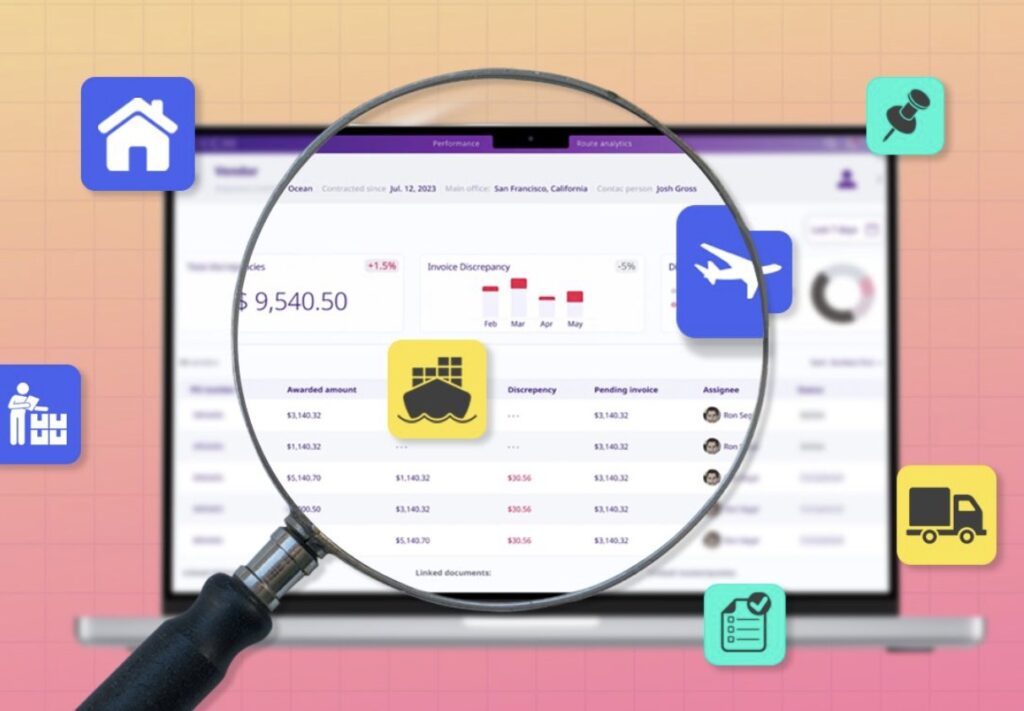
Third, modern MEIO has to support different transportation modes and constraints. Inventory decisions are tightly linked to how goods move (ocean, air, or ground) and those trade-offs matter.
Finally, usability matters. Planners need a system that’s not just mathematically sound but also actionable and scalable, so they can run scenarios, adapt quickly, and align decisions across teams.
In short, MEIO replaces guesswork with a network-wide, data-driven approach to inventory planning.
Where inventory matters most: industry examples
The value of MEIO shows up quickly in industries where the stakes are high.
Pharma, biotech, and medical device manufacturers need reliable service with constrained or expensive supply. Too little inventory risks patient impact; too much leads to waste and obsolescence. MEIO helps strike that balance by aligning inventory to critical service targets.
High-tech and semiconductor companies face volatile demand and extremely costly inventory. Holding excess stock ties up significant capital, but shortages can halt production downstream. MEIO enables smarter positioning and sizing of inventory across complex, global networks.
A quick MEIO readiness check
If you’re considering MEIO, start with a simple gut check:
- Do you have clear service level targets by product or segment?
- Can you measure lead times and their variability across your network?
- Do you understand how locations depend on each other (not just in isolation)?
- Is your data reasonably aligned across planning systems?
- Do you have a defined location strategy (where you want to hold inventory)?
You don’t need perfection, but you do need a solid foundation to get meaningful results.
A practical way to get started
You don’t have to transform your entire network overnight.
A low-risk starting point is to focus on one region, product family, or network slice. Model the service versus inventory trade-offs, validate the results, and build confidence from there.
From that first step, MEIO becomes less of a concept, and more of a clear path. If you’d like to learn more about delivering better service with less inventory, visit e2open.com.
More Blogs
SAP Sapphire 2026: Key Takeaways & What’s Next for Supply Chain