
More
July 3, 2020
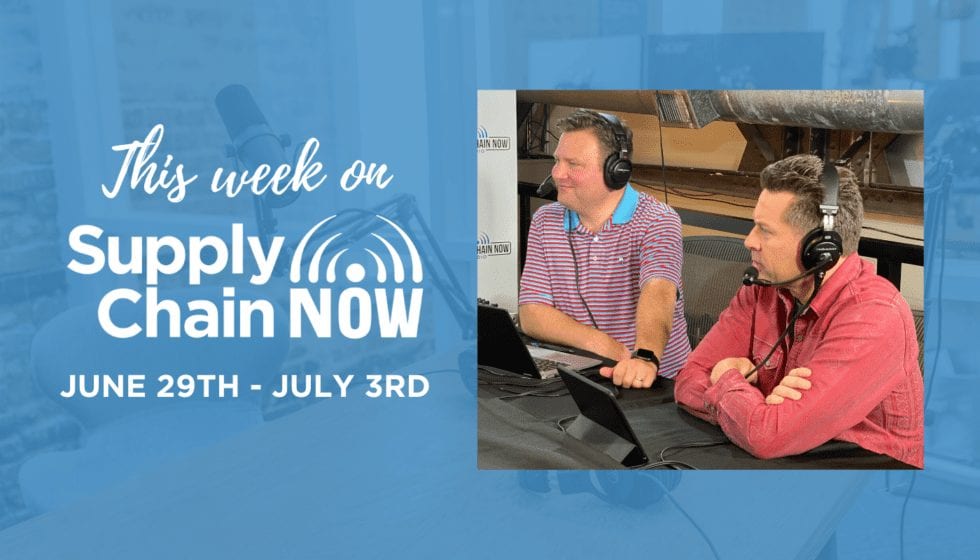
This Week on Supply Chain Now- June 29th – July 3rd
Another great week here at Supply Chain Now! Did you catch all the episodes? If not, you can check them all out here: We kicked off the week with This Week in Business History, where Scott looks back at some of the biggest historical events in business history for the week ahead. Supply Chain Now · “This Week in Business History for June 29th: The U.S. Interstate Highway System” Then on Tuesday, Scott and Greg welcomed Cynthia Curry with the Metro Atlanta Chamber and Jasmine Crowe with Goodr to the podcast for a conversation about redirecting excess prepared food and so much more. Supply Chain Now · “Feed More & Waste Less: Jasmine Crowe with Goodr” On Wednesday, we continued our new series, TECHquila Sunrise with Greg White, where Greg shares the latest investments, acquisitions, innovations, and glorious implosions in Supply Chain Tech every week. Supply Chain Now · “Top 25 Startup Ecosystems, Inclusive Investing, & Big Deals: TECHquila Sunrise with Greg White” On Thursday we published the Supply Chain Buzz, where Greg and Scott discussed the top supply chain news of the week. Supply Chain Now · “Supply Chain Buzz for June 29th:…

August 3, 2021
This Week In Supply Chain Now: July 26th – 30th
Stay up to date on all the latest conversations, interviews, and episodes we released this week here at Supply Chain Now. On Monday, we released 2 new episodes! On this episode of Digital Transformers, Kevin L. Jackson discusses how Enterprise Information Management Transforms with Mark Judson. On This Week in Business History, Scott Luton shares about 10 Cities with Business Ties You Didn’t Know! On Tuesday, we released an episode of TEKTOK with host, Karin Bursa. She was accompanied by Scott Luton and supply chain pioneer, Art Mesher. On Tuesday we also released an episode of TECHquila Sunrise with host Greg White and special guest Shannon Vaillancourt, CEO of Ratelinx. On Wednesday we released Supply Chain Today and Tomorrow hosted by Scott Luton and Greg White with special guest Mike Griswold from Gartner. On Thursday, we released a replay of the Supply Chain Buzz. In this episode, hosts Greg White and Scott Luton welcomed Jordon White from Crisp and Jerry Stephens from Outlier to discuss the current state of the food and retail supply chain. We ended the week on Friday with 2 episodes! We released another Dial P for Procurement episode! Hosts Kelly Barner and Scott Luton welcomed special…