














Episode Summary
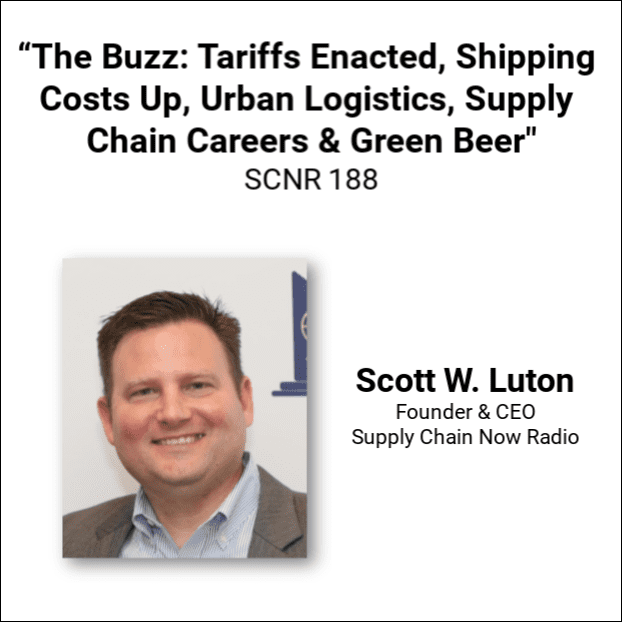
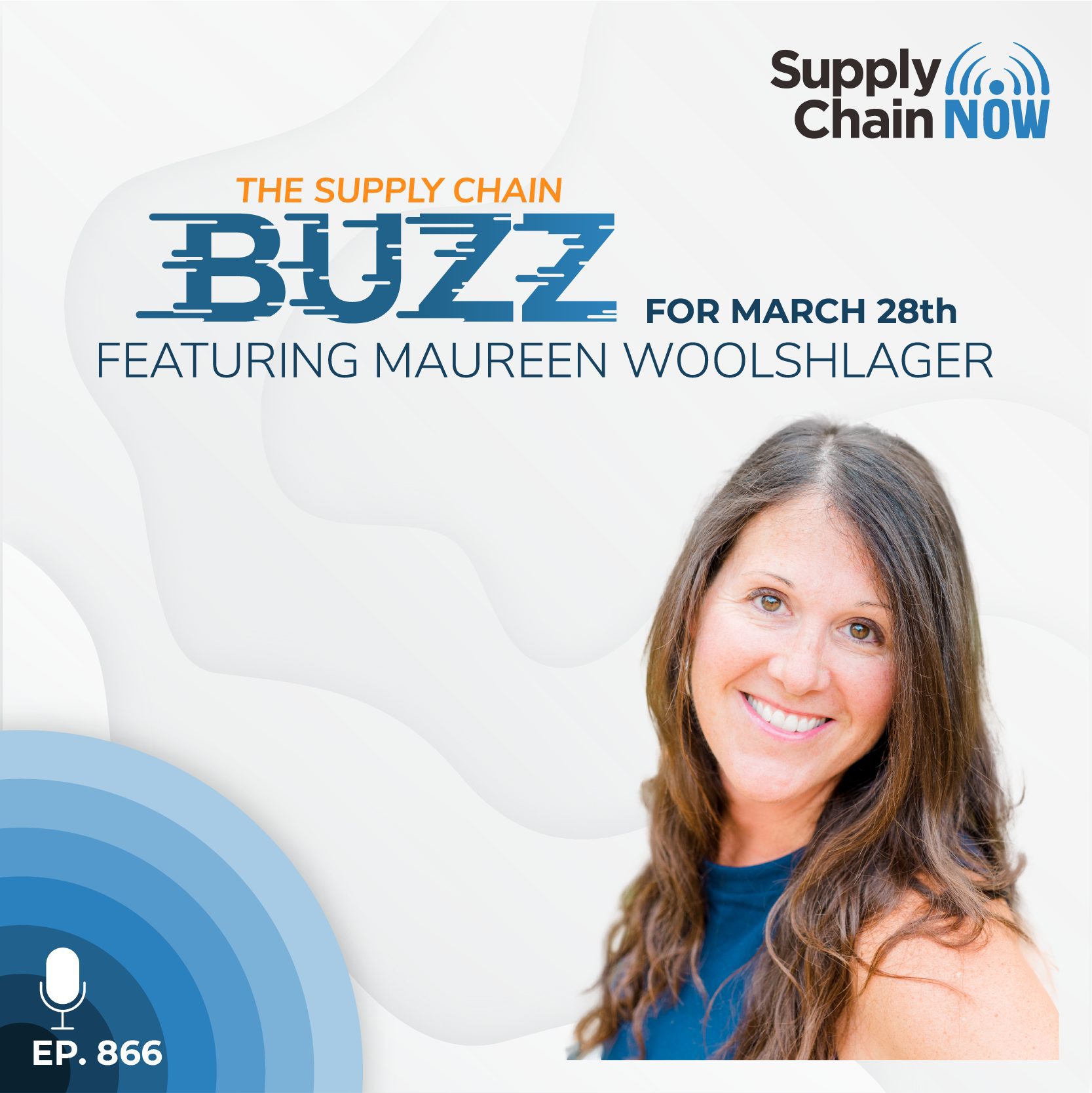
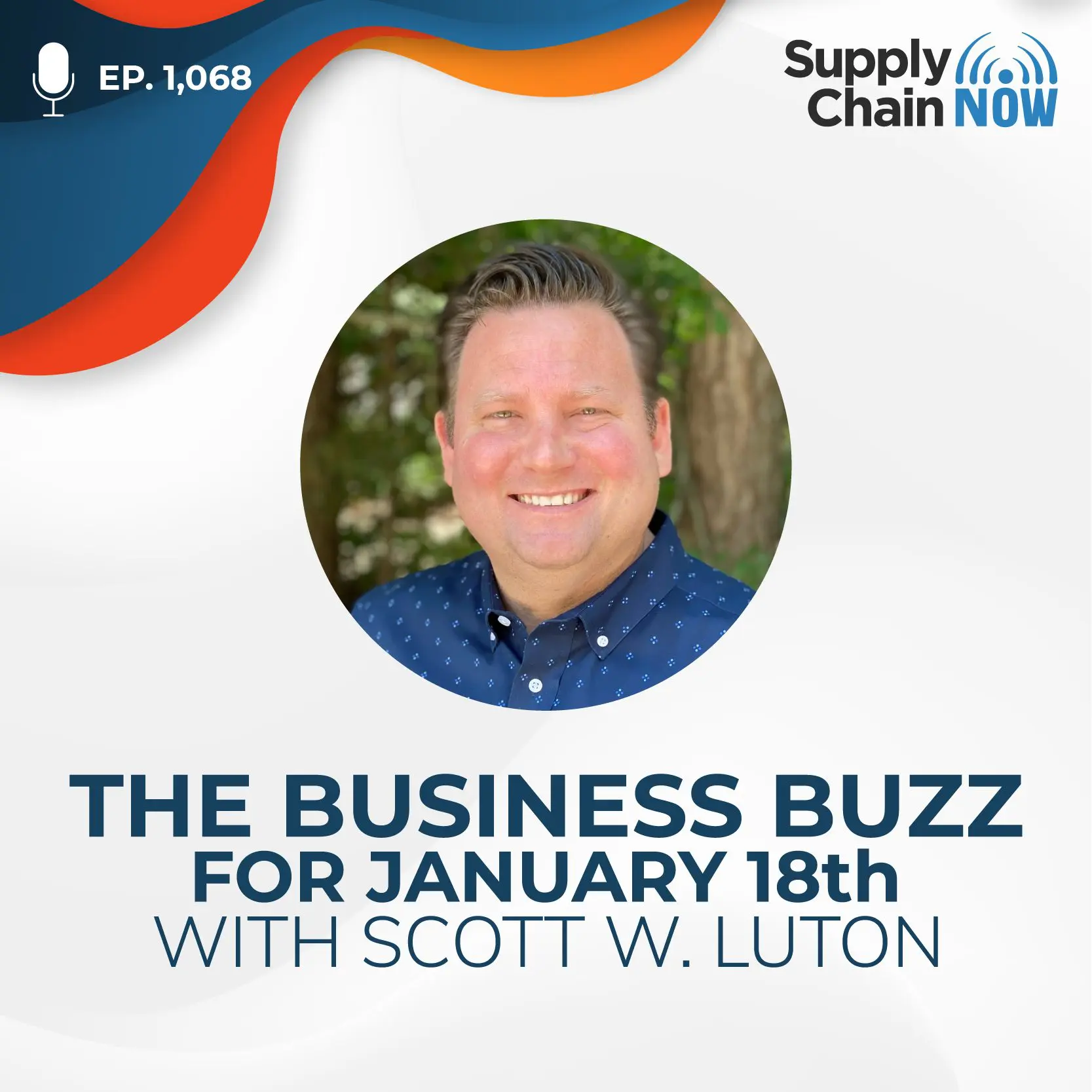
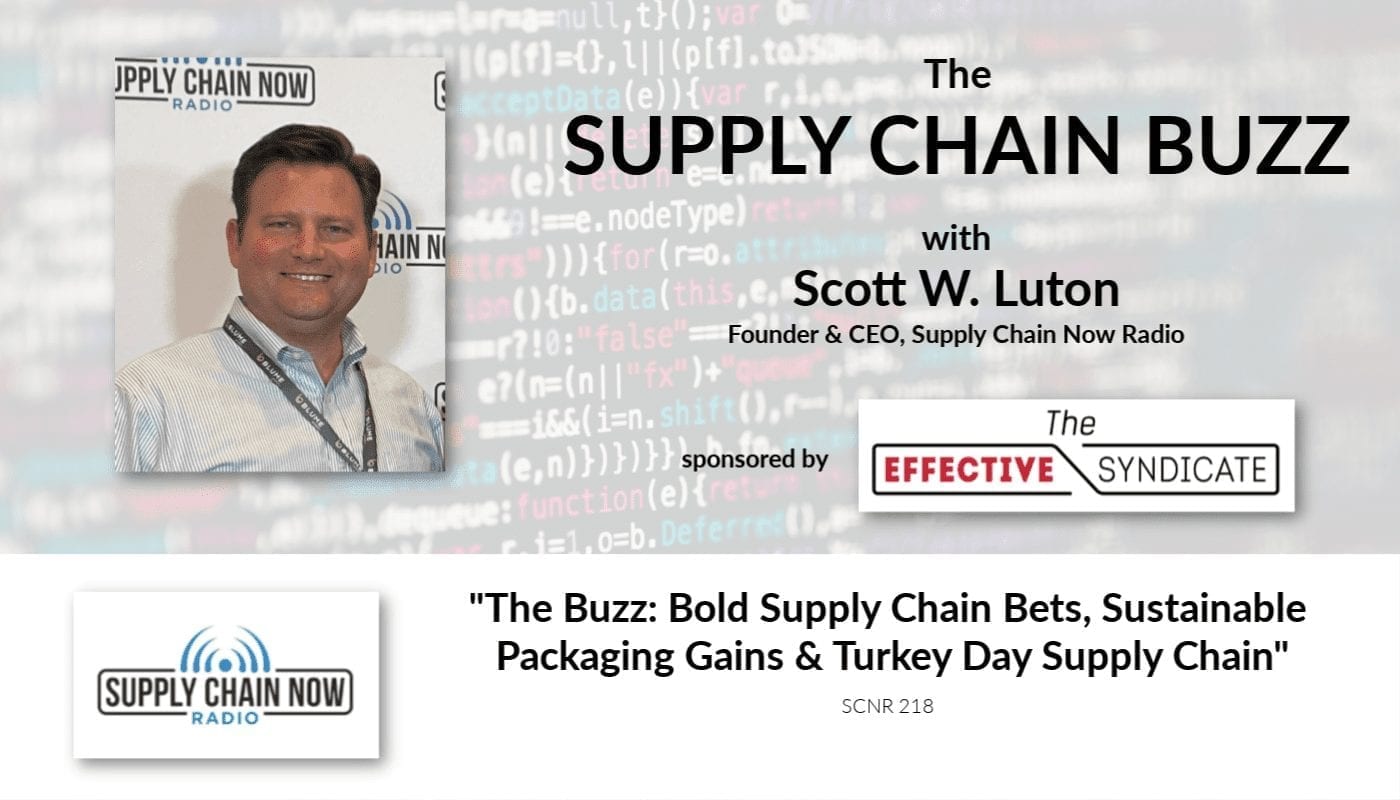
In this episode of the Supply Chain Buzz, Scott Luton discusses the latest topics and top stories in supply chain, in 15 minutes or less!
Episode Transcript
[00:00:07] Good morning, Scott Luton here with you on Supply Chain Now Radio, welcome back to the show. In today’s show, we’re continuing our Supply chain Buzz series, a brief weekly look at some of the top news and trends across the global. In the end, Supply chain community all in 50 minutes or less. Today’s episode, The Supply chain Buzz. Supply Chain Now Radio is brought to you by the Effective syndicate, a leading coaching and consulting firm that helps companies win by optimizing process and developing winning cultures.
[00:00:37] You can learn more at the effective syndicate dot com. It’s Monday, November 25th. Let’s get to the buzz. Up first today, we’re talking massive supply chain improvement by home improvement behemoth, according to a story from Armacost Grove. Over at Supply chain Dobb, Lowe’s is investing 1.7 billion dollars into its supply chain. The aim is to transform the organization from a store based home delivery model to a market based model standing up a true omni channel ecosystem. And it’s already started as Lowe’s recently opened two new bulk distribution centers and three cross-talk terminals. This year, the new warehouses have already begun to take some of the pressure off of stores to keep the shelves full. A long running challenge has been avoiding stock outs at Lowe’s Low. CEO Marvin Ellison stated during a recent earnings call that the company had underinvested in key areas such as Supply chain, such as I.T. and leadership development company CFO David ditton added, quote, Throughout 2020, we were we will refine our in-stock expectations and begin to strategically reduce inventories in certain areas while protecting our in-stock position, sales and gross margin in, quote, Lowe’s leadership plans to grow e-commerce sales where the company is actually lagging behind other organizations of similar sizes. Building a more effective and successful omni channel model is a big part of the growth plan. In our second story here today on The Buzz. We talk healthcare supply chain. According to an article in The Wall Street Journal by Sarah Castellanos, U.P.S.
[00:02:19] is launching a new service in early twenty twenty one called U.P.S. Premiere. Its objective, you ask, to prioritize the handling of shipments such as personalized medicines, DNA and gene therapies, investigative drugs, laboratory specimens and implantable medical devices using sensors and data analytics to track the packages. Exact location in near real time U.P.S. is aiming to ensure that packages arrive at exactly the right time and place, despite factors such as bad weather. Currently, U.P.S. employees know where a high priority package is at only a few points throughout the delivery cycle. The new sensors that U.P.S. Premie will be utilizing interact with electronic readers in sorting and distribution operations, using technologies including Bluetooth, cellular and Wi-Fi u._p._s. Team members can use that information to prioritize deliveries and make any necessary changes. The launch of this new service at U.P.S. is reflective of a wider range of investments, all aiming to improve health care supply chain, where many experts see massive opportunities to not only save money, time and resources, but also deliver better service to patients and customers, according to health care technology firm Trace Link and its CEO Shabbier Diehard. As many as 10 entities handle a drug before it gets to a patient, including manufacturers, pharmacies and wholesale distributors. All of these touches that make up the current complex health health care supply chain in the U.S. produced roughly 150 to 300 drug shortages every quarter between 2014 and 2019, according to the University of Utah.
[00:04:09] Improved deployment of technology, better visibility and more effective supply and demand forecasting are some of the ongoing initiatives taking place in the health care supply chain space, all which could lead to hundreds of millions of dollars in savings alone. U.P.S. Premier joined other players such as FedEx Sense Aware in a partnership between Merck and Trace Link in efforts to revolutionize global health care. In our third store today, let’s talk sustainable packaging, two big brands are announcing big gains in this space, according to Chief Sustainability Officer magazine. Coca-Cola Sweden has announced that all of its bottles made at its Djordje Brew bottling facility in first quarter 2020 will be made from 100 percent recycled materials. This is a company wide first. The move will cut virgin plastics usage in Sweden by thirty five hundred tons every year. It will also cut its CO2 emissions by 25 percent annually against those produced under the former bottling approach. This is a big step in overall sustainability strategy for the Coca-Cola Company. Among the company’s ambitious goals for 2030, Coca-Cola aims to retrieve one bottle or can for every one sold through its own initiatives. Not to be outdone, fast food giant McDonald’s has continued its sustainability journey under its better EM platform. McDonald’s has announced a variety of packaging initiatives across its European operations aimed at driving down its plastics plastics usage. Flourish. For example, will no longer have their plastic dome lids and their plastic spoons are due to be replaced with alternatives.
[00:06:00] A fiber based lid is being introduced in France for cold drinks. Happy Meal toy take-back programs are being piloted in the UK due to popular demand. McDonald’s is also redesigning its paper straws to improve their strength. The impact, you ask the the elimination of the meat flurries dome. Plastic lids alone does away with about twelve hundred tons of plastic each year. So we asked you, does your company have an interesting sustainability initiative or as a consumer, have you seen a company roll out a new program that made you to stop that made you stop and take note? Tell us about it. shipp’s. A note to Amanda at Supply Chain Now Radio RT.com. With it being Thanksgiving week in the US, in our final story here on The Buzz today, we’re going to be talking about Turkey Day Supply chain. So consider these numbers. Approximately 250 million Americans will spend a whopping 2.3 7 billion dollars in food for Thanksgiving dinner alone. Some reports have American families saying they’ll spend 5 to 6 percent more in 2019 than in 2018. Almost 50 million turkeys will be consumed. Frozen turkeys make up about 90 percent of the total spend, according to Chris Kanani over at Logistics. A few points. Obviously you can’t grow. All these birds veered just in time approach. So the birds are grown and slaughtered throughout the year where they then enter a multitude of warehouses and distribution centers.
[00:07:34] Let’s talk for a second. Turkey traceability and technology, according to Steve Banker over at Forbes. Everybody wants a better understanding of where their food is coming from, right? Turkey producers are turning more and more, as you might expect, to technology. Jenny 0 is the nation’s second largest Turkey brand, and it uses labels that help to provide traceability for its birds. The label includes a code that can be entered on the Jenny Web site, which will give the customer the region of the farm. Cargill, the third largest Turkey provider, has turned to blockchain for improved traceability. This gives consumers more detailed information about the origin of their birds, such as the exact name and location of the farm. Aside from the name location of the farm, consumers immediately receive any other images and other or other information that the producer wants to share. According to Nielsen, the following figures represent total sales in the U.S. the week before and the week up Thanksgiving. One hundred and ninety three million pounds of potatoes will be purchased. Seventy seven million pounds of ham. Fifty seven million pounds of sweet potatoes, 17 million pounds of fresh cranberries. I guess thereby doesn’t use the infamous canned gelatin that many of us grew up with. Americans will spend suddenly four million dollars on spices alone. Do you ever stop and think about the transportation and logistics of all of these Thanksgiving ingredients? According to smart sense, the average American will travel 550 miles roundtrip on Thanksgiving, whereas each ingredient will travel between 15 hundred and twenty five hundred miles from farm to fork.
[00:09:17] How about adult beverages? Did you know? The World Street Journal has reported that Thanksgiving Eve is a bigger night of alcoholic beverage consumption than even New Year’s Eve. So as we prepare for a big annual holiday here in the state, tests all take a minute to be mindful and thankful for the army of the global supply chain professionals. That allow us to enjoy Thanksgiving. And that’s a wrap for today’s episode. Several of the leading Supply chain news stories and trends right here on the Supply chain Buzz. Supply Chain Now Radio. One quick programing note. I’m really excited to be joining Karen Smith of Contour Brands, Sean Willams with the University of Tennessee and Karen Bursa with Majidi on a Supply chain Brain webcast entitled Supply chain Talent in the Digital Age. Join us at 11:00 a.m. Eastern Time on December 4th with what promises to be a very informational and intriguing session. You’ll find links to each of the stories we covered here today on the show, notes for your convenience, including a few additional resources such as the webcast registration link. Big thanks to today’s sponsor of the Supply chain Buzz. The Effective syndicate. Be sure to check them out at the Effective syndicate dot com. To our listeners. On behalf of the entire Supply Chain Now Radio team, this is Scott Luton.
[00:10:38] Thank you for joining us. We wish you a very successful week. And Happy Thanksgiving, everybody.
Hosts


Additional Links & Resources
Check Out Our Sponsors