
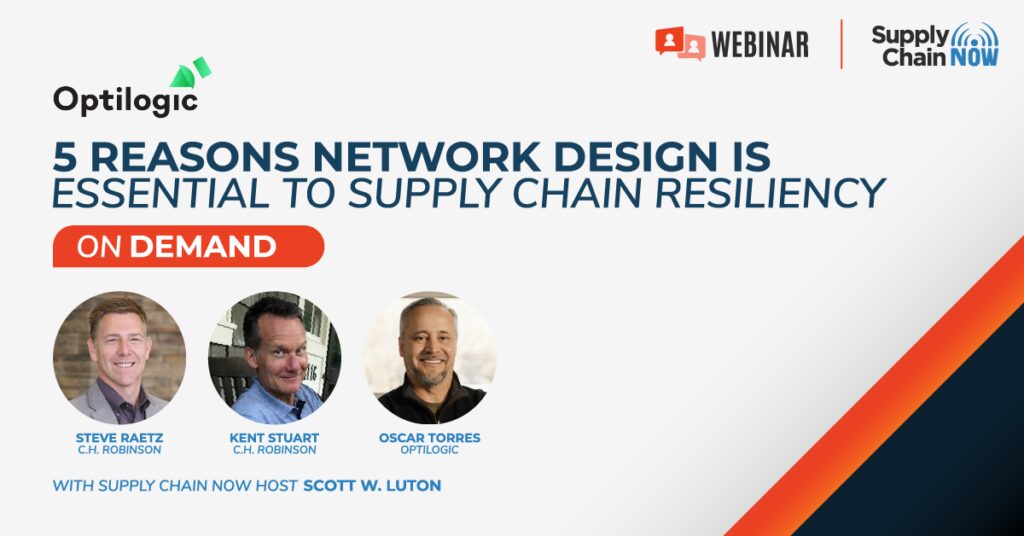

WEBINAR: 5 Reasons Network Design Is Essential to Supply Chain Resiliency
Do you have the ability to model the cost, service, and risk implications of potential supply chain decisions? Here’s how better supply chain network design benefits your business and customers—and how to get started today.
If your organization has a physical supply chain, supply chain network design is a critical capability to create digital models of your current and future supply chain to test the impact and performance of multiple alternatives—before you invest a dime. Join C.H. Robinson and Optilogic in a practical discussion on how leading companies are taking a balanced approach to optimizing across multiple criteria such as cost, service, risk, and carbon emissions when developing supply chain strategy.
More Webinars
disruption

Webinar
October 21, 2022
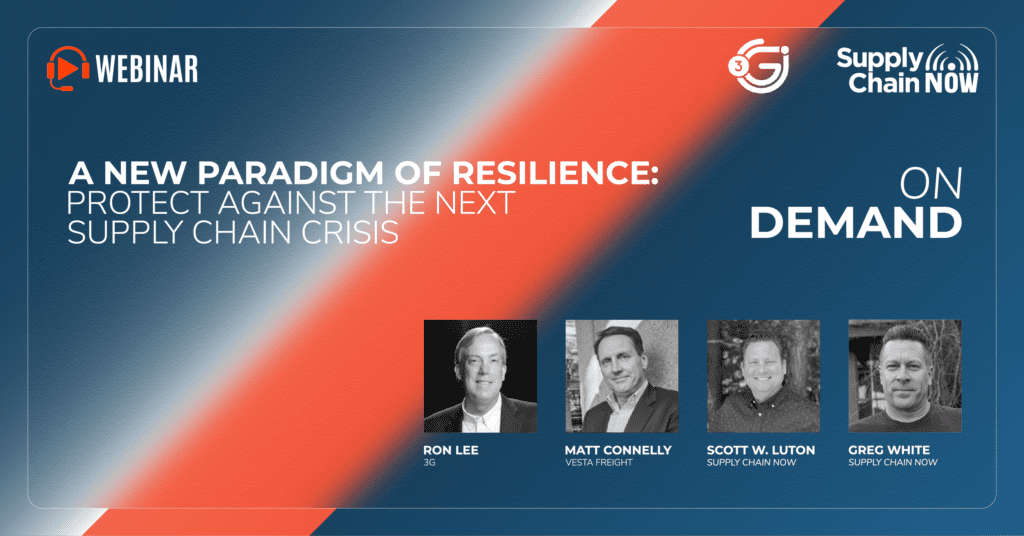
A New Paradigm Of Resilience: Protect Against The Next Supply Chain Crisis
With all the discussion around the current state of global supply chains, one question that gets asked too many times these days is: “How will my company manage during this incessant supply chain crisis?” Join Supply Chain Now hostsScott Luton and Greg White as they welcome Ron Lee, Chief Product and Technology Officer with 3GTMS, and Matt Connelly, Co-Founder and CEO of Vesta Freight, in this upcoming webinar. The panel will discuss a new paradigm of supply chain resilience that protects against continuous shocks to operations and profitability in an environment of systemic disruption.
6 River Systems
Webinar
June 13, 2022
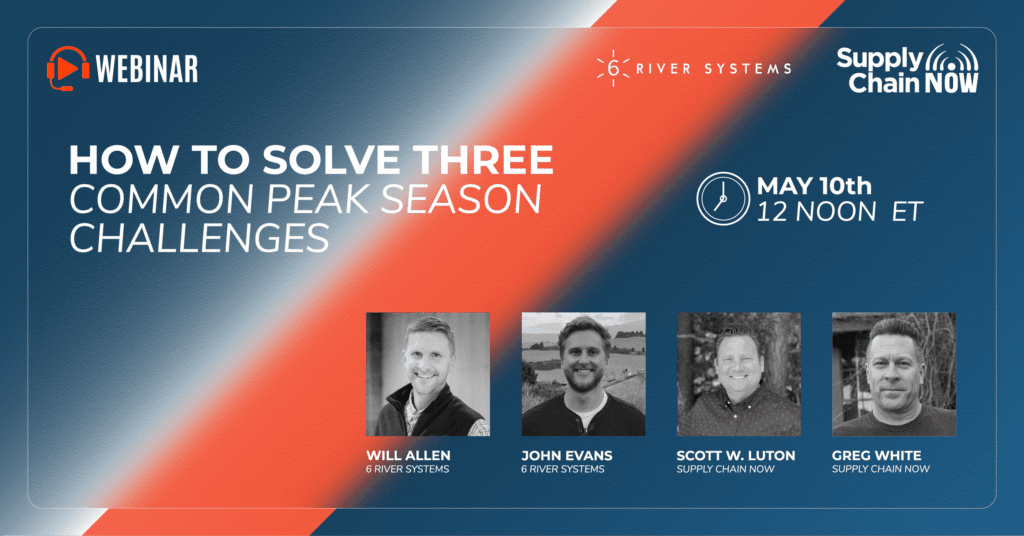
How to Solve Three Common Peak Season Challenges
Stories of supply chain disruption have dominated the headlines and confirmed that modern supply chains must be built on a more resilient foundation. At the same time, we’re in an age of rapid digital transformation and businesses are all racing to modernize systems to deliver that just-on-time service customers have come to expect. As a result, data accessibility and visibility of supply chain processes have become critical. However, many businesses remain stuck in a maze of outdated legacy systems and siloed information. As we move from a linear supply chain model to a more dynamic, digital, and collaborative model, shouldn’t your data framework act in the same way? Peak season amplifies existing fulfillment challenges, and introduces new ones. E-commerce companies need the flexibility to scale up quickly to meet increased demand. Join John Evans and Will Allen with 6 River Systems and Scott Luton and Greg White with Supply Chain Now to learn how you can: – Empower your labor force and increase their productivity – Manage seasonal spikes in demand – Improve customer satisfaction and retention Plus, learn how Crocs successfully tackled a surge in demand by popping up a warehouse just in time for peak.