Intro/Outro (00:00:03):
Welcome to supply chain. Now the voice of global supply chain supply chain now focuses on the best in the business for our worldwide audience, the people, the technologies, the best practices, and today’s critical issues. The challenges and opportunities stay tuned to hear from those making global business happen right here on supply chain now. Hey,
Scott Luton (00:00:32):
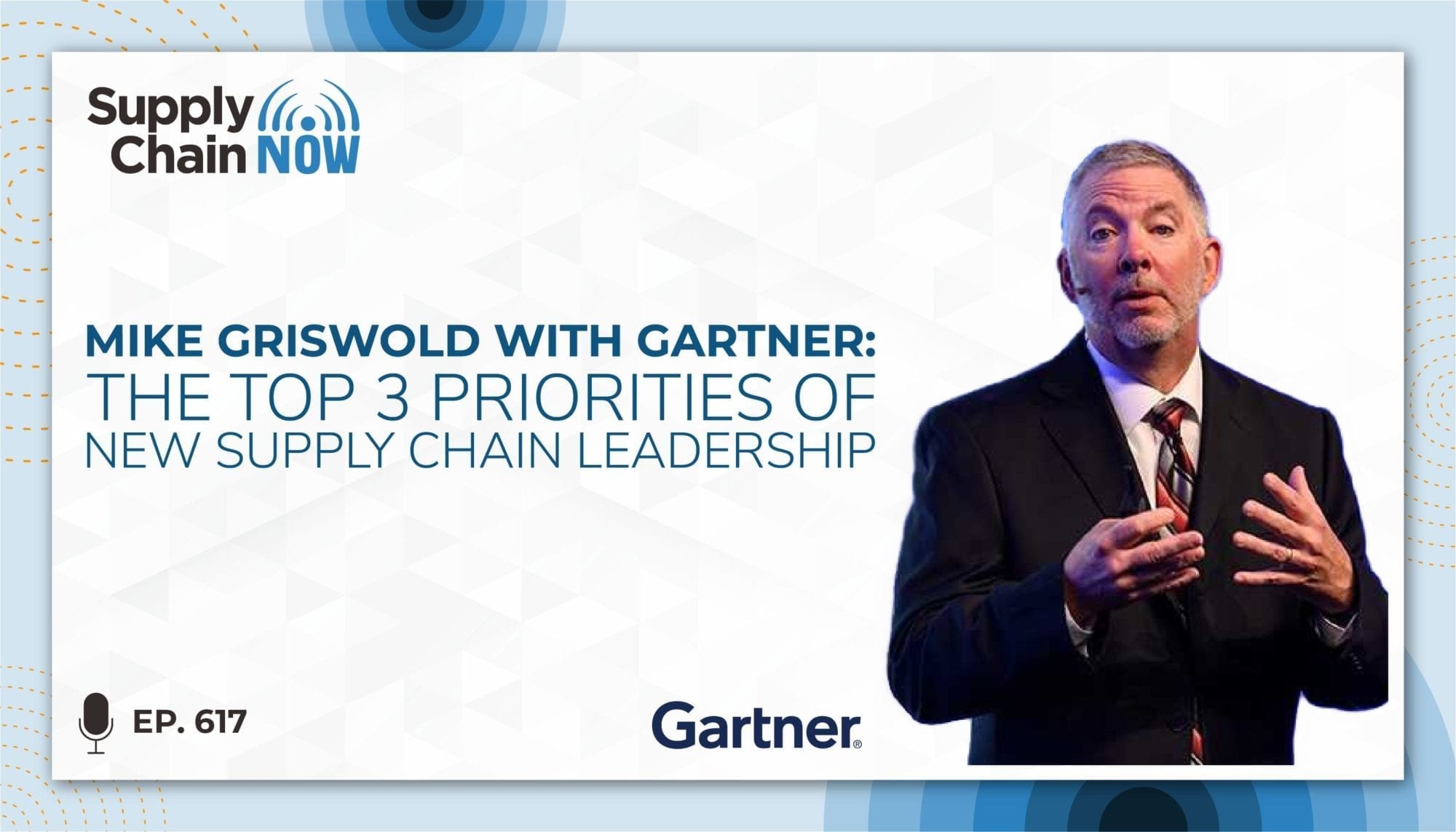
Good afternoon, Scott Luton, Greg white with you here on supply chain. Now welcome everybody, Greg, how are you doing? I’m doing quite well. Interesting. All kinds of interesting stuff happening today. Isn’t there it’s popping. It is certainly happened here in early April, across global supply chain and global business. And it’s gorgeous just out to my right is a, is our windows here and it is a gorgeous April day here in the Metro Atlanta area. You can see the sun’s sneaking in under the shutters here. Plantation shutters for there. Yeah. Oh gosh. And we got a great conversation teed up here today. So today’s show we’re continuing our really popular series supply chain today and tomorrow with Mike Griswold with Gartner. So get your questions and your comments ready. Mike is a guru as everyone as we’ve gotten lots of feedback from everybody around today, Greg, we’re talking about top priorities, the top of the top priorities for new chief supply chain officers.
Scott Luton (00:01:32):
Yeah, I, I mean, um, appropriate in a lot of ways, not, not only new, like people who have been experienced, but people who are new to the industry. So many people are coming to the supply chain industry from elsewhere, so much happening. And of course we’re undergoing this incredible generational transformation that necessitates us reevaluating, everything breed. Yeah. Re reevaluate everything. Uh, cancel all assumptions question everybody. So it’s right. Intriguing time to be acknowledged reality, but refuse to be bound by it. I’ve heard that before wherever. Um, great, great conversation teed up outstanding conversation. I want to share a couple of things before we get going before we say hello to a few folks, uh, wonderful folks that have joined us in the comments. So today’s episode Greg on the main channel supply chain. Now, uh, if you’re not subscribed, go find it where you get your podcasts from and click subscribe to them as a thing, uh, Nissa, Madonna CEO, pioneer service incorporated. You talk about passionate for all things manufacturing. This interview, I had the, um, had to go drink a cool drink after we were done. It was, it was such a passion fueled perspective. Um, uh, so, so much passion fueled perspective. Is that a word? Is that a phrase, but passion fueled hyphenated word, but somebody put it in the comments, Peter bull leg, give us the appropriate,
Greg White (00:03:00):
Uh, appropriate grammar there.
Scott Luton (00:03:03):
Um, but what a wonderful interview, uh, her journey, her foray into, um, you know, starting a manufacturing operation and growing that over the last almost 30 years and how much give forward that Anissa is doing for a critical industries. It was, um, it was a, a pleasure to be part of this.
Greg White (00:03:21):
Very cool. It looks like she’s got a good idea there.
Scott Luton (00:03:24):
So check out episode six, 10 on the main channel, but that’s not the only good, good things. Good resources we’ve got for folks Gregory. Yeah. Mastermind live spring 2021. Tell us about that, Greg,
Greg White (00:03:38):
On the, on the upper card, Kelly Barner and I are going to be duking it out about supply chain versus procurement. No, um, no, this is fantastic. Uh, Kelly and, and Phillip Edison, um, and art of procurement are, are bringing this to us and just sharing a ton about procurement and man, as if I didn’t know procurement was a hot topic, I think I may have shared this with folks maybe late last week, we are exploring a ton of procurement tech and Kelly. And I actually talked on Saturday about a company or two that are out there in the marketplace making moves. This is an incredible opportunity. And I think this industry is finally with the guidance of people like Phillip and Kelly is finally ready to make some transformational changes that will enable a lot of growth for companies and eliminate a lot of risks. Like we saw for so many companies with procurement during this seismic societal disruption.
Scott Luton (00:04:43):
Yes. And it’s and even better news, it’s free to join. So April 13th and 14th, you can go to art, a procurement.com/mastermind lab. We can drop that in the comments, but y’all check that out.
Greg White (00:04:56):
Americans have no excuse. You have till May 17th to file your taxes. So it’s not like you’re under the gun on April 13th or 14th. So either that’s right.
Scott Luton (00:05:07):
All right. Let’s say hello to a few folks here. Simon says passion fueled sounds like a fruit based energy drink. I need one of those right now. Simon, it’s been a busy week, but I, I agree so welcome again, Simon and love your sense of humor on these Kayvon is where this, uh, there is he who has coined the new phrase, the new AB normal. So great to have you Mahesh via LinkedIn. Great to see you here. Of course, Amanda and clay and Natalie are behind the scenes making it happen. Great to have you here. [inaudible] is back with us via LinkedIn. Hello from India. He says, Adele is with us, uh, Abdul Rahman, a dual dual rom on, right. I think I got that right. Uh, via LinkedIn. Great to have you with us here today. The hing is with us and the hang was with us the other day. Uh, I think he hails from China and it’s great to have your, uh, own today’s livestream. Uh, Felicia, Priscilla,
Greg White (00:06:07):
Holy mackerel. There she is.
Scott Luton (00:06:09):
The reverse logistics association is with us
Greg White (00:06:13):
Every time I love, I love seeing her, her headshot because I just think of her standing on a beach. And that just makes me feel better. Right?
Scott Luton (00:06:22):
We all need to be standing on a beach with our
Greg White (00:06:24):
Faith. Amen. That’s so cute.
Scott Luton (00:06:27):
Uh, or foreshadowing. Here’s what that’s called. We’re going foreshadowing just a bit. So y’all sit tight. As we talk lightening round with Mike Griswold, Peter is back with us. He says the floor guys here making a ruckus. So the closed captions will come in handy while he does his final prep for cement and membrane installation. Man, sounds like a big project there.
Greg White (00:06:46):
Gosh, I hope it’s not too late in floor. Heating is a godsend and an energy saver. Peter Bartlett
Scott Luton (00:06:54):
Energy tips. The more, you know, powered by supply chain now, uh, Mervyn is, uh, with this via LinkedIn from Dublin Mervin. Great to have you with us here today. Pray teak is back with us. Great to see you Victor via LinkedIn. Appreciate that feedback. Love to have you here with us today and Gary Skinner. Hello from beautiful Pacific Northwest and Gary congrats. I believe you kicked off a new podcast, so, Oh, wow. Cool. Awesome to see. All right. So folks, we’ve got to dive into our guests here today. The one and only Mike Griswold, vice president analyst with Gartner.
Greg White (00:07:35):
All right, Mike. Good afternoon. How are you doing
Mike Griswold (00:07:37):
Good. I’m glad you provided all the context on the cement and membrane comment, cause that could have gone a whole lot of different directions.
Scott Luton (00:07:46):
You know, Greg never ceases to amaze me just how much he knows about everything. Actually, the two of y’all. Um, but, uh, it’s so neat to have you back. We’ve really enjoyed this series. We’ve, we’ve kept it, you know, running into the new year and we’ve gotten a ton of feedback, Mike, uh, from all that you share. So welcome back here today.
Mike Griswold (00:08:05):
Well, thanks. I always enjoy spending time with everyone.
Greg White (00:08:08):
It feels like the right time of year to be sharing time with you, Mike.
Mike Griswold (00:08:13):
Well, yeah, I mean, hoops ended Monday. Masters starts tomorrow. I mean, after, uh, after Sunday, the masters I go into basically a sports hibernation. Cause I’m not a baseball guy. I’m not an NBA guy. So this is pretty much my last real attention to sports
Greg White (00:08:33):
Awhile till I’m guessing around the 4th of July when the U S open is played. Yeah. Us open fan. Yes. Yes.
Mike Griswold (00:08:42):
Yep. Good. So I’ll keep my eye on golf. But other than that, I’m sorry. That’s father’s day. Isn’t it? The major sports for me are pretty much done on Sunday. Not a tennis fan. Are you a no,
Greg White (00:08:56):
Darn it. So Greg, where are we going to, as we keep going down the warmup here, we’ve got the lightning round we’re break where we’re dusting off and breaking it back out from Mike Griswold. What are we going to be talking with Mike about today? So we’ve talked about the hoops final. We’re going to talk a little bit more about the masters as if that isn’t enough and gosh, don’t you think it ought to be? We’re going to talk about national beer day right today is national beer day in the States. So I’m going to hit Mike with some heavy, heavy topics. Like what is your F first of all, I know your favorite adult beverage is not beer, but, and I’d love to talk about that too, because I think it is a worthy, it’s a worthy beverage as well. But when you do, I know you don’t often drink beer, Mike Griswold, but when you do, what beer do you prefer?
Mike Griswold (00:09:49):
Well, it’s interesting. My wife and I have been watching a lot of, a lot of streaming shows and you get the same ads all the time and I was getting Modelo ads all the time. So I finally decided, you know what, I’m going to try. I love it. Um, so now I have a refrigerator full of Modelo. Um, you know, I like it because it comes in the, in the smaller bottles. So if you only drink, you know, one of those, you don’t feel quite as guilty, but Medalla actually, um, I’m a big fan of that before that it was Heineken light. I liked the Heineken light. Um, but those would be, you know, if I, if someone said, Hey, you know, we’re going to get a beer, what do you want? It would probably be one of those two.
Greg White (00:10:26):
So Modelo, especial or Negra Modelo, the dark, the lighter one. Okay. Yeah. Both are delicious by the way. Right. And we were talking, we may have been talking about beer a little bit pre show Scott. And as I said, I think Mexican beers, there are some fantastic Mexican beers and Modelo is right at the top of the list. So excellent choice. But all right, you have to share, we have to give equal time here, Mike. I know that beer is not your favorite adult beverage. So even though it is national beer day, what is your, what, what is your go-to?
Mike Griswold (00:10:58):
Yeah, I I’ve become a scotch guy, so, uh, I like a good McClellan and I also have found there’s an, um, an Island off of Scotland that has eight distilleries. One of them is a place called I’m looking at it right now. [inaudible] frog lap. H R O AIG. I know I’m, I’m butchering the Scottish. What I like about that is when you buy a bottle of that scotch, you can register and they give you it’s, it’s, it’s heated through peat Moss, and there’s a huge peat Moss right next to the distillery. They will give you your own one foot square of loss. Uh, you can go online, you can see it through Google or so I now have a one square foot of peop uh, of a peat bog in the Island, on an Island off the coast of Scotland. Trust me, I will have more of that year as the year goes on.
Greg White (00:11:56):
Outstanding. So do you like the PD scotches
Mike Griswold (00:11:58):
Better? I do. I like the way they smell. I like the way they taste. Um, yeah,
Greg White (00:12:03):
So I’m going to butcher it to Mike, but I’ve heard it said, and it’s something like LA Freud or something like that. It’s very gala, but don’t, I don’t even attempt it. I just go that one. Yeah.
Scott Luton (00:12:18):
Wow, man. Soaking up the knowledge here today. Uh, w Mike, what’s your favorite meal?
Mike Griswold (00:12:24):
It’s got to be one real quick thing. Um, unfortunately it’s a lot more expensive than Malik cups. We talked about those a couple of a couple shows ago, so it’s a little bit pricier than the male lookups. That is a good point.
Scott Luton (00:12:36):
You know, you never know what’s going to generate the most comments on these live streams last month, Greg and Mike hotdog preferences, regulations generated a ton of comments. Right. Um, but Greg, from here we’re going to golf, right?
Greg White (00:12:52):
Yeah. Well, of course, um, ordinary under ordinary circumstances today would be the par three tournament of the masters. So we would, at the end of the day, know who definitely was not going to win the masters because I think it is still true. Mike, you can check me on this. No one has ever won the par three tournament. And then one of the masters though, a few years ago, Tom, sorry, I keep wanting to say Tom kite, but it’s not a, Oh my gosh. Who am I thinking for Kansas city? Oh, my gosh played when Jack Nicklaus played Watson won the par three at like 58 years old or something like that, and then almost won the masters. So, but that’s as close as we’ve ever come. So, uh, who’s your pick for the masters this year?
Mike Griswold (00:13:39):
So I, I have, um, two, I I’m, I was torn between Justin Thomas and Patrick Reed. Uh, I think Patrick Reed’s game, uh, he’s a past winner. He knows what it takes. Thomas is playing well to me though, the hands down sentimental favorite has to be Jordan speed. Uh, the struggles he’s had to win last week, he’s won, uh, already there. Uh, he to me would be the sentimental favorite. Um, but I, I think JT, uh, and Patrick Reed are the two that I’m, I’m looking at.
Greg White (00:14:14):
I, I got to agree. All three of those are great picks as they always are. Of course, I’m always rooting for Phil. I know this, this could, this could be the last time last season, he plays on the, on the main tour, um, who knows what he’s going to do, but I got to tell you, I’ve watched Lee Westwood when you talk sentimental. It’s hard for me to think of it that way, but when you talk sentimental, I really think there is a good case. Is did he even qualify?
Mike Griswold (00:14:45):
Yep. Yeah. He’s 20th in the world. So he’s in. Yeah.
Greg White (00:14:48):
Yeah. So he’s played well, he’s come up second and two incredible tournaments against, um, against some really tough competition and competition. That was definitely on a run in both of those tournaments. He’s got his partner, his girlfriend, I guess, on the bag for him, he’s playing looser than he ever has. And, um, I re I don’t know that his game fits Augusta that well, but if there’s any time, any time he’s going to break through, I think it’s right now,
Mike Griswold (00:15:19):
He’s an easy guy to root for. I just, uh, I just don’t trust him on Sunday. Yeah. He’s definitely an easy guy to root for. Yeah. Yeah.
Scott Luton (00:15:27):
I’m in says, uh, it would be lovely to see Lee was Westwood when, and I would echo a lot of what you shared there, Greg and Mike. Um, but you know, what, what I love about, uh, the NCAAs, the BA you know, the brackets and the basketball tournament as I do the masters as I do about baseball is it gives us a little bit of a little bit of normalcy back and we all are craving that for sure. Hey, Ben Harris is with us here. The Metro Atlanta chamber, hopefully not changed. He would love one in Westwood.
Greg White (00:15:57):
Well, so then you need to put your pick in there as well, because I’m interested in if anyone knows Ben knows, right? Okay. Don’t put him for money, Mike, just to be clear.
Scott Luton (00:16:08):
So from the masters of golf to the masters of supply chain, we have our opportunity to put a finger on the pulse with a guru across global supply chain each month with Mike Griswold and today, and by the way, hello, Dave and great to see her today. Um, today we’re talking about, you know, there’s been a, uh, um, a plethora of new chief supply chain officers across industries. It’s a great development here in recent years, right? We’ve, we’ve reported on wide variety of new organizations that have newly named a C S C O as it were. So Gardner Mike released a report that got our attention here not too long ago, entitled the top 10 supply chain priorities for the new chief supply chain officer. So things are really focusing in on, uh, really in the first a hundred days. And it really is a, it triggered a lot of internal conversation here. And we’re so grateful to have you here sharing some of your top. I think we, we, we promoted it. Uh, Greg has top three, but we may get an, we may get a bonus one or two here today. So my orchestra, a couple of your top priorities for new CSC is let’s start with your first one.
Mike Griswold (00:17:19):
Yeah. I mean, I think if, if we, if we take one step back and we talk to companies about this all the time, I mean, if you think about how you want to prioritize, I think the way to think about it is in three buckets, you know, people process and technology. And I think those 10, um, priorities tend to land in all three. I think the one that I would focus on first is, you know, the people in the process. So, so one of the 10 is the supply chain strategy vision. I think that to me is probably where everyone, at least in my opinion probably needs to start. So as you’re coming into a new supply chain, you know, trying to get the lay of the land in terms of how does the supply chain strategy and vision align with the corporate strategy? You know, what is the corporate strategy and how does the supply chain enable that?
Mike Griswold (00:18:13):
I think one of the things that the three of us and the listeners have talked about is the role of the supply chain. Hopefully as you’re coming into this, into this job, into a new supply chain, you’ve already done the homework to understand what the role is. You know, my advice to folks is if you’re looking at an organization, you know, hopefully before you’ve landed there and their role, the supply chain is basically a cost center. I would suggest that you not, you know, I wouldn’t engage in that discussion a whole lot longer to be perfectly honest, career advancement elsewhere. That, yes. Great. That’s a very good way to put it. You know, I think, you know, when, when we talk to companies, you know, more and more, what we’re hearing is, is the vision of the supply chain is to be an enabler for growth, a driver of innovation. And for some people it’s going to be their competitive weapon. If that’s the chair that you’ve landed in, I think first congratulations. And second, those are the things that you want to think about, right? What’s how do we align with the strategy and what do we see as the role of the supply chain? You know, that you’re now going to be leading? What do you, what is that role today and what do you want to evolve it to, um, over your time there? I mean that, to me, Scott and Greg is the first one.
Scott Luton (00:19:34):
So Greg, I’d love for you to piggyback on that. You know, I’ve been fortunate to rub elbows with what I’ll call a visionary, a business leader in Greg white I’ve, I’ve, I’ve learned a ton from that. So I bet this first one we’re starting really resonates with you.
Greg White (00:19:48):
Yeah, absolutely. I mean, I’ve seen, um, you know, I’m going to name a company, Henry shine, uh, that I worked at before. My technology company was a technology company. We did consulting because I didn’t have any funding. So I had even, I, I needed money just to pay for peanut butter and jelly sandwiches. Um, and at, at, at Henry Schein, they had such a forward view of the supply chain that it became and drove the accountability and the process culture of the entire company. And I think that’s the kind of strategy that companies need to be aspiring towards. And that’s what a chief supply chain officer, I think, needs to be aware of that she or he could, could actually shape the culture, the customer experience, the brand identity, certainly the brand identity, either, either by action or by it by mistake. They, uh, your supply chain shapes the brand identity of your company.
Greg White (00:20:46):
And I think that, um, you need to acknowledge that you need to embrace that and you need to address that. And then you can learn from the other business entities, the other departments in the, in the organization, but you can also teach them a lot because since we are held so accountable, we are so driven by data. We are so driven by sound process. We are so driven by transparency and, and in inter departmental and inter enterprise interaction, um, technology, all of those things. And we have to be so disciplined because if we fail the entire company fails. So absolutely strategy has to be right at the top of the list and to go to roll, as Mike said earlier, if you don’t have, if you don’t have a seat at the table, you better demand one, earn one, or find another table. A great,
Scott Luton (00:21:41):
So, uh, Gary agrees as well. Strategy is the roadmap so agree. And he says he really appreciates all the experience being shared here, learning, collaborating, and growing Mervin asked him string question. And I bet there’s a lot of parallels. I know we’re talking, we’re talking to here today, the chief supply chain officer new need new CSC owes, but Mike do a lot of these apply to the chief procurement role as well.
Mike Griswold (00:22:07):
Yeah, that’s a great question. I, I think these apply to anyone that basically has that C in their title, right? When, when you are the chief X, whatever that fill in the blank is I think people are looking to you to drive those three areas, people process, and technology. So whether you’re a chief supply chain officer or chief procurement officer, when I think about the top 25 company briefings, we did cause we’re in the middle of that season. Now, you know, there’s a chief customer officer emerging and you know, all of those, those, um, those C levels, I think, need to be able to articulate, you know, the strategy, the vision and the role of their organization. I mean, if I’m a chief procurement officer, I need to be able to articulate what is the role of our procurement department? Yeah. I have no procurement experience, but my sense is, Greg, I’m sure you can elaborate on this. My sense is if, if your only job in procurement or you’re only seen as the people that buy paper or paper and staplers, then yeah. You probably need another table because I think that role is emerging to become much more strategic, much more enabling. I think we’re also looking for a lot more agility out of that particular part of the business as well.
Greg White (00:23:27):
Yeah. And early on we talked, you’re dead on Mike and, and early on in this crisis, we talked a lot about, um, how similar the, the business issues are, including that seat at the table are for procurement and yet how different, um, the roles can. But at the same time, there’s an aspect. There is an aspect of procurement that applies directly to supply chain, right? If you are procuring the parts that, or, or the, um, the raw materials or the componentry that makes up a product that you are creating a finished good from that’s procurement for supply chain, if you are, um, procuring the conveyors and the internal systems and the, and the, the technology and right. And, and, and the things that either create or store or move the product, then that’s procurement and the S the esteem of that organization and the woes and joys of that organization, both procurement and supply chain, they are very, very much aligned. Well, it’s dually applicable though. The business processes or the business goals to some extent are very much different.
Mike Griswold (00:24:39):
Yeah, I agree. Great. If you think about the score model, right. That’s been around forever. Um, and we think about that in terms of talking to organizations about the span of control of their supply chain plan source, make, deliver all being part of the supply chain. That sourcing piece to your point is incredibly important. Yeah.
Scott Luton (00:24:59):
All right. I want to share a couple of comments, and then we’re going to move to your, uh, your circuit priority. Mike, first off, Bob is back with us after quite some time. Bob hope this finds you well, and we look forward to reconnecting soon. Uh, LA LA maybe is with us via Facebook. Great to see you here today, look forward to your POV. Ben says corporate goals and KPIs have to be the primary driver for strategy. Simon really talks about the rising sea levels. You know, Mike, you mentioned, this is, this is for anyone with a seed in their name, especially those that aspire for more Mahesh says smooth environment is very important to run the process. Moodley he mentioned how sustainability in our planet is a big part of supply chain strategy these days. And Ben agreed. Ben said he referenced Rick McDonald, chief supply chain officer at Clorox, who said each of these repeatedly on his previous appearances with us here. Um, okay.
Greg White (00:25:53):
You know, we’re about to talk to another chief supply chain officer tomorrow. If you think about people who are great examples of leadership of what Mike is talking about here, Rick McDonald, Sandra McQuillan come immediately to mind, right. There are other greats as well. We’ve talked to them, but those are the two that I think we know that.
Scott Luton (00:26:11):
Right. Excellent. And to that end, uh, we will have Sandra McQuillan live with us tomorrow at 12 noon, chief supply chain officer with mandolins international. So y’all bring your POV’s for there for Sandra as well. Okay. So Mike, so much to cover so little time, what will be your second priority here?
Mike Griswold (00:26:27):
Yeah, I think it’s going to be on the people’s side. Um, and that’s everything from understanding in the, this new environment that we’re working in and working in for the foreseeable future, you know, from a skillset perspective, from a role perspective from a D and I perspective, you know, what, what have you, as a chief supply chain officer inherited on the people and the culture side? I think it’s, it’s, it’s great to have the strategy. It’s great to be able to align on paper and in PowerPoint to a corporate strategy, but you actually have to have the skills and the people in the culture to actually do the work and do the work well. So I think, you know, one of the things that we’re finding in talking to organizations is, you know, this whole dynamic of working at home, working remotely, the impact that that’s had and potentially a culture shift.
Mike Griswold (00:27:18):
I mean, there’s a number of w which I, it’s hard for me even to think that I’m uttering these words, but there are a number of retailers that I talk to on a pretty regular basis who are now quite comfortable working remotely. I think if we had rewind the clock and said, okay, we’re going to have a pandemic. What, what industry is going to struggle to work from home? I think we all would’ve said retail, but that’s not the case. Um, they are, they’ve adjusted, they’re productive. And I think what a lot of them have realized is our culture can survive remotely. Uh, maybe not, maybe we don’t want to be a hundred percent remote, but I’m hearing more and more people say, Hey, whenever we get back to normal or abnormal, as someone has coined already, we might be 50%, you know, work at home, which is, I think more than we ever would’ve thought retail would have gotten to. So to me, it’s, it’s an understanding of the people from a skillset and your culture. And where does, is that where you want it to be?
Greg White (00:28:17):
So there’s a quick, uh, just a month or two ago, there was a wall street journal article, citing research that, uh, 80% of professionals prefer to continue after the pandemic working from home at least three days a week. So it kind of to that hybrid model, Mike, three days a week, wow. Three days a week. Um, so Greg, and also one of the clarification and Mike, I really appreciate how you, in each of your appearances, you talk about DEI, diversity, equity, and inclusion. It’s certainly what, um, C-level officers have got to keep front and center to, to not just talk about, but act on. So I love, I love how you’re you talk about, uh, you refer to that quite a bit, Greg, let’s talk about, um, what do you, what’s your take on what Mike has shared? I mean, people are who makes it happen, right?
Greg White (00:29:02):
Uh, technology can only do so much. And, you know, I think we’re starting to see a more rapid evolution of technology doing the mundane, the repeatable, sometimes even the highly, highly intellectual, but creative and emergency. And, you know, as I often talk about with Scott, you and your, your fellow veterans from the military, being able to make life and death decisions instantaneously with inadequate information, that is a uniquely human condition. AI needs a ton of data to make the decisions, right? It’s like teaching a child. It has to have enough experience to have learned how to solve these. So of course, people are absolutely critical to this. And of course, culture is, I mean, culture is the business to me. I know we say slip supply chain as a business, but culture is the business because the way that you either enable or allow your organization to operate becomes your identity, your effectiveness, your productivity, it becomes all of those things that make people happen. And even if technology is involved in your company, people still make the decision to select one technology over another. Right. So, absolutely critical to nurture that culture. Um, and again, for chief supply chain officers for any, any C-suite as Mike is talking about, you have to be very intentional about culture. Culture happens either you as a leader, make it happen, or you allow it to happen. It’s much, much better to make it happen so that you have some control over that culture.
Mike Griswold (00:30:39):
Sorry, go ahead, Scott.
Scott Luton (00:30:40):
Uh, just a couple of quick comments. I hear a lot, uh, enablement right technology and how it enables people and to do their job better, and they’d be more happy about it. And, you know, you look at any study out there. A recent one that I came across was, was based on Oxford research, happy employees, right. Where there’s a nice positive culture. That’s deliberately created by leadership and, and, and all the people in it. There are 13% more productive. And that’s just one, one data point, according to Oxford research. So really important aspect, uh, in the C-suite Mike, your, what were you going to follow up?
Mike Griswold (00:31:13):
Yeah, I think the culture, when, when, when I reflect on kind of where our researches has gone and in conversations with clients, the cult, the emerging, you know, attributes of culture to Greg’s point that you want to make happen, uh, are around agility, responsiveness, and innovation, you know, kind of, not necessarily in that order, but when you look at a company’s culture, you know, it has to foster innovation, which means you have to be, uh, accepting and tolerant to failure because not everything you innovate on is going to work, right. Even if, if Amazon based is success on the, um, the fire phone, right. They, they wouldn’t be allowed. So, um, that, that would be, but that’s the culture, right? I mean, the, the culture of Amazon is one where we’re going to try a bunch of stuff. It’s not all going to work and we’re okay with that.
Mike Griswold (00:32:05):
Right. You also though need this idea, particularly in today’s environment around how do we build a gelati and responsiveness? Uh, a lot of companies have, you know, taken a look at some of the things that we probably would never label as agile, like the budgeting process, like the capital expenditure process. Right? All of those things are now becoming a lot more agile because they have to right Greg to Greg’s point, we have to make decisions faster. Um, we need data for that, but we also, I think we’re finding, I think part of this because of the remote nature of work, now we are, we are empowering people more and we are pushing decisions down lower than we ever have before. I think partly because we’ve had to, I think a by-product of that, you know, maybe a positive unintended consequence is I think companies are now making decisions faster.
Scott Luton (00:32:59):
Yeah. Well said empowerment and an enablement to, to the critical Edwards. There’s plenty of others. Greg. We use it a lot around here. I’m gonna share a couple of comments here. Uh, Simon says, be experts in your own data. I love that LinkedIn. And, and I’m not sure, uh, clay or Amanda, let me know who this is says far for far too long people and work and culture have been seen as separate initiatives. Excellent point big show. Bob Bova is very, is a, if more management stays working remotely workers at the point of action becoming become even more valuable. They need the power to suggest the tech to help the most excellent point here. David says, uh, it’s more of the triangle Patrick van hol, uh, I guess he said one week on his last laughter appearance with us and you take out one, one aspect of the triangle is going to collapse slightly good.
Scott Luton (00:33:51):
All three legged stool, right. We all re referenced quite a bit. Uh, let’s see. Oh, that was Patrick van. Ho how about that? So this, uh, appear who said this, uh, people working culture that was Patrick van ho Patrick, great to have you with us here today. And then finally Peter says the office and work environments can also be a me first mentality, which stifles growth of great talent from below upwards. I’ve worked hard to lift my past colleagues to higher Heights and do not see too many others doing just that. I think I navigated through his that’s pretty good.
Greg White (00:34:28):
You got to remember, he’s doing that while a Jack hammer something
Mike Griswold (00:34:33):
Right here.
Greg White (00:34:35):
Those are all really incredible points. I think the, you know, the culture of innovation has to allow failure, right? And as you said, Amazon, that’s one of their, one of their key core values. One of their other core values, however, is also be right a lot literally. So I think we, we want to be careful that, that, that right to fail or to have failures, doesn’t become the right to fail. And it also must not become the right to enter into these innovations carelessly. It still requires diligence. It still requires forethought, but we don’t want analysis by paralysis. Right. Excellent point. My great uncle used to say, do something if you do it wrong
Scott Luton (00:35:22):
Well, because not making a decision, Greg, I think we’ve talked to with, with Mike, uh, plenty of times is making a decision, right?
Greg White (00:35:30):
Great Canadian philosopher, Getty Lee, if you choose not to decide, you still have made a choice. Nice. Um, and, and,
Scott Luton (00:35:38):
And by the way, uh, I want to give Pat, so Patrick van hol is with Connexus. One of Gartner’s magic quadrant. I recognize here planning. Yeah. So welcome. And thanks for being here with us here today, Patrick. And then when I love this quote here, Bob Bova says, John wooden said, if you’re not making mistakes, then you’re not doing anything, um, positive that a doer makes mistakes. And then finally comment from AA, from the air capital of the world, Greg, the home of Greg white, Wichita, Kansas. It is good to see renewed attention on the PPT people process and technology. And he gives a wink. Greg, you have to do the wink technology, becoming more technology, becoming more of a dominant strategic tool. And he’s got a hammer in there, man. Hey, doling out motorcars becoming more of a dominant strategic tool for C CXOs, the whole C-suite and industry 4.0 seismically disrupted quote and Greg by the pandemic. A lot of good stuff there. Yeah. All right. There’s so much cover when we talk about, um, leadership and, and the C-suite Mike, what is your third priority here today?
Mike Griswold (00:36:53):
Yeah, I think let’s, let’s round out the people process and technology with the technology component, which is, you know, we, we’ve been talking about a gardener for a number of years, this idea of digital transformation. Uh, and I think that that is, you know, when you land in, you know, a new chief supply chain officer role, I think one of the things you want to explore is, you know, w what are we doing digitally? What, what does digital mean to our organization and what are the, the transformational capabilities that it can bring us, you know, typically those land in areas, which we’ll, I’m sure be familiar to everyone, um, you know, big data, advanced analytics, um, machine learning and AI, all those types of things. But we’re also seeing that digital transformation start to move into areas around automation. Right? Greg talked a little bit about, you know, automating decisions, you know, the role that data has to play in, in educating AI and machine learning applications, so they can make good decisions.
Mike Griswold (00:37:59):
Um, but we’re seeing a lot of interest in, in automation, typical areas, you know, distribution centers and those types of things in terms of automating those activities. But we’re also finding people looking to augment some of the more customer experience types of activities, whether it’s call centers, whether it’s, um, application testing, those types of things. So I think sitting down once you’re, you know, in your new seat and understanding what digital initiatives are underway, uh, and then I think that that always has to be tested against what we already talked about. How does that digital transformation aligned with our strategy and the role of supply chain and how does it align with the people? Right. Do both from the perspective of, do we have the right people right. To move us forward digitally, but also if we’re going down the road of automation, what impact is that going to have on people?
Mike Griswold (00:38:55):
And how are we going to handle that? Are we going to handle that through upskilling and retraining and reeducation, or are we going to handle it in some other way? So that, to me, this whole idea of digital transformation starts to knit the other two together. Uh, and it’s also one of those things. And Greg would like your thoughts on this. It seems to me to be, you know, digital transformation is a very personal kind of personal company type of answer. You know, if I’m, you know, a retailer, you know, my digital transformation may be very different than a consumer products company. And even within industry, it may be. So I think it’s important to take the time to understand those first two and then apply it to, you know, this idea of digital transformation.
Greg White (00:39:38):
Yeah. Well, I, I think, um, you’re, you’re dead on there. Of course. What else would I say your might as well, um, on what else would we expect? Uh, but you know, I think, um, you’re right, the last point you made in, in industry, because I think about the industry I came from auto parts and the industry you came from grocery. And I think about how by, um, uh, by force really, we had to be so technologically savvy because, um, if we were out of stock, we were out of business, right. If you don’t have back in the day, way back in the day, you didn’t have a starter for a 72 in palette, even though they, they were all 20 years old or whatever people thought you were an idiot. Right. Um, and, and we had come of age in a timeframe, and this is, this is also what makes the, the other point you made the digital transformation.
Greg White (00:40:32):
So personal or so company oriented is that when your company comes of age, when your company matures or reaches a level of sophistication matters, right? Because technology, for instance, POS and perpetual inventory, perpetual inventory in particular didn’t exist when Albertsons was fledgling days. And, and we, and we came of age at a later time when it was both available and absolutely necessary the S the supply chain, or even the merchandising and store operations chain of grocery is substantially different. And so you could rely on at one point, like they did in the general store days, the vendors to come in and go, you got enough Cheerios, or you don’t, and we’re going to make sure you get more Coca-Cola or whatever product, you know, the vendors were engaged in that. So that actually hindered the advancement of technology. In some companies, we saw the pain of that in, you know, in spades during the early days of COVID.
Greg White (00:41:30):
And I think, you know, that’s a good of how even within industry, you juxtapose those, and you have those different needs levels of, of application and capabilities, um, within a company. And that’s what makes it sort of personal also to AAS point, right? You have to think of technology or even digital transformation as just a hammer. It’s just a better tool to enable your people to get the job done. So what a, what a great emoji to pick. Yes. Yeah. Well, and, and take a step further. Uh, it’s like, uh, Kevin L. Jackson shared with us yesterday, you got to, you got to fine tune those tools, right? You gotta make sure the inputs and the specs and what they’re, uh, how you set them to work all that the, the w the work is put into that. Otherwise you’re just putting a big, sloppy bandaid on something that, that can help you at all. Well, that goes back to Mike’s point, which is to stitch all of that culture and people and strategy and role of supply chain together, right. It needs to address all of those constituencies
Mike Griswold (00:42:34):
Here. Here’s the challenge that I see in Greg with, like, your perspective, since you came from that side of the house, one of the things I’m observing is I think the technology providers in general are doing can access is a great example. And I’m not saying that just because Patrick’s on. And he used to be, you know, a colleague of mine at Gardner can access is, is one of those companies that has a really good digital vision for their clients. And I think the technology market in general is doing a pretty good job of laying out what a digital transformation can look like for a company that partners with them. My caution to folks, though, is you need, you need to identify what your vision looks like, and you can’t, um, necessarily assume that the vision a technology provider has is one that will work for you, which is why I, again, I come back to, you need to do your homework in those first two areas and find the match between what you want, your role as supply chain, to be the capabilities and culture you have as a company, and, and pressure test that against a technology providers, roadmap, we are not lacking for roadmaps.
Mike Griswold (00:43:46):
I think all, we all, what our real challenge is, is finding that match kind of like a matchmaker, right? This is my vision. Here’s who it aligns the best to. Uh, and because you can go horribly wrong, trying to take your company into a digital transformation, that’s not right for you. Yeah. I think we’ve all seen examples of that. Yeah.
Greg White (00:44:09):
If you think of ERP as, uh, as a euphemism in, in the past for digital transformation, we’ve seen it go horribly wrong, literally bankrupting and, and companies in that process. So, absolutely. But yeah, to your point, Mike, and look, I just want to be clear this episode, not brought to you by Connexus, but in as much as we’ve had a lot of interaction with Kanaxis. I think that, you know, the discussion I had with John Sacara, their CEO, our violent agreement, um, discussion is, is that he encourages his team. He even challenges his customers to tell them the problem and the solution that they want, and then figure out whether connects us or whatever technology is the right solution for that. And that is an absolutely critical thing for a chief supply chain officer kind of bring it full circle here, or chief supply chain officer to do when thinking about digital transformation, understand as you have already tied together, Mike strategy and the role of the, of the supply chain organization and the people and the culture of the organization and, and the goals and other, uh, objectives and market dynamics and constraints and opportunities and vision of the company itself to figure out and, and have, have a distinct point of view when you’re talking to technology providers so that you can assess whether their roadmap, their capabilities, their, um, implementation methodology, all of the things that go into a digital transformation, whether those fit your organization.
Mike Griswold (00:45:45):
Yeah. I think Greg, if an organization can articulate, uh, the answer to those first couple of questions and take that to a technology provider and say, Hey, this is how I see our role. This is what I see us having from a capabilities and a culture perspective. That matchmaking becomes a whole lot easier. It’s very easy to say this fits this, unfortunately does not fit without that, that work upfront. Um, you’re asking for trouble.
Greg White (00:46:14):
All right. I think that kind of information, sorry, Scott, but I’m on a, I’m on a roll here. You ever seen animal house? He’s rolling. Um, I think that discussion that we have just had is why that communication of vision of what you want to accomplish is much more valuable than an RFP that says, do you have this feature? Do you have that feature? Do you have the other feature? Because the presumption is then that the, that the company conducting, or the company expecting digital transformation knows what they need to do and what they really know. And this is 100% of the time, the case, what they really know is what they want to accomplish. What is the outcome that they desire? And they don’t know enough as a operating company to know what kind of features a technology needs, by the way, if you ever get an RFP, chances are very good. It was written by your competitors.
Scott Luton (00:47:08):
Right. Okay. All right. So lots of t-shirt isms here today. So many, uh, we have no shortage of roadmaps, amen to that, Mike, uh, if you’re doing RFPs, your competitor wrote them. Excellent point, Greg, I’m going to share a couple of, other of these from the, we’ve got a lot of comments here. I want to share. This is a great perspective. So LA says in my country, Sudan in Africa, we must look at the energy availability, electricity, gasoline, before even thinking about visual transformation. Excellent point there. Yeah.
Mike Griswold (00:47:37):
That’s a great point. And it’s interesting because I’ll just speak for myself. I mean, there are certain things that, that I take for granted when we talk about culture and, you know, roadmap, one of the things we take for granted that we probably should quite frankly, and that, that is a great example of, you know, there are, there are things there’s, there’s some things that we need to address first in terms of just, can we keep the lights on that before we even worry about transformation? So that, that is a, was a great point.
Scott Luton (00:48:09):
You know, Mike, uh, Greg and I were on a pot, uh, an event based in Pakistan, Greg, if you remember that about right about a year ago. And we were, we were taking a very similar, uh, path talking about sustainability and, and, uh, innovation and digital transformation. And the same point was made Greg, remember that
Greg White (00:48:29):
We’re just trying to survive, right? I mean, it’s really more about getting and consuming the basics then than worrying about sustainability at the same time though, guys think about this in Sudan and other countries in Africa, they have solved problems with new technology where, where it does enable digital transformation. So it’s certainly possible. For instance, 80% of the population of Africa is unbanked. So how do they bank with their cell phone if they want to buy a candy bar or whatever, whatever, right. If they want to do it at a bodega on the street, probably not called that in Africa, but they, they want to buy it. They can buy with their cell phone and, and instead of having money in the bank, they essentially have money as credit on their cell phone bill that allows them to buy things. And we are the first world country with all these banks on street corners. And we just finally got the opportunity to tap our credit card, to be able to do that, by the way I could do that eight years ago in Europe. Um, so there are advantages to having been a latecomer, kind of like the automotive versus grocery store example, right? There are advantages. You just have to find them, right.
Scott Luton (00:49:36):
And that, you know, that’s where we’re going to find somebody solutions to, you know, we’re talking, uh, Greg online this morning about, uh, corrugated in cardboard and just out of control, we’re going to look to these new, the latest generations in, in, in, in a variety of geographic, uh, communities, uh, across the globe, that’s where these solutions to, to hit these old and new problems are going to come from. So, yeah. Thanks so much for joining us here today. LA from Sudan, let me share a couple of quick comments as, as our time with Mike. It’s rolling. It’s running down here. Debbie says, I also think it’s about letting go of control on management level and accept the talent of employees only then innovation and transformation will happen even though the success ratio is smaller than the failure ratio is I like Simon keeping it simple, create happy planners. Well, I think I was to his boss.
Mike Griswold (00:50:30):
I think if, if every day is beer day, that will help.
Scott Luton (00:50:34):
Yeah. Next point. It is the little things that count. Yeah, exactly. All right. I got to share this from Kayvon and, uh, one or two others, uh, Kayvon says for making automated decisions. At first, we should determine if the system is closed is closed or its input features are entirely known. Otherwise we risk making infeasible or invalid decisions, which are fast, but not reliable fast, but not reliable. I love that.
Mike Griswold (00:51:00):
Yeah, that’s it real quick. That’s an interesting, a very interesting, um, and spot on comment. I remember when, uh, when I was at Shaw supermarkets in the early days of an ITU, um, strategist, transportation modeling exercise, the, the model would, would spit out some really interesting network suggestions and transportation suggestions that were not feasible. So it’s a great point, um, around kind of the feasibility and, and kind of narrowing the scope of what you want, these of how you want an application to solve the problem. Excellent point,
Scott Luton (00:51:36):
Uh, a baseball analogy to that. Mike, our beloved Atlanta Braves are Owen for, for the season and I’ve got a perfect fix. We need a Greg Maddux, we need a Fred McGriff and we need a Mark Waller’s today, but it’s a non-starter. And there’s lots of that that goes on in business. For sure. I want to share this from, um, uh, Bob, he says the biggest challenge to go digital transformation is time. This is a company-wide adoption to do all the analysis, take into consideration the culture and the future goals. People I talk to are just overwhelmed, but it has to happen. He says, that’s oftentimes very true. Greg agreed an elephant one bite at a time. Amen. Amen. And I’ll bring this back and then we’ll, we’ll make sure folks know how to connect with Mike. Allay says absolutely. Greg actually, it’s been a problem for the government to control all the money transactions on the mobile credit between States and entities and all the countries that make up. Of course, the continent of Africa. It’s a great point there. LA, we’re going to have to have you back what they feature you on a live stream and really focusing on what’s going on in sedan. Okay. So as much as I’d love to grab some popcorn and diet Coke and watch out to talk and exchange perspectives, cause we’re only tackling three all day long, the Braves hopefully get their first win there that’s four, four and the fourth I think. So here we are totally engaged and he’s watching scale. Yeah.
Scott Luton (00:53:09):
All right. So Mike, always a pleasure. Uh, I mean the comments are, are a simple testimony to, um, just how neat and simple your perspective is. You know, your name came up. I think, uh, Greg on our, uh, our, our lab stream or our neat little casual live stream to celebrate 600 episodes. And Mike, you were one of a handful of names that came up repeatedly. Uh, Amanda who’s with us here behind the scenes was talking about just how simple you take these complex things that are going on across industry, and then put it in a way and communicate in a way anyone can really understand and gather the important aspects. And I think it’s a, it’s a huge, um, uh, advantage for when leaders can do that, right. Make the complex things simple. So your ears may have burned just plumb off on that last live stream. I appreciate that. Thanks
Greg White (00:54:01):
Years of trying to get me to understand as my analysts that you know, Greg,
Scott Luton (00:54:10):
I believe, and if, if, uh, if we have not dropped the link, I know we did on, on the, on the lab, uh, Twitter feed, but, uh, Amanda or clay, if y’all drop in the link to download for free that report, uh, highlights those things. There’s one of the, uh, elements of that report that we won’t be able to do justice here today, but I appreciated was, you know, every CSCO hire is not the same. You have internal hires, you have external hires, you have veterans, you got new, you’ve got companies where it’s a brand new position, right. And you’ve got times where we’re organizations will hire consultants. And of course the trust factor. Uh, so, so they mentioned a couple of these things in the report. So I’ll make sure we drop that in the comments. So it’s like we already have. Okay. So my beyond that link and there’s, there’s so much that y’all do at Gardner, how can folks connect with you in the garden?
Mike Griswold (00:54:57):
Yeah. Uh, Mike dot Griswold, gardner.com easiest way. I have been slowly working my, my LinkedIn, um, acumen up slowly. Uh, so I’m, I’m a little bit more active there. I belong ways to go. Um, but I am, I am working to, uh, bring myself into the 21st century as opposed to the 19th century as it relates to LinkedIn. So, um, everyone be patient with me. Well, so
Greg White (00:55:25):
You’re a real influencer regardless of your activity on LinkedIn. I mean, I think people understand that big corporations come to you the top 25 supply chains in the world come to you for guidance on how to get better. So, um, we appreciate, and we will wait patiently for you to share your gifts. Michael,
Mike Griswold (00:55:46):
I think maybe next month I’ll come with a big sandwich board. That’s probably the easiest way for people to connect with me.
Scott Luton (00:55:52):
Excellent point, excellent point. Hey, before we let Mike go, what do y’all want in the comments? Uh, you know, get it in the comments before we sign off here today or shoot us a note. What would y’all like Mike to address when he comes back and spends time with us in may, we’d love to get your POV and then we’ll, uh, get Mike prepped and we’ll be ready to go next month. So, uh, Mike always a pleasure really appreciate your time with us here today. Hope you enjoy. Uh, what’s what for many folks here in the States, at least the spring break, of course, with masters happy viewing, I hope you get also get a chance to get out and hit the little white ball with you and your wife. So hit them good this later this week. Okay.
Greg White (00:56:30):
Yeah, I always enjoy it. I’ll see you next month.
Scott Luton (00:56:34):
Awesome. All right. So much analyst with Gartner, Greg, what a, uh, fast moving wild wild West always is though.
Greg White (00:56:45):
I got to tell you something. I really miss work, being able to work with him almost every single day. I mean, he, he and the team at Gardner gave me a ton of insight and guidance into what goes on in retail and supply chain around the globe really, really talented. Again, a practitioner moved to being an analyst, uh, and, and again, someone who is a real live influencer of
Scott Luton (00:57:12):
Business, excellent police, chief supply
Greg White (00:57:15):
Chain officers that are in that report. Listen to Mike every single day,
Scott Luton (00:57:21):
Mike was dropping so much knowledge that it short circuited, our swoosh swoosh machine.
Greg White (00:57:27):
I just know, I just thought about that. Yeah, we didn’t even switch it.
Scott Luton (00:57:30):
Yeah. Swish machine that doesn’t come out, uh, too easily. But, uh, what, uh, a full session with Mike and Greg are enjoyed your POV here today. Anytime you’ve taught leadership, you know, it’s, it can be such a passionate and wide ranging discussion, and I’m glad we, um, we could have tackled all 10 of those priorities if we had just about another seven hours, I think what you think.
Greg White (00:57:53):
I think it would have taken that. Yeah. Look, there’s no shortage of knowledge from Mike and opinions from me. So it’s going to take time,
Scott Luton (00:58:00):
Well ask and you shall receive T squared already referencing the question we pose to the community. And what do you want Mike Griswold to talk about? He says VMI C P F R. Is that collaborative
Greg White (00:58:14):
Planning, forecasting and replenishment. Wow. Yeah.
Scott Luton (00:58:19):
And reverse logistics way. We’ll see if Mike can address all of that, but T-square thanks for tuning in via about, uh, via YouTube, by the way, uh, our reverse logistics series. We’ll continue our next live stream with our LA, which Felicia is a big member of the team will be the last Friday of this month. We’re still nailing down. The guests stay tuned. We had a wonderful, uh, conversation, uh, Greg with Becca mines from best buy on the last time. Right,
Greg White (00:58:48):
Man, again, not an advert, but what a great organization that has been at the forefront of all of this digital transformation for retail for over a decade. Right? Think back to the term showrooming, if you’ve been in retail, you know, showrooming, you know, that best buy was at the forefront of that. And now at the forefront of digital commerce.
Scott Luton (00:59:11):
So-so so, Hey, one last thing as we start to wrap here, we’re a couple of minutes over. I want to ask you about something. Uh, first off Clay’s dropping me, uh, updates on the Braves. It looks like the Braves have reclaimed the lead in middle of the second, six to four. How about that? We get a Royal score also. Uh, they, they, they start at one 10 Eastern time. So that’d be eight minutes. I think their record is slightly better than the Braves Scott. Uh, it’s not tough to do. Um, all right. So Greg, we’ve got a neat live stream coming up. And the last week of April, I think it’s April 28th at 12 noon, and it’s called take your shot, your shot. Right? So if you had 45 seconds to put in a nutshell, what that’s about and why folks should tune in, what would that be?
Scott Luton (01:00:02):
Greg real live supply chain, technology, startups pitching to real live, uh, supply chain, technology, investors, founders, and experts, their company’s story, possibly even seeking funding and doing it all live in front of all of you. It’s kind of like shark tank, except biology is not quite as nice as Mr. Wonderful. So buckle up because I mean, these are real live in the moment. Evaluations of real life businesses. There is no script. There’s no behind the scenes agreements, even like on shark tank, anything could happen. And it’s a great learning experience, whether you are evaluating investments, whether you’re making investments, whether you’re just observing this crazy thing, we call supply chain tech or whether you are a founder and you want to know how to effectively pitch your company in three minutes. Love that. All right. So folks, if you look at that, uh, appeals to you as much as it does us, and as much as some of the feedback we got in lat, the, uh, the initial episode tune in here on any of these five social channels, 12 noon Eastern time on Wednesday, April 28th.
Scott Luton (01:01:17):
So it’s a tequila sunrise show hosted here by supply chain now, and you’re not gonna want to miss it. It’s really fascinating to see the dance play out between those parties that Greg described. So, all right, everybody, thanks so much. I love the comments and we couldn’t get all of them. Uh, Mike, it stirs a lot of folks leadership passions, for sure. Um, hope this finds you well, wherever you are, have a wonderful week. Hey, on behalf of our entire team here on behalf of Greg white and Amanda and clay and Natalie Scott Luton signing off for now, Hey, do good gift forward. Be the changes needed and go Braves on that note. We’ll see you next time here on support you now. Thanks.
Intro/Outro (01:01:54):
Thanks for being a part of our supply chain. Now, community check out all of our programming@supplychainnow.com and make sure you subscribe to supply chain. Now anywhere you listen to podcasts and follow us on Facebook, LinkedIn, Twitter, and Instagram. See you next time on supply chain. Now.