

More
April 24, 2020
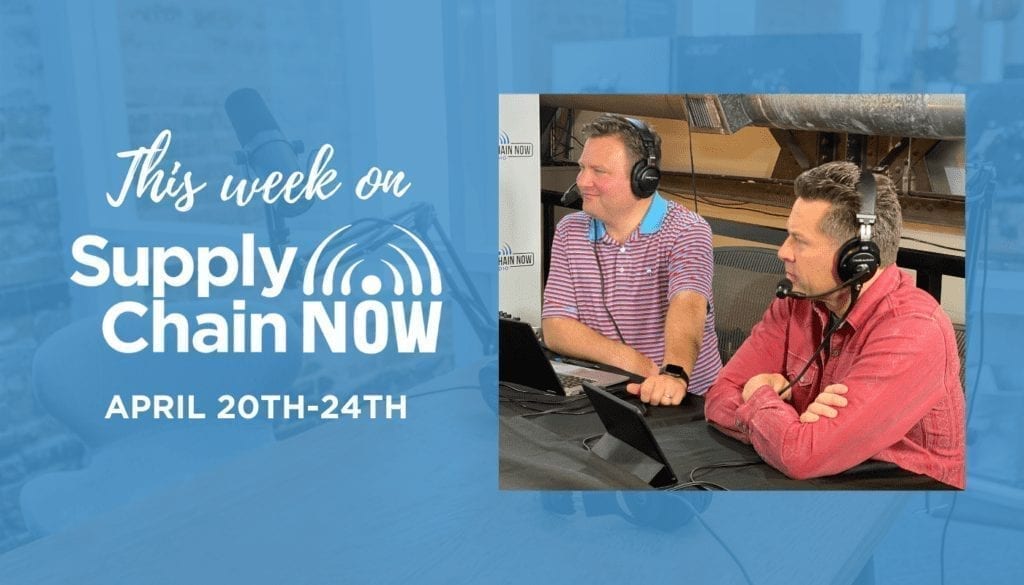
This Week on Supply Chain Now: April 20-24
It has been another busy week for Supply Chain Now! Did you catch all the episodes? If not, no worries! Check them all out here: We started out the week with a new episode in our Logistics with a Purpose series sponsored by our good friends at Vector Global Logistics. Listen as Scott, Greg, and Enrique have a great conversation with Mickey Horner with Rise Against Hunger. On Tuesday, Scott and Greg were joined by AIAG’s CR Summit speaker Joerg Walden, CEO of iPoint. Then we published the new and improved Supply Chain Buzz, with Scott and Greg sharing and discussing the latest news and events in Supply Chain and beyond. Scott and Greg were joined by Randy Strang with MedShare on Thursday for another episode in the Logistics with a Purpose series, sponsored by Vector Global Logistics. And to wrap up the week, Scott and fellow host Fred Tolbert with Demand Solutions were proud to host three exceptional Supply Chain students from the University of Georgia’s Terry College of Business.
August 6, 2021
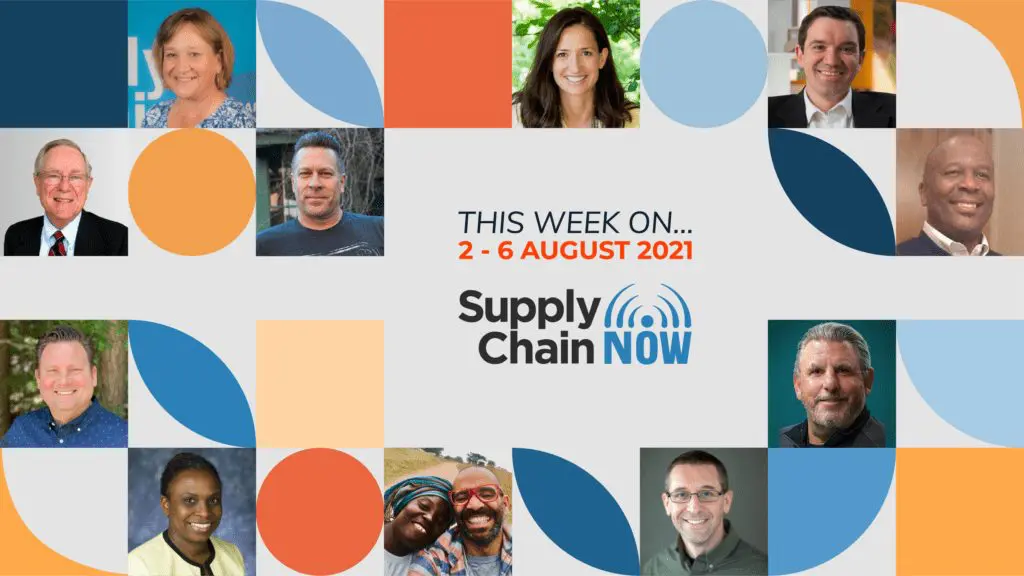
This Week In Supply Chain Now: August 2nd-6th
Stay up to date on all the latest conversations, interviews, and episodes we released this week here at Supply Chain Now. On Monday’s episode of Supply Chain Now, Scott Luton and Greg White discuss the U.S. Bank 2021 Q2 Freight Payment Index with Bobby Holland of U.S. Bank & John Janson with Sanmar. On This Week in Business History, Kelly Barner shares the best and most interesting bits of historical business trivia, all occurring during the first week in August. We also released an episode of Supply Chain Now en Español with Enrique Alvarez and Demo Perez featuring Felisa Preciado. On Tuesday we released another Logistics With Purpose episode! Hosts Enrique Alvarez and Kristi Porter welcomed Alice Brown with GoodSteps to the show. Another show that was in the mix this week was TECHquila Sunrise with Greg White. This is the 2nd part of a great conversation with RateLinx CEO Shannon Vaillancourt, where they discussed 3 Keys to turn supply chain visibility into action. On Wednesday, Tim Nelson with Hope for Justice joined Scott Luton and Greg White. They discussed their noble efforts to eradicate slavery and human trafficking in the supply chain throughout the world. On Thursday, we released…