
More

supply chain
September 18, 2025
Freight Audit & Payment: The Anchor for Supply Chains in Turbulent Times
Special Guest Blog Post written by Bart A. De Muynck The past few years have exposed just how fragile our supply chains can be. From tariff shocks to pandemic disruptions, from inflationary pressures to mounting parcel surcharges, the landscape has shifted beneath our feet. Companies that once managed logistics as a back-office function are now grappling with its role as a front-line business risk. What’s often missed in this conversation is the role of freight audit and payment (FAP). Long considered a tactical necessity, FAP has quietly become a strategic imperative. And as I explored in the Better Supply Chains Market Radar: Freight Audit & Payment, the companies that treat it that way are the ones best equipped to weather today’s volatility. Why FAP Has Become Mission-Critical When tariffs can add 15–20% to input costs almost overnight, or when the elimination of the U.S. de minimis exemption threatens to reshape cross-border e-commerce, companies need more than visibility. They need real-time intelligence and agility. Traditional FAP approaches—manual audits, siloed spreadsheets, reactive error correction—are no longer sufficient. Modern FAP platforms, powered by AI and advanced analytics, enable shippers to: Audit with precision at scale, uncovering hidden…
August 21, 2020
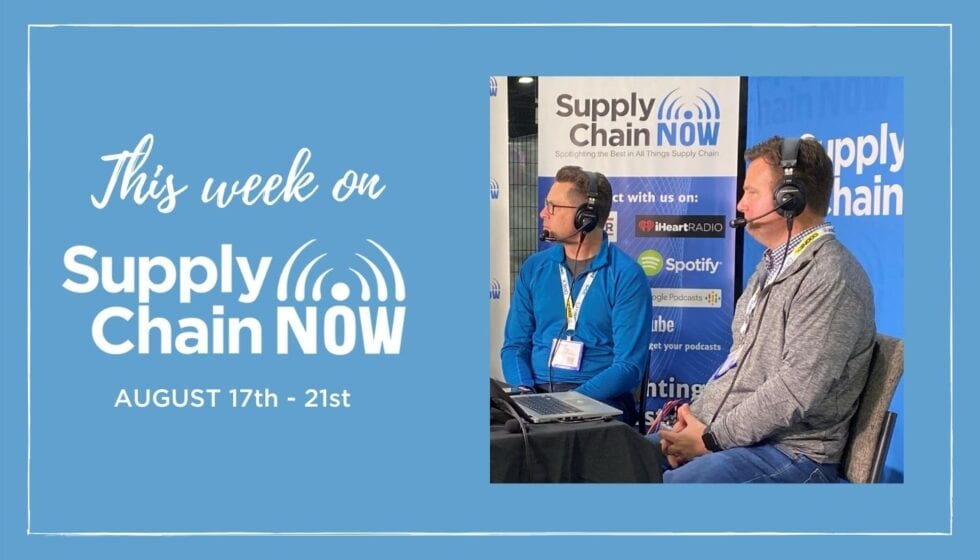
This Week on Supply Chain Now: August 17th – 21st
Another BIG week at Supply Chain Now! If you missed an episode, get a quick summary and listen here! On Monday, we published a new episode in This Week in Business History. Scott shared the stories of a few retail legends, the birth of Motown, and more! Supply Chain Now · “This Week in Business History for August 17th: Retail & Radio Legends are Born” We continued the Today in Manufacturing series on Tuesday as Kelly Scheib with Proterra joined Laura Madajewski, Jason Moss, and Scott on the podcast on Tuesday. Supply Chain Now · “Serving the People Behind the Numbers: Kelly Scheib with Proterra” On Wednesday, we published this week’s Supply Chain Buzz, where Scott and Greg shared the top supply chain stories of the week. Supply Chain Now · “The Supply Chain Buzz for August 17th: Imports Up, Cold Chain Explosion, & Good News” On Thursday, we shared an excellent interview on supply chain leadership as Scott & Greg spoke with Rick Blasgen, the President & CEO of CSCMP. Supply Chain Now · “Leading the Supply Chain Industry Forward: Rick Blasgen with CSCMP” And we wrapped up the week a little…