Intro/Outro (00:03):
Welcome to Supply Chain Now, the voice of global supply chain. Supply Chain Now focuses on the best in the business for our worldwide audience, the people, the technologies, the best practices, and today’s critical issues, the challenges, and opportunities. Stay tuned to hear from those making global business happen right here on Supply Chain Now.
Enrique Alvarez (00:32):
Good afternoon and welcome to another episode, or I guess another livestream of our very good show, Logistics With Purpose. It’s a pleasure to be here with everyone. My name’s Enrique Alvarez with Vector Global. And I have an incredible guest today. And I’m delighted to be joined by my super cohost, Kristi. How are you doing today?
Kristi Porter (00:52):
Hi, Enrique. I’m good. I’m excited to be here because, yet again, we get to have another incredible conversation with somebody that we can learn from and be inspired by. So, I know you and I just really enjoy getting to hear more about what people are up to and how they’re solving big problems.
Enrique Alvarez (01:07):
It’s super exciting. I think it’s one of the best parts of my week, right? It’s always fun to kind of talk to very interesting individuals, people that are truly changing the world and people that are just doing amazing things. It’s inspirational, and it’s exciting, and it’s great. And for everyone that just noticed, I broke my clavicle, so I’ll be a little bit slower today with clicking the comments in. But how’s your week going, Kristi?
Kristi Porter (01:30):
It’s going really well. If we can ever get rid of this rain in Atlanta [inaudible] shiny skies, for sure. But [inaudible].
Enrique Alvarez (00:01:34):
It’s been raining, yeah. Raining like crazy. You’re absolutely right. Well, with that said, again, amazing guests. Kristi, why don’t you just introduce us to the guest?
Kristi Porter (01:46):
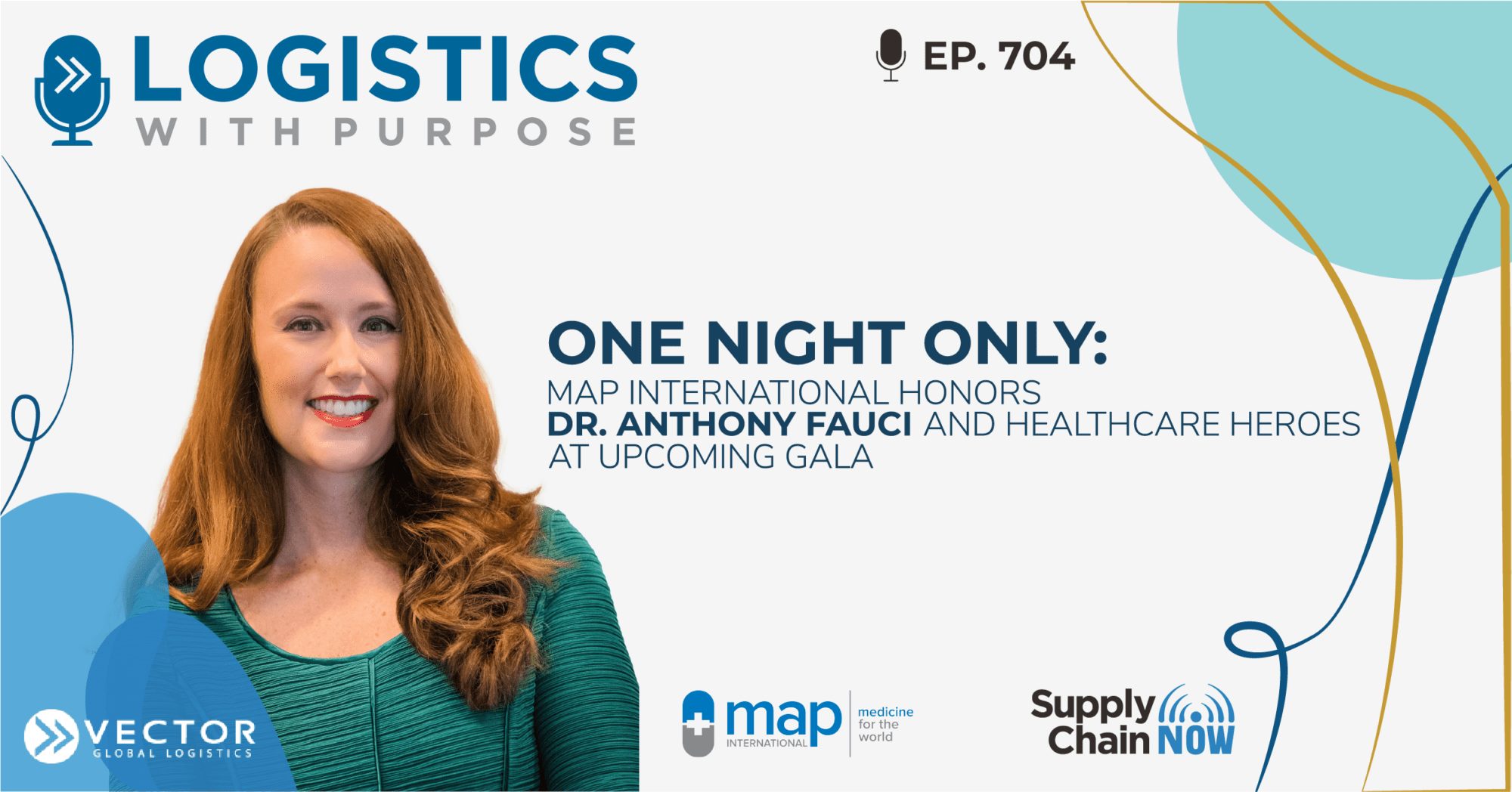
Yes. So, today, we’re excited to have Jodi Allison, who is Vice President of Global Giving at MAP International. And we’ve had MAP on before, and we’ve had Steve Sterling of MAP on before. But Jodi is new to us. And so, we’re excited to learn more about her and more about MAP through her eyes. And really thrilled to talk about their upcoming Bill Foege Global Health Awards, which we’re excited to participate in and learn more about as well.
Enrique Alvarez (02:11):
Yeah. It’s a great event. And she was just telling us before we joined the livestream of all the different galas that they’ve had in the past, and they sound amazing, incredible. Like, great, very relevant, very timely. And, of course, it’s a great organization, so it’s our pleasure to be supporting in any way we can. And, of course, throughout this livestream, we’ll going to be pushing the very, very clear message that, let’s just help them, help Map, help other organizations, let’s continue helping the world. I think we need it, especially now with the pandemic and whatever the new Delta variance is coming along. So, let’s just be pushing. I think it’s been a long couple of years, but we should be okay if we work together.
Kristi Porter (02:51):
Yep. And if ever there was a time to recognize healthcare and the strides we’ve made and celebrate the people working in that field, then the time is now. And MAP is certainly leading the way.
Enrique Alvarez (03:00):
Absolutely. And with that said, let me just introduce – well, not introduce – let me just thank some of our people that are joining. Peter – as always – thank you very much for being here. It’s great to see you. The team at Supply Chain Now. I mean, guys, we wouldn’t be able to do any of this without your help, Allie, Clay, Scott – who’s actually sending a text as well – Amanda, everyone else. Rhonda, welcome as well. And I’ll continue to read some of these comments as we have our conversation with Jodi. But without further ado, let’s just introduce Jodi to our audience.
Kristi Porter (03:32):
Yeah. Welcome, Jodi.
Enrique Alvarez (03:34):
Now, with the proper swoosh. Yes.
Kristi Porter (03:36):
Yes. The anticipation was killing us. Thanks, Jodi.
Enrique Alvarez (03:38):
[Inaudible] just to show up like that. We needed the swoosh first.
Jodi Allison (03:42):
I’m a multiple swish girl. It was, like, three times. I got the triple swish. So, I’m thrilled to be here with a triple swish. That might be a record for you guys.
Enrique Alvarez (03:53):
It is a record. But it’s a pleasure having you here. How are you doing today, Jodi?
Jodi Allison (03:55):
I’m doing great. Thank you guys for having me on. I’m so grateful to be part of this and to have the opportunity to speak to both of you, so thanks. And I see a bunch of people in the little comment section, so wow. We already have a great gang of people attending, which is so wonderful. I love it.
Enrique Alvarez (04:14):
It’s great. And there’s such a great community. Supply Chain Now has done a great job in just bringing people together. And then, you’ll see, it’s actually pretty international as well. So, we have Musawir and Bashar, who’s also a regular, and some others that we’ll continue to talk to. By the way, if you’re new to this livestream, please, we love all the comments and questions for our guests. So, please keep sending them. And, Jodi, before we dive into MAP, which is an amazing organization, and then also the big gala, I mean, we’d love to hear a little bit more about you and your upbringing and who are you. Tell us a little more about yourself.
Jodi Allison (04:54):
Wow. We’re in therapy now, so be careful. The tears could start flowing. So, I have been at MAP International for 22 years now, so quite a long time. I, literally, started when I was 23. So, I’ve grown up at MAP, which has been such a gift to me, personally, just being part of such a fantastic organization. I still love what I do every single day, even after 22 years. So, I grew up where you guys are located. I grew up in the Atlanta area. I now live in Tampa, Florida. So, I work remotely. MAP International, our main kind of distribution center is located in Brunswick, Georgia, near the Gold Isles. Many of you have probably come and visited St. Simons or Jekyll or Cumberland Islands, so we’re right there located in Brunswick, Georgia. We have a lot of people that come and visit us during the winter because we are, you know, very, very friendly when it comes to weather. And I am now in Tampa and love it there. And MAP also has an office in Atlanta. So, that could be another spot where we could meet up with you guys in person face-to-face is in Atlanta. We have an office there too. It’s just such a pleasure to be here. So, thanks again for having me. I’m excited about talking to you about MAP, and this event, and getting to know you guys better as well. So, be careful, I’ve got questions for you guys too. I’m going to turn the table.
Enrique Alvarez (06:16):
We’re ready and that’s perfectly fine. It’s fair. Well, tell us a little bit, for people that might not know, what MAP is. I mean, what is MAP? And what can you tell us a bit more about them in a very general sense. And then, a little bit more about you in relation to your role with MAP throughout those amazing 22 years.
Jodi Allison (06:35):
Twenty-two years, it’s crazy. So, MAP is a Christian Organization. We provide medicines and health supplies to people in need all around the world. And our goal is that, we want to make people healthy so they can experience life to the fullest. We serve all people. I mentioned earlier, we are a Christian Organization. We were founded as a Christian Organization, but we serve all people regardless of religion, and gender, and race, and ethnicity, and nationality, orientation. We serve everyone. So, we’re very passionate about making sure that we can help as many people as possible. We are laser-focused in what we do. We really focus just on medicines and health supplies. So, there’s other organizations that do really amazing things with housing, or school supplies, or even clean water. While we may have some elements of those things in some of the partners that we work with or in our disaster relief efforts, for the most part, we’re kind of laser-focused just on medicines and health supplies.
Jodi Allison (07:38):
And we get those medicines and health supplies primarily through the pharmaceutical and health industry here in the U.S. and in Europe, primarily. So, those products are donated to us. Those are called Gifts In Kind, GIK. We get a lot of GIK of these medicines and health supplies. And when I say a lot, it is, you know, well over half-a-billion dollars a year. And that’s in whack value, which is about half of the average wholesale price, which is way cheaper, of course, than retail value. So, it fills up a lot of space for our medicines and health supplies. And we serve, again, kind of all people in a lot of different ways. We do it through U.S. physicians that travel on medical mission trips to help people in the developing world. And then, we also do it through partners that are on the ground that have holistic programs. And we kind of feed into their holistic programs with our medicines and health supplies. So, we might ship a 40 foot or 20 foot sea container to them. There’s a lot of logistics, as you can imagine, that are involved in the work that we do. Last year, we sent to 86 different countries. I think that’s even going to be higher this school year when it comes to an end.
Jodi Allison (08:53):
Because of the pandemic we’ve sent to a lot of places that we traditionally don’t send to. But the pandemic has just opened up so many hard opportunities, especially around PPE, just to make sure that we can fulfill the needs of people who are struggling with any type of health condition, but especially COVID-19 in the past year, especially. So, that’s what MAP does.
Jodi Allison (09:17):
I can tell you just a couple of [inaudible] about what I do. So, my title, as you said earlier, is Vice President of Global Giving. And what that means is kind of very simplistically, we have a team of people that bring in resources to MAP, and then we have a team of people that gets the resources out. And those are your kind of people, these are the supply chain people that help — medicines to the people that need them. And then, my team helps bring in the medicines and health supplies and some of the funding that allows MAP to keep its doors open and keep the lights on, so to speak. So, we work directly with the pharmaceutical industry. We work with large major individual donors. We work with foundations, and corporations, and churches, and all kinds of different outlets to make sure that we can fund the organization, both with large amounts of product and then also the finances that we need. So, I kind of lead that team.
Jodi Allison (10:11):
I also work on the corporate side. And this team, the staff members at MAP, I just can’t speak about them enough, their dedication, their passion. Everyone could be working elsewhere making more money, and getting more accolades, and living kind of a better lifestyle than probably what they’re affording to live working at a nonprofit. But people have this passion to be able to serve people around the world. We call ourselves the Servants of the Servants, and we are that. We really live into that every day, where we’re just passionate about helping people. And so, the fact that you can make more money doing something else kind of goes away when you have a strong passion for what you do. And, certainly, all of the staff members at MAP live into that every single day. And, especially during the pandemic, where we had people coming in weekends, nights, working extra hours to just try to meet the demand for, especially, PPE but also medicines and health supplies around the world during this time.
Kristi Porter (11:15):
MAP is certainly missing the mark if they don’t have a video of you on their careers page. Because you are incredible [inaudible].
Jodi Allison (11:23):
Thank you. Thank you. I appreciate that.
Kristi Porter (11:24):
Yeah. Also, when I was reading through and kind of soaking in more of what you guys do, because there’s so much to it, as you mentioned, I love the tagline of “Medicine for the world.” So, you kind of talked about what you do and how you do it, but let’s also discuss the need for it. So, why is MAP important and unique and what makes it so critical? Obviously, everybody kind of understands a little bit more now that we’re living through a pandemic and all in similar situations. But, just in general, you’ve had such a storied history. So, what is unique and what is the need?
Jodi Allison (12:03):
Yeah. It’s a really good question. And I think, especially as you said, right now, we’ve never been more interconnected, probably, in the history of mankind, certainly not in the last hundred plus years related to health than we are right now. I think often in the developed world, we think, “Oh, there’s all these weird, rare diseases, and neglected tropical diseases, and these strange things that happen in the developing world.” I know sometimes when I talk about the fact that we work with leprosy at MAP, people say, “Leprosy still exists? Like, what? What is that? I thought that went away, you know, in biblical times.” No. It’s an ongoing issue in many parts of the developing world. But we kind of feel like because we have such great healthcare here in the U.S. – relatively speaking – and also in Western Europe, and in more developed nations, that we’re immune to some of these crises. And it’s proven now with COVID-19 that we are not. We are absolutely all in this together in a way that we’ve probably never felt before, at least in my lifetime.
Jodi Allison (13:10):
So, the facts are this, there’s two billion people who live without access to medicines that they desperately need every single day of their life. And that’s across the board, children and elderly, and people that need ongoing care for chronic conditions like heart disease or diabetes, and basic, basic medicines like penicillin and amoxicillin, things that are just incredible basic that they do not have. And I think for me, personally, I know a lot of us kind of think about kids – and for those of us that have kids or you’re close with children, nieces, nephews, whatever it may be – you think your child starts coughing and you think, “Okay. Let me give him some cold medicine.” And then, that cough may turn into pneumonia. And so, you take him to the doctor, and they do a chest x-ray, and they give you some antibiotics. And, you know, most of the time, your child’s perfectly fine. Same with ear infections, really basic conditions. Strep throat is another really big one.
Jodi Allison (14:14):
And that’s not the way it is in the developing world. I mean, there are millions of children that die every year from absolutely easily preventable illnesses that are treated because they don’t have access to medicine. So, we’re really called at MAP to try to reach as many people as possible. We have some numbers of people that we’ve reached over the years. Certainly, in our 67 years of being around at MAP, we’ve treated billions of people throughout the world. And it’s incredible. It’s wonderful to be able to work in a place that does this. But, also, it’s a drop in the bucket of kind of the effect that we’re able to have every year. And the more resources that we can get, obviously, the more people we can treat.
Jodi Allison (15:00):
And so, that’s what we do. This is what we live for, is, to try to find ways that we can help more and more people to live healthier lives. Because without health, your food security, or your clean water, or your shelter isn’t important because if you are sick or your child is sick, then it affects every other area of your life. And for us to live in a world where children under five – I think it’s 25,000 children a day under five – are dying from preventable illnesses, I mean, it’s staggering.
Enrique Alvarez (15:35):
It’s heartbreaking.
Jodi Allison (15:37):
It’s heartbreaking. And it’s really something that’s easily preventable with very inexpensive medicine. I mean, you know, antibiotics, the whole –
Enrique Alvarez (15:47):
That we have in abundance here in the U.S. and in other countries.
Kristi Porter (15:49):
Yeah. We get for free when we get [inaudible].
Jodi Allison (15:50):
Absolute abundance.
Enrique Alvarez (15:50):
There’s no shortage. There’s nothing. It’s just a matter of, like, really being aware of what’s happening in other parts of the world and just helping those people out. Jodi, let me interrupt you for a second because I have so many comments that I’m going to start missing most of them. Charles, thank you so much. He loves your message and efforts in helping humans.
Jodi Allison (16:12):
Thank you, Charles.
Enrique Alvarez (16:14)
Brijesh, “Great. Good to hear about MAP services.” Monica here, “It’s great to listen to you talk with such passion.” And I will have to kind of double on that comment because, yeah, it’s great. I mean, people can really feel and understand what’s going on, on the kind of passion that you and everyone else at MAP has to help people around the world. So, thank you. Thank you for what you guys do. And please pass all the thank you comments to all your team as well.
Jodi Allison (16:44):
I will. We are passionate folks. I mean, we really are. But there’s a reason for that passion. And it’s really those two billion people every year who don’t have access to medicine that really – I mean, we should all be passionate about that. I mean, hopefully, everyone that’s listening today has a passion and it’s something that’s as worthwhile as helping people to live lives, where they can then fulfill what’s in store for them, what they’re called to do. And we are a group that loves some passion. It’s actually part of our core at MAP. We have core values, and this is one of our core values is passion. So, we aren’t short on that.
Enrique Alvarez (17:24):
People can tell. And, again, I cannot stress this enough, if you guys have not heard of MAP or you are not too familiar with it, just go online. Like, they’re an amazing organization. They need all our support. And I think they’re doing amazing things. Scott Luton says, “Health is the new wealth, for sure. Staggering statistics.” I have a question for you, Jodi – actually, I have many questions for you. But one that comes from the audience, so I’ll actually ask you that one first. Who funds MAP is the question? Good question.
Jodi Allison (17:56):
It’s a really great question. So, we get funding from lots of different sources. So, corporations fund us. Certainly, all the products that we mentioned earlier come from corporations. But many of them are very generous with cash funding too. We get funding from other nonprofits. So, our partner nonprofits that use our medicines, they help donate money to MAP to help us run the organization. We have unbelievably generous individual donors. So, these are people, some of which give us, you know, $20 a month all the way up to our larger donors that give significant amounts. Yes. I mean, we have such incredible rich stories of people that sacrificially give to us. Maybe someone who’s elderly that just wants to help others, and they give us $10 a month, but that comes from the heart because they really don’t have it. I mean, they’re giving out of a strong desire to help people, even if they have to make a sacrifice. And I don’t mean like they’re sacrificing their Starbucks. I mean, they’re really making a true sacrifice to be able to give money away to a nonprofit.
Jodi Allison (19:07):
And we take that so seriously. We look at every single dollar that comes into MAP from wherever it might come from as a gift. And we want to make sure that that gift is used and stewarded in the best way possible. So, you know, we kind of have an efficiency rating of around 98 percent, which means that about 98 percent of the funding that comes into MAP is used for programs and not [inaudible]. That shifts every year, but we’re always somewhere in those high 90s as far as the way that the funding that comes into MAP through all these various channels is used. And we want it to be used to help people in need. We don’t want it to be [inaudible]. Steve will tell you, if Steve Stirling, our CEO, was here right now, we do not have high salaries.
Enrique Alvarez (19:56):
Steve is a great, great person too. We’ve had the opportunity to talk to him and meet with him. And there’s actually an interview with him on Supply Chain Now that, again, I encourage people to go and check out. You’re right – and his story is unbelievable as well. So, we’re missing [inaudible].
Jodi Allison (20:11):
The most amazing story.
Enrique Alvarez (20:13):
Really good story.
Jodi Allison (20:15):
He has a really, really great story, to your point. And you mentioned earlier that people can go online, we’re at map.org. So, it’s super easy, M-A-P-dot-O-R-G. Very easy to find us. And you can actually click and read Steve’s story. And he has this unbelievable testimony. He actually came to MAP because he is a polio survivor. Steve walks on crutches and is a survivor of polio and has, obviously, lived with this for his entire life. And so, he has a story that really showcases the power of medicines and health supplies. I mean, he talks about how for the 30 cent dose of vaccine, it would have changed his life forever.
Enrique Alvarez (20:59):
Like, knowing MAP, probably, would have changed his life. But it’s changing a lot of people’s lives right now. And I have another question from Pankaj, “You have to discuss over use of latest MHEs, which are the main asset during operation.” I know if you’re familiar, we’ll get back to Pankaj on that.
Jodi Allison (21:19):
Yeah. MHEs, I’m going to need help on that.
Enrique Alvarez (21:22):
I have no idea that’s why I passed it to you. You’re the expert.
Jodi Allison (21:27):
You’re clearly smarter than me, and I’m totally good with that. I like being the dumbest person in the room. It happens to me all the time.
Enrique Alvarez (21:36):
We will table this one. We’ll give him an answer afterwards. But I do have one myself, Jodi – and thank you once again for doing this. This is fantastic. And we’re getting tons of questions. You’ll see them afterwards – what additional challenges have you actually faced during the pandemic? Because I know that one thing that really captures my attention is it seems to me almost like a race against the expiration date on some of these medicines, right? Because, for me, coming from logistics, and maybe some of the folks out there that are also coming from logistics, tell us a bit more about what the problem is with the expiration dates. And then, also, what impacts did the pandemic have on you guys and how did you resolve it?
Jodi Allison (22:17):
Yeah. You nailed it. The expiration dating is our largest challenge at MAP. So, the majority of products that we manage at MAP, even things that maybe you wouldn’t expect, even these PPEs that are coming in, face masks, gowns, many of them, in fact most of them, have expiration dating on them. So, we have to have logistics like no other because of these expiration dates. And we have to have them in country, and there’s rules and regulations. And every single country is different on how much dating has to be on the product by the time it arrives. But you certainly have to have enough where it can arrive, be distributed to the people that need it, and then be consumed or worn or processed internally or externally prior to the expiration date. So, there is a race against time. The drum is beating for us every single day when it comes to expiration dating.
Jodi Allison (23:15):
So, it’s a really important piece of the work that we do and how it kind of segues with logistics, is, because we have to get these medicines and supplies there and we have to get them there quickly. And so, it’s a race against time, but, also, kind of a race against health. I mean, right now, if someone does not have PPE and they need to see a patient, if a healthcare worker needs to see a patient and they don’t have PPE, they’re at super high risk of contracting COVID. And in most developing countries, there still is no vaccine there for them. I mean, it’s kind of hard for us to imagine, in the U.S. and in the developed world, most people who want the vaccine can get it. And that is definitely not the case right now. So, it is a really big part of what we do. And part of it is the reason why companies donate products to us oftentimes is because it’s starting to diminish and dating. We do not accept expired products. We do not accept –
Enrique Alvarez (24:13):
You would never ever ship anything that’s expired, anything that wouldn’t be safe, anything that it’s even close to. I mean, you guys are staying way, way – away from that.
Jodi Allison (24:22):
We have very high standards when it comes to the products that we distribute and that we use internationally. And, certainly, 100 percent correct in what we said, we do not distribute expired medicines. And we have to be careful even about the expiration dating that comes in because we ship all of these internationally. MAP — internationally. We do have a domestic medicines program that’s smaller. So, most of the work that we do is international. And you’re right, the expiration dating is a real challenge. And during the pandemic, I would say, the biggest challenge that we had was just the amount of work increased so drastically for us. We have all of our regular work because that doesn’t go away and then you have the complications of COVID-19 on top of it.
Jodi Allison (25:08):
So, you have this need for incredibly large amounts of PPE, which we used to be able to get for pennies, literally less than a dollar for, you know, a lot of the PPE that we were sourcing. And all of a sudden, we had quotes, you know, at $15 or $8 for a box of gloves that we used to be able to get for $2. So, the sourcing of PPE was so challenging. And trying to vet and find really highly qualified PPE vendors was another challenge. Because there were a lot of scam artists out there, sadly, that were not creating good high quality PPE. But we’re just trying to make a quick buck. And we’ve heard horror stories from other nonprofits – luckily MAP was not one of them – where they either paid for PPE that never showed up and they couldn’t get their money back or they got the PPE and it was such low quality that they couldn’t use it.
Enrique Alvarez (26:08):
It was definitely a challenging year for that particular reason. And, also, as a logistics company, we saw it firsthand. I’ve never seen anything that corrupt in my life. It was horrible. It was broker after broker after broker. It was just people ripping each other off. There’s tons of price gaging. It was pretty bad. You’re right, it was tough times to actually try to get reliable products that would save people’s lives.
Jodi Allison (26:39):
It really was incredibly challenging. And I just think, like, who tries to rip off nonprofits? And who tries in the middle of a pandemic to provide such a low quality PPE that it’s pointless? There’s no reason to even have it during a global pandemic with the contagious rate of COVID-19. It was just unbelievable to me. But there are people, sadly, like that out there. We were able to navigate through that. But, certainly, finding PPE was really hard. And, of course, the need for it was huge. So, we already had some in our facility, which was wonderful. We were able to get product to Wu Han, actually. So, we were sending, you know, millions of PPE to Wu Han right when this outbreak happened, when none of us knew what it was going to turn into. So, if you could rewind your brain back to when we were watching news stories in Wu Han, and we were all thinking, “Oh, this is heartbreaking for the people that live there.” And never in a million years thought that it was going to turn into what it turned into.
Jodi Allison (27:41):
So, what we did is we said, “Hey, we help people. And we want to partner with people to help in Wu Han.” So, we sent a lot of PPE to China in the early days. We don’t regret that at all, but it did leave us less once it started making its way to the U.S., and we had partners here in the U.S. who needed it. We had staff members at that point, you know, who needed it, who were wearing masks in the office and needed it, and couldn’t find it elsewhere during that time. But it’s really about finding the right products and sourcing them, of course, for as low of cost as you can being a nonprofit, but still having that high quality. So, that was a real challenge.
Jodi Allison (28:22):
And then, I think, just trying to find that balance. All of us, you know, people were working from home. We had just staff heroes who were coming into our distribution center to be able to work together, wearing masks, sometimes wearing other PPE, to be able to get the medicines and health supplies out and other PPE out. But we had a lot of people working from home. So, I think for all of us, we can relate to having to shift and work from your home. And, all of a sudden, you see people’s little kid faces popping into your — and dog’s barking and, you know, smoke alarms going off, all the kind of funny things that happened when you transitioned to a work from home environment. So, like everybody, we pivoted to do that, but it was challenging, and there was some staff exhaustion. I mean, we were working really long hours, even longer than normal, to try to keep up with the work.
Jodi Allison (29:16):
MAP has one large distribution center. During this time of COVID, we’ve added three more, because we outgrew our space with the need for PPE being so strong. And us having the desire to help as many people as possible, we, literally, outgrew our space. And so, we’ve had to be really nimble and resourceful and find small distribution centers and big distribution centers. And one of them, at one point, inSouth Georgia, I remember, had no air conditioning. So, we couldn’t store medicines there, but we could store some of the PPE items. But we had to work to, like, get air conditioning in this storage facility, this warehouse, so that we could find a place to store PPE. And we didn’t have to turn anything down —
Enrique Alvarez (30:05):
Jodi, I will have to stop you a little bit again, because I have so many comments also from the audience. I mean, you’re doing a great job. Everyone’s actually trying to ask you question.
Jodi Allison (30:12):
I love it. I love engaging with audience.
Enrique Alvarez (30:15):
Jose Montoya, thank you very much. Welcome, Nurfad Natarevej – I probably did not pronounce your name correctly, but thank you for being here as well. He actually wrote a couple things in French. Charles as well. Charles actually has another question that I believe it’s interesting for you. He says, “Does MAP integrate with blockchain technology?”
Jodi Allison (30:45):
So, Charles, let me just tell you, I’ve sat into some blockchain lessons, it’s beyond me. I can’t figure it out. I’m just being real with you, Charles. We would love to do more with blockchain. I see the benefit of it especially for an organizationlike MAP. We need help, so, Charles, help us.
Enrique Alvarez (31:07):
Maybe Charles can help us with that.
Jodi Allison (31:09):
Yes. Charles, we need you.
Enrique Alvarez (31:09):
If you know a little bit more about that, send us an email, contact Supply Chain Now. We can definitely get some help there. Laxmi, thank you so much as well for joining. Laxmi also has a very interesting question. And just, in general, you have such a rich career and very successful career. What are the five major strategies for having an agile supply chain, is what Laxmi was wondering.
Jodi Allison (31:36):
So, Laxmi, I think more than anything – and I hope you guys agree with me – it’s relationship building. You have to have partners at every single solitary part of the supply chain that you trust. Trust is absolutely foundational. You have to have trust. If you don’t have that, you’re done. So, I think that would probably be number one. Like, you have to have that trust.
Enrique Alvarez (32:00):
Yeah. That could be one, two and three, right?
Jodi Allison (32:03):
Yes. It might be one through three, exactly. So, the trust is just vital. But then, also, I think developing those relationships and the partnerships in a deeper way. One advantage – there’s some disadvantages of being 67 years old as an organization – is, certainly, that we have relationships within the supply chain that are, you know, 50 plus years old. And those relationships are just key to our success.
Jodi Allison (32:32):
And then, in general, flexibility. I think we all learned above all else last year, flexibility is vital. You have to be able to pivot, constantly change, think outside the box, look at things that you’ve never thought of before. When we were outgrowing our facility, we had to say, “Okay. What can we do?” We live in a small town where MAP is located, our distribution center. In a relatively small town, Brunswick, Georgia. There’s not tons of space everywhere. So, you have to be resourceful. You have to be able to be flexible. You have to go find ways to make things happen. And that’s key, I think, for all of us in supply chain, is, when something’s presented to you, is, how can you think outside the box to make this work? How can we always say yes — but the way to do it efficiently and appropriately and effectively? And so, constantly thinking in that kind of mindset really will drive success.
Enrique Alvarez (33:27):
Right. Well said. And, Kristi, I know you’re dying to ask a couple of questions as well.
Jodi Allison (33:32):
You have the look.
Enrique Alvarez (33:32):
You can raise your hand if there’s —
Kristi Porter (33:34):
[Inaudible] you do this all day. Yes. I have some questions too. You’ve mentioned partners a couple of times, and Jose had also asked the question, if you partner with other Christian Organizations. I know you’ve mentioned industries that you work with, but I don’t know if there are other specific organizations that you partner with.
Jodi Allison (33:51):
Absolutely. Yes. So, we definitely partner with other Christian Organizations. We also partner with other secular organizations. Anyone that has really good on the ground field programs. So, Food For The Poor, which is a really well known organization that you guys may have heard of. World Vision is another one that had, probably, over 50 years of a relationship with them. We work with another nonprofit called Project Hope, which you guys might’ve heard of. Christian Aid Ministries, which is this incredible organization that’s out of Ohio, primarily, and they also have offices in Pennsylvania. Just wonderful organizations that we’ve gone and vetted over the years. We’ve built that trust, that we talked about was so important. And then, we’ve been able to find ways to partner with them, to meet their medicine and supply needs while they’re meeting the holistic needs of entire communities. And when you go and visit, it just takes your breath away of what they’re doing, whether they’re running orphanages or homes for troubled teens, or they’re working in big hospitals or smaller clinics or outpost in the middle of nowhere. And they’re working hard to provide health needs for people that would never ever be served otherwise.
Jodi Allison (35:10):
We have mobile clinics that we’ve supported over the years that are on canoes. So, they’re canoe mobile clinics in Indonesia, they go to the most remote islands and they literally have a clinic on a canoe. And I know — it was like they were stuck there for a month. You know, the water changed and it was like, “You can’t leave. You got to be here for a month until the water changes and you’re able to get back out in your canoe and paddle to the next island.” It’s incredible what people do and the links that they go to, to provide health services with MAP medicines. So, we’re part of that process. So, partnership, for us, is absolutely key and it’s vital to what we do every day.
Kristi Porter (35:53):
That’s amazing. And you mentioned that you’ve been around for over six decades, which says a lot about your organization just in that fact. And you’ve, of course, told us a lot about the need. The statistics are staggering. But let’s talk about a couple of the wins. So, if you want to share some specific stats and stories just on what you guys have been able to accomplish over the past six decades.
Jodi Allison (36:15):
Yeah. I think for sure, the biggest thing if you ask any staff member at MAP what’s the biggest win, we would always say it’s the lives of the people that we’ve been able to touch. It’s the healing that’s taken place from children up to, you know, elderly adults that we’ve been able to be a part of. The people are the important part for us. It’s all about how can we serve more and more and more people. The money is a way to get to that. Events are a way to get to that. Getting donations of gifts in kind from the pharma and health industry is a way to get to that. But it’s really about how do we serve as many people as possible.
Jodi Allison (36:56):
I have all kinds of, you know, personal stories of where I’ve been able to physically see people, and serve them, and touch their lives through the work that MAP does. But, of course, I’ve been involved in so many amazing stories, whether it’s through our rare disease program – MAP has a very active rare disease program – where you’re providing medicines that are absolutely critical to someone who has a very rare disease. And if they don’t get that medicine, they will die. And these programs that we have are so important because you get to see it in the life of one person or two people that may, you know, be in a family.
Jodi Allison (37:37):
We have a wonderful story of two sisters, actually, that live in Guatemala in very impoverished conditions. And they have a rare disease which would have rendered them completely paralyzed and eventually killed them. If they — this one medicine that is an expensive medicine and not available at all in Guatemala. And we’ve been providing this medicine through Bausch Health. Which is, prior to that, Merck owned the product and they provided it to these two sisters. And then, it’s kind of moved through to different companies. Now, it’s owned by Bausch Health. So, Bausch Health has said, “We want to do this. And we want to do it for free for a family that would never be able to afford it.” And so, these two girls are living incredible lives. I mean, their father reached out to me recently and, actually, one of them was walking now. She’s never walked before in her life and she’s able to walk now. The other one is still in a wheelchair, but she can move the wheelchair on her own. And these are just two people that our medicines and the work that we do has been able to affect. But think about the trickle down effect, it’s their family, it’s their community, everyone around them gets to see these girls thrive in their life. And without the medicine, it never would have happened.
Enrique Alvarez (38:52):
As a father, you can’t really thank people enough for something like that. There’s just no words to describe how much you have changed positively their lives in general. So, that’s really great.
Jodi Allison (39:07):
It’s those stories, it’s kind of the power of one multiplied by billions that we’ve served in the 67 years and the 2 billion people every year that are in need. It all kind of trickles down to that person, that one that you’re helping and how their lives then can affect other lives. I mean, that’s why we’re doing it. Without those medicines, they wouldn’t have those opportunities that they have now that they’re healthy and strong.
Kristi Porter (00:39:37):
That’s incredible. You’re an amazing ambassador for MAP. So, thank you for — answering these questions for us. But I know there is another purpose that we’re here today. And Enrique has a question about the other reason we’re here today, besides just discussing MAP in general, which we’re obviously big fans of.
Enrique Alvarez (39:57):
Well, thank you very much for letting me ask the question. I thought you were just going to go right to it.
Kristi Porter (40:00):
We’ll take turns.
Enrique Alvarez (40:00):
No, it’s fine. You can keep going if you want. So, yes, we’re here to celebrate a big event that’s coming up and this is something that you guys do almost every year, except with last year for obvious reasons. But Vector is incredibly proud to actually sponsor it. And one of the things I want to do throughout this livestream is, hopefully, raising of awareness so that other people would join, other organizations and companies like ours could actually join, and help you. Because I believe what you’re doing is very important. So, tell us a bit more about the Global Health Awards that you have coming up.
Jodi Allison (40:39):
Sure. So, we have the Bill Foege Global Health Awards. This is our fourth year doing it. Enrique said, last year we had an altered version because, unfortunately, due to COVID, we weren’t able to get together. But this year, we will be. So, it’s September 23rd in Atlanta at the Delta Flight Museum. Which, if you’ve never been to the Delta Flight Museum, it is such a fun place to host an event. There’s, like, airplanes hanging off the ceiling and there’s a history of flight. And you actually get to walk through the museum – it’s fully open – so that you can see everything while you kind of go about with a drink and an order and kind of roam around. It’s a fantastic event. The honorees that we have this year are really wonderful.
Jodi Allison (41:27):
You can learn more about it on our website at map.org. There’s a whole section that’s called the Bill Foege Global Health Awards. You’ll see it on there. It’s kind of on the top right. And you can click on that and learn about the sponsorships. There’s also individual tickets. You can sponsor a table without actually attending, if you live outside the Atlanta area. If you actually kind of donate the seats that the tables represent, we get those to people who may not be able to afford a ticket. And so, we have all kinds of great people that come to the event with tickets that are from a sponsorship but, again, may not be able to afford it on their own but really add great value to the event. So, it’s a wonderful opportunity to get together and honor some spectacular people. I can go into that if you guys want me to now.
Kristi Porter (42:18):
Plus, people get to meet the three of us. So, I mean, what better – there’s a lot of great things going on [inaudible] meet us in person [inaudible].
Jodi Allison (42:25):
That’s reason enough to come to the event, right? So, [inaudible] in the same room with the three of us.
Kristi Porter (42:31):
Yes. But you have an incredible –
Jodi Allison (42:34):
Tickets are being sold right no by the dozens.
Kristi Porter (42:37):
[Inaudible] need banner. But you have an incredible list of people that you’re recognizing, so tell us more. Some, obviously, names will be recognizable. But tell us about who they are and why you chose them.
Jodi Allison (42:50):
Absolutely. So, these awards are actually named after Bill Foege. And if you guys do not know who Bill Foege is, he is worth a Google. He’s actually credited for being the man who saved more people than anyone else in existence because he helped with the eradication of smallpox. So, smallpox, it’s actually the only infectious disease that’s been completely eradicated. And Bill Foege played a huge part in that. He is an epidemiologist and a physician. So, smallpox killed hundreds of millions of people. So, through his work, he’s obviously been able to save hundreds of millions of lives by finding and making sure that the smallpox vaccine could be distributed everywhere, not just in developing countries, but really around the world.
Jodi Allison (43:43):
If you ever want to feel kind of bad about your own accomplishments and where you’re at in life, read about him. He’s the Head of the CDC. He’s an advisor for the Gates Foundation. He’s actually one of the personal heroes of Bill Gates. He cofounded the Task Force For Global Health, which is responsible for saving many hundreds of millions of lives every year. He was the Executive Director of the Carter Center. He’s received the Presidential Medal of Freedom. I mean, it just keeps going on and on. He’s an amazing accomplished individual.
Jodi Allison (44:14):
And I’ve had the privilege of being around him. He’s in his 80s now. And he’s a humble and curious man, still doing really big, amazing things even at this stage of his career. These awards are named after him. He will be there. He was uncomfortable actually with having an award named after him. And it took his wife to actually push him to allow us the honor of using his name for these awards. He will be, now, in fourth year part of this event, so he’ll be there. You’ll get to meet him as well. I mean, you know, maybe not as cool as the three of us, but you’ll get to meet [inaudible].
Jodi Allison (44:54):
And our honorees this year, the main one that everyone knows about unless you’ve been living under a rock [inaudible].
Enrique Alvarez (45:00):
It could be in a different planet by now.
Jodi Allison (45:03):
Yes. Yes. You’d have to be on a different planet to not know the name of Anthony Fauci. Regardless of how you feel about him, you know who he is. And he’s actually scheduled to be there. So, barring any sort of, you know, major issues in the world, Dr. Fauci will be present to accept the award. The next person is actually Dr. Carlos Del Rio. So, he’s a Professor of Medicine and Global Health and Epidemiology at Emory University, which is in Atlanta. He was also one of the investigators of the Moderna vaccine during the trial period. He’s done really incredible things in kind of his medical career in the Atlanta area. But then, also, especially during COVID-19, he’s really stepped up and been a real presence, especially in Atlanta, but also around the U.S. too.
Jodi Allison (45:53):
And then, Dr. Katalin Karikó – we talked about her pronunciation. We hope that’s correct – she actually was one of the heroes of COVID-19 vaccine development. She’s a Hungarian biochemist, who’s mRNA. So, you guys have probably heard that word a lot, too, mRNA. That’s the technology that’s been licensed by BioNTech and Moderna to create their COVID-19 vaccines. So, she is the creator of that, which is just mind blowing. Fun fact about her, the Olympics are starting this week, she is the mother of a two time Olympic gold medalist rower. So, she created this amazing human being. She’s an amazing human being. And so, that was just like a fun fact that I found when I was researching her. And I thought, “Wow. How does a child live into a mom like that and live through that?” She becomes a gold medalist twice. Pretty impressive.
Jodi Allison (46:56):
But — kind of the focus that I want all of you to really sit with is the fact that we are going to honor the frontline healthcare workers that exists all around the world, not just here in the U.S. There are frontline healthcare workers who have been really the heart of this pandemic. And you may have seen it, you may have felt it. If you or someone in your family or friends have had COVID-19, there’s never been a time where you are more grateful for these frontline healthcare workers who have sacrificed themselves. They have sacrificed their families. They have lived in hotels. And, you know, taken off all their clothes in the garage for the last almost two years to make sure that they don’t spread COVID-19 into their homes. I mean, they have made such huge sacrifices and above all else. And I’m sure Dr. Fauci would say the same thing, these are the people that we want to honor at this event. We’ll have a number of them there. You’ll be able to shake their hand and thank them for the work that they’re doing. But these frontline healthcare workers who day in, day out are really just putting themselves on the line. We want to make sure that we honor them as much as we can.
Enrique Alvarez (48:12):
No, it’s a great, great list of people. Great cause. Great organization. And it sounds like it’s going to be an incredibly interesting and fun evening as well. So, very happy and honored to be a limited part of that and trying to help MAP in any way we can.
Jodi Allison (48:29):
We’re so grateful to you guys. Thank you.
Enrique Alvarez (48:32):
No. Really, it’s all you, and we’re just a minor part of what you guys do. But thank you so much for saying it. And with that, when it comes to the sponsors, is there anything, a little bit more detail, that you want to give to all the people that are listening to us now and maybe some of the organizations or potential sponsors that might be listening to this livestream and that they will probably listen to the podcast once we launch it as a podcast?
Jodi Allison (48:59):
Absolutely. So, we have six levels of sponsorship. There are all different kinds of price points. And the way that we look at sponsorships is really about kind of an example of the results. So, a Diamond Sponsorship – you know, they all have the names, Diamond, Gold, and Silver. So, a Diamond Sponsorship, which is actually our highest level, just to give an example, that helps to provide about ten-and-a-half million dollars worth of life-changing medicines and supplies in two 40 foot sea containers to treat about 132,000 people. So, that’s how we quantify things at MAP is just the amount of product that we’re able to ship and the number of people that it helps on the ground. So, you’ll see it when you go to our website, again that’s map.org. And if you click on the Bill Foege Global Health Awards, it’ll tell you everything about sponsorships.
Jodi Allison (49:55):
We also have individual tickets. So, if your corporation may not be able to sponsor, then, certainly, you can buy individual tickets to attend. It’s just a wonderful way for you guys to come and learn more about MAP, learn more about these amazing honorees that we have, have a really fun night. Get to meet all kinds of interesting people that are going to be sitting at your table with you, who play such a big part of kind of a huge role in the global health community that may be sitting right beside you. So, we’ve got all kinds of fun people attend. I was telling them that in the past, we’ve had Ted Turner and Hank Aaron. And just really, you know, cool, interesting people come that are supporting MAP and supporting the honorees. But, also, they could be sitting at the table beside you and that’s a fun way to have an evening. So, I would just encourage all of you to learn more about the actual sponsorship levels. I won’t go into it here just because this is about more than just raising money, but certainly that is part of what we do. And so, as a reminder, it’s just map.org, super easy to find. And you can learn everything you want to know and more about the gala by going there.
Enrique Alvarez (51:13):
Thank you. Thank you so much. And, yes, I can’t really think of any other year, probably, in history we’re celebrating healthcare workers and healthcare. It’s just so important and critical and timely. And everyone has actually had a chance to experience it firsthand. And as you said, it’s really not about the money. Money allows you to kind of continue to help people and continue to help children in foreign countries and countries that don’t have the privilege that we, and some other European countries, might have. So, it’s really all about helping others. So, I definitely second what you’ve said. And I continue to encourage people to go to your website, learn a little bit more about the awards, learn a little bit more about how they can be participating, and just support MAP in general as well.
Jodi Allison (51:59):
Thank you. We’d love that.
Kristi Porter (51:58):
But, of course, the evening is about raising funds. I know you talked about the incredible increase in need that you guys have had with the pandemic. Of course, nonprofits overall, you guys, you had to restructure last year’s event so there’s a lot to rebuild from that as well. And you’ve talked so much about the need and all that you guys have been able to do. So, you know, tell us a little bit more about the outcome of this event. What will be made possible by additional funding that’s created if we can get more sponsors and attendees and people on board with supporting your mission.
Jodi Allison (52:35):
Yeah. So, of course, we love sponsors. So, thanks for talking about it here. And if anyone has any questions, I think they’re going to somehow get my email address out there. You can find me. You can definitely find me, even if you just go to our website and say that you want to communicate with Jodi, they’ll –
Enrique Alvarez (52:52):
We’ll put the website, and the email, and all the contact information here down below.
Jodi Allison (52:57):
Perfect. Perfect. So, we can talk more about it. But, certainly, any additional funding that we raise at this event will be used to sponsor shipments. So, those can be large container shipments of PPE. We have a lot of PPE actually right now. With the pandemic, at least here in the U.S., being more under control due to vaccination of certain people, we have more PPE available. So, we want to have additional funding to help get that PPE out to the people that need it. So, while we get it donated – so it’s technically free – getting to the places that we need to get it to is not free. There’s obviously a lot of cost involved in that. So, we will make sure that every dollar that comes in helps to take medicines, health supplies, PPE to countries around the world that are in dire need of it.
Jodi Allison (53:53):
We’re even doing things right now, like, providing vaccine syringes. So that when vaccines do arrive, we’ve had some instances that we know of in the developing world where they do have some vaccine but they don’t have a way to administer it. So, imagine that, you have a vaccine, but you have no syringe or needle to be able to get the vaccine into people’s bodies. And so, we are providing needles, and syringes, gloves. I mean, I don’t know about you guys, but I am vaccinated. And when I was vaccinated and my children are vaccinated, just the amount of gloves that you watch people — you know, they put on a pair and they take off a pair. Ffor the next person, put on another pair and take off a pair. So, there are a lot of gloves that are needed. That’s probably, right now, one of the highest needed items in addition to mask and gowns and things like that that are still needed, but almost solely we’re in dire need of gloves.
Jodi Allison (54:50):
So, we’re pre-positioning those or pre-preparing to get as many PPEs, as well as things like vaccines, or needles and syringes into the countries to support the vaccine efforts. We’re not distributing vaccines, and no nonprofit right now is doing that, that I’m aware of. But maybe, eventually, that will happen where we’ll have some vaccines here in the U.S. that we can distribute into the developing world. And we’ll be able to start getting more and more people vaccinated. Which, as we can see from talking about smallpox earlier and the eradication of smallpox, that would have never happened without a vaccine. And so, we are huge advocates for vaccines and most healthcare workers are. But we want to make sure that regardless of people’s philosophy around vaccines, that people that want them have the opportunity to get them and are not being kept from being vaccinated from something as simple as a syringe and needle. So, we’re working for that, you know, every day. And the funding from that event will go toward MAP’s work around the world, providing medicines and health supplies.
Enrique Alvarez (55:54):
Well, thank you. Thank you once again, Jodi. I mean, we could continue to talk for at least a couple more hours.
Jodi Allison (55:57):
Thank you guys.
Enrique Alvarez (55:58):
It’s been super interesting and exciting. And it was a pleasure meeting you and talking to you. And as I said before, what you are doing is incredibly important, what you and your team at MAP are doing is amazing. So, please, congratulate everyone. And we look up to you guys. We’re trying to follow your footsteps and be, hopefully, as good of, I guess, global citizens as you guys are.
Enrique Alvarez (56:25):
And Jose also says, “Jodi, I wish each company has an amazing ambassador like you,” and I could not agree more. This was great.
Jodi Allison (56:32):
Jose, you were touching me. It is such [inaudible]. Thank you so much. And thank you guys for just allowing us to talk about what MAP does and the work that we do. And, also, just about this event. We’re so grateful to you guys for hosting us. And thanks for the work that you’re doing. I mean, a lot of you guys are in supply chain, what we do could never happen if we couldn’t get it to the places that we need to get it to. And we know supply chain is an entire process. It’s not just, you know, a truck going out the door. And you guys do exceptional work, all of you. Your work matters greatly to people around the world. So, thank you for what you’re doing and thanks for just allowing us to platform to talk a little bit more about what we do. We deeply appreciate it. Thanks for all the sweet words, guys. You guys are the best.
Enrique Alvarez (57:22):
Thank you. Thank you so much. This was a great conversation and it was a great fun. And we’ll definitely reach out to you in the future and see how MAP is doing. So, thank you so much, Jodi.
Kristi Porter (57:32):
We’re excited for September.
Enrique Alvarez (59:34):
Excited for September 23rd.
Jodi Allison (59:34):
Yes. [Inaudible]. See you guys there. Yes. Yes.
Enrique Alvarez (57:40):
September 23rd, go to map.org to find out a little bit more about the event, and also about your organization. And continue helping as many people as you possibly can. We will actually include all those details, contact information, and links when we post this episode as well. And I’m sure that we’re going to bring them up at some point in the little letters underneath the screens as well. So, thank you, Jodi. Have a great rest of the week and have a good day.
Jodi Allison (58:07):
Thank you. Thank you.
Kristi Porter (58:11):
Thanks everyone.
Enrique Alvarez (58:12):
Thanks.
Jodi Allison (58:11):
Thanks. You, too. Bye everyone.
Enrique Alvarez (58:14):
Well, Kristi, that was great. We had an amazing conversation with Jodi and MAP, and this gala that’s coming up. Sounds incredible.
Kristi Porter (58:22):
Yeah. I was excited before we talked to Jodi. But, now, I’m, like, counting down the days that we get to hangout in person. And, hopefully, some of the people who watched us will be here, we’ll get to meet them in person as well. But, I mean, there were so many questions and, obviously, everyone was completely engaged with everything that MAP is doing. And they’re an incredible organization, so please go check them out if you hadn’t heard of them before. I’m completely inspired for the rest of my day.
Enrique Alvarez (58:49):
Same here. Same here. Again, Enrique and Kristi with another episode of Logistics With Purpose. Thank you very much, everyone, for joining us today. And if you enjoyed conversations like the one we had, please continue to follow us. You can go to Supply Chain Now and sign up. And follow us on LinkedIn. Follow us on our website. Follow us on all the different platforms that you get your podcasts from. So, once again, Enrique here. Thank you so much. Have a good evening. And talk to you soon.
Intro/Outro (59:21):
Thanks for being a part of our Supply Chain Now community. Check out all of our programming at supplychainnow.com, and make sure you subscribe to Supply Chain Now anywhere you listen to podcasts. And follow us on Facebook, LinkedIn, Twitter, and Instagram. See you next time on Supply Chain Now.