
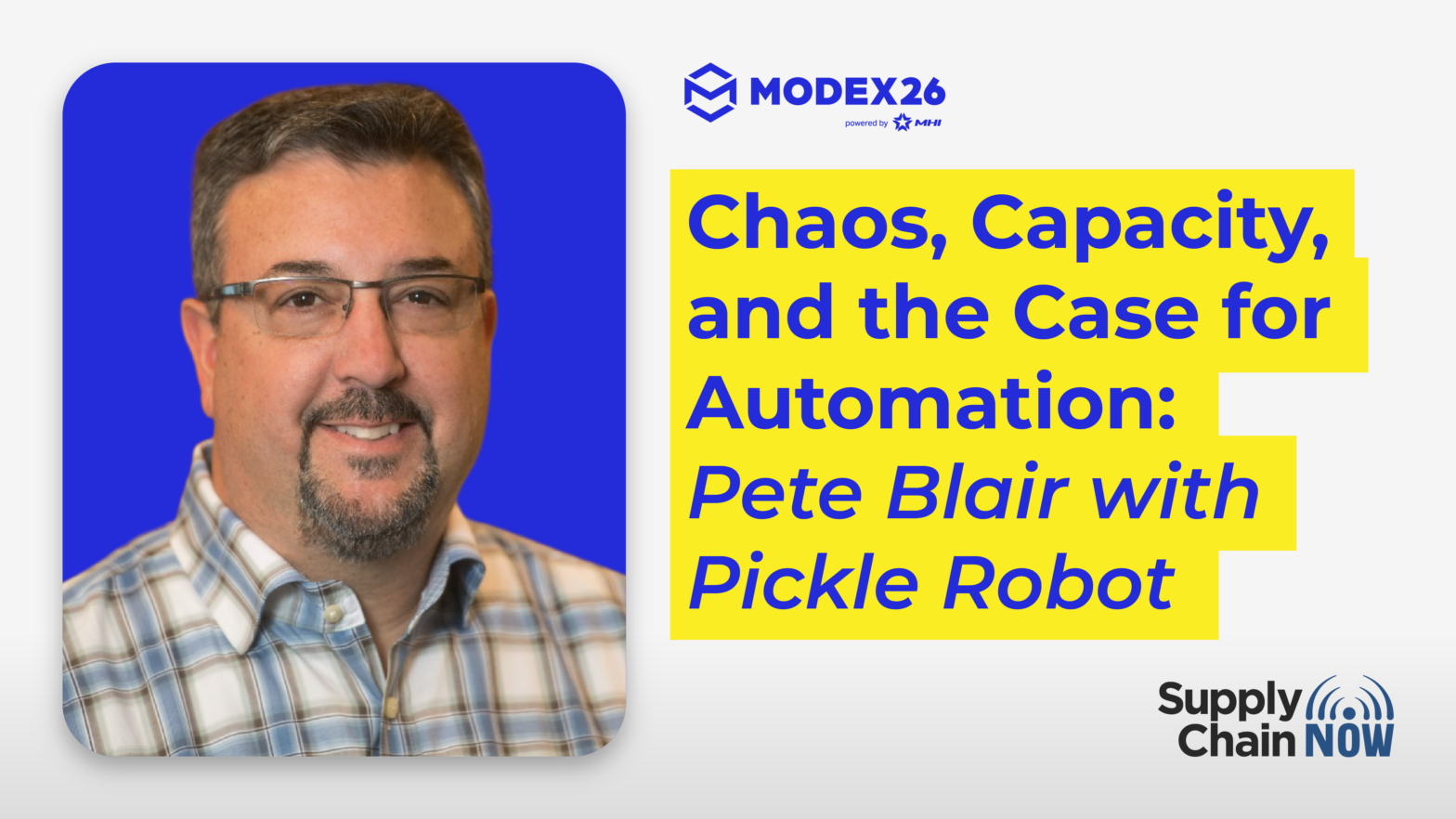
At MODEX 2026 in Atlanta, the energy was unmistakable. With thousands of supply chain professionals gathered, one theme echoed across conversations: uncertainty is no longer episodic. It’s constant and seemingly endless. In a candid discussion with Scott Luton, Pete Blair, VP of Product & Marketing at Pickle Robot, unpacked how organizations are navigating volatility, workforce challenges, and the growing role of automation in keeping operations moving.
Category Archives: Supply Chain Now
From Planning to Decision Making
Supply chains are more volatile and interconnected than ever, but many planning processes still rely on disconnected systems, manual analysis, and spreadsheet-based interventions. This white paper explores how network optimization, supported by advances in optimization technology, workflow design, cloud computing, and AI, can help planning teams evaluate cross-functional trade-offs, respond faster to change, and move from static plans to continuous, decision-driven supply chain planning.
Kase Helps Brands Save With Amazon Shipping Through EasyPost
In today’s volatile shipping environment, balancing cost, speed, and customer expectations is no easy task. In this case study, discover how Kase, a leading omnichannel 3PL, partnered with EasyPost and leveraged Amazon Shipping to deliver faster, more reliable service, without sacrificing margins or customer experience.
A Practical Guide to Performance Testing for Enterprise Systems

Most systems don’t fail all at once. They slow down, back up, and quietly break when demand hits from every direction at once. What passed testing last week suddenly struggles under peak volume, overlapping processes, or hours of sustained use.
Smarter Sensors for Cold Storage Efficiency

Cold storage environments demand precision, consistency, and technology that performs under pressure. This free ebook explores how advanced sensor technologies are transforming cold storage logistics, helping teams reduce risk, improve accuracy, and keep goods moving safely through the supply chain.
Critical Mass: Inside the Coalition Building America’s Circular Supply Chain

It started over drinks, 80s music, and a shared frustration that has probably launched more good organizations than any strategic planning process ever has.
Why Track and Trace Is Essential for Modern Supply Chains
Supply chains have never been more complex or more exposed to disruption. From geopolitical instability and extreme weather to labor shortages and shifting demand, organizations are operating in a constant state of uncertainty. In this environment, basic visibility is no longer enough. Companies need the ability to monitor products in motion, understand their history, and act quickly on reliable data. That is where track and trace becomes essential.
Why Your Supply Chain Team Spends More Time in Outlook Than Your ERP
There is a dirty secret in supply chain management: the most critical information about your orders, delays, and supplier commitments doesn’t live in your ERP. It lives in email.
Are You Sure Consumers Are the Unlock for Circularity?

One of the most repeated excuses in the circular economy space is that American consumers just do not care enough. They will not sort their waste. They will not pay a premium for sustainable products. They will not participate in take-back programs. Europe is different, the story goes. Americans are a lost cause.
The Connected TMS for Shippers: One Platform for Every Mode
Learn how a connected TMS helps shippers manage every transportation mode in one workflow, respond faster to disruptions, and improve service with exception‑ready intelligence.
The Geopolitics of Junk

Here is the situation. The United States imports 95% of its critical mineral supply. Lithium, cobalt, rare earth elements, the stuff inside every battery, every semiconductor, every electric motor. We do not make it, we do not mine much of it, and we do not control the supply chain that delivers it. That is not an energy policy problem. That is a national security problem.
National Supply Chain Day® Returns April 29, 2026 | Celebrating the People and Stories Powering the Global Supply Chain

National Supply Chain Day (NSCD)® returns on Wednesday, April 29, 2026 with Supply Chain Now, bringing together professionals across the industry for an annual celebration dedicated to recognizing and elevating the people, processes, and innovations that keep the world moving.